Nigeria’s minister of information, Lai Mohammed, has identified resistance by key participants in the aviation sector as one of the banes of development of the sector.
According to Mohammed, any minister who wants to make any radical change must wrestle himself from the shackles of such resistance to drive policies that will stimulate growth.
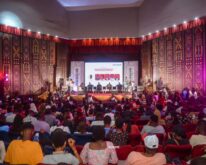
Speaking during the quarterly Aviation Round Table (ART) forum in Lagos yesterday, the minister said aviation industry would make progress if key players get into politics to influence government’s policies.
He said rather than lament over challenges in the sector, players should come together to seek solutions, adding that there was a need to rework the legal framework for turning around the sector, as it affects concession agreements.
This, he said, can be achieved if there is a focused agenda that will deliver a solid foundation for aviation growth.
Also speaking at the event, Allen Onyema, chairman of Air Peace Airline, said the major reasons airlines die in Nigeria was because of harsh operating environment and multiple charges.
Onyema explained that in countries where there were friendly operating environment, airlines make up to 3 to 5 percent profits but in a country like Nigeria, airlines could only talk about how best to cut their losses.
“Can all 150 airlines get it wrong in Nigeria? Airlines have continued to struggle with poor airport infrastructures, poor manpower, high insurance premium, among others. Until these legislative challenges are addressed, more airlines will die in Nigeria,” he said.
Gabriel Olowo, president, ART, said only 44 aircraft were operating in Nigeria, which cannot compete with international operators.
Olowo suggested that it would be profitable for domestic airlines to operate as one airline without losing their individual names and aircraft. This way, he said, will make them compete with the international airlines and expand their routes.
Wale Babalakin, chairman, Bi-Courtney, said for aviation sector to be a catalyst for economic development, Nigeria must address its educational system, as the system was not designed to manage a successful economy.
“A weak educational system has continued to bring about poor development. Up till now Nigeria has no maintenance hangar, as no single component of aircraft is produced in Nigeria. We have to start all over again by addressing the decadence of great intellects,” Babalakin said.
A government that does not honour its own agreement cannot be taken serious by investors, he said, saying we have to find a way to ensure the best minds in government are put at the negotiation stage so that the sector can get the best of solutions.
IFEOMA OKEKE

Join BusinessDay whatsapp Channel, to stay up to date
Open In Whatsapp