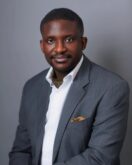
Anselm Adodo, a catholic monk and director, Pax Herbal Clinic and Research Laboratories, Ewu, Edo State, has developed clinically-tested medicine and remedies from indigenously grown herbs that have saved thousands of lives over two decades now. In this interview with OBINNA EMELIKE, the priest speaks on Transformation Studies in Africa, a new curriculum he initiated at University of Ibadan; Communitalism, a new theory on Africans worldview, he is advancing across the world; Pax Africana, among other issues. Excerpts:
May we know why so much emphasis on your new book and theory?
My new book: ‘Integral Community Enterprise in Africa’. In the book, I tried to develop a theory which I tagged; Communitalism as an alternative to Capitalism. It is unique because it is coming from Africa and it is not just a theory, it has been developed and practicalised. The problem I have discovered is that we are brilliant in discussions in Nigeria, we hold discussions, do analysis and it stops there. There has never been resolution and even when there is resolution, there are no action plans to achieve it. Implementation of actions plans, laws and almost every other thing has been the problem in Africa. In view of implementing actions plans on our resolutions, we have set up a centre called Pax Africana. We want to learn from the experience of Pax Herbals to have this centre of research that is introducing a new way of doing research in Africa. It focuses on research and practices, theory and action. That is the purpose. So, building on the experience of Pax Herbal and the theory of business, you demonstrate how it can be done, you take on the theory of economics and practicalise it, show how it is done. Also you take technology and education and practicalise it. So, that is the stage Pax is now, reaching out to share this new way of doing research and practicalising it to the world.
We now want to influence the universities, research institutes and the government of Nigeria. We want to show that the way forward is not government building roads, but adopting a new concept of development, starting from developing your people and equipping your human capital. At the recent Pax Herbals conference, I told them that if you want to destroy a country, you don’t need bombs, just destroy the educational system. Nations that are developed first developed their educational system. From Taiwan, China and the rest of the Asian Tigers, they closed their doors and developed their educational systems before getting to their enviable heights in technology today.
But the problem in Nigeria is that we have failed to discover if the educational system we adopt is right for the country. The education system we run today is part of the propaganda of the West. You see professors of engineering, people graduating with Masters and PhDs in engineering every year, yet we have no electricity. Can’t they develop solar energy? I went to the office of a vice chancellor who is an engineer and I saw one roadside electrician coming to repair the air conditioner. But this is a vice chancellor who is an engineer and who is also training undergraduates to become engineers tomorrow. Of course, they will graduate to also welcome roadside people to do repairs for them, whereas, they are supposed to repair it on their own and most importantly develop their own technology. So, why are they engineers.
What should Nigeria do to ensure connect between theory and practice in schools and workplace?
What we are now doing in this our new centre is to bridge the gap between the university and the industry to ensure that people connect the two; theory and practical.
Our education has to be reviewed and it is on that ground I collaborated with the University of Ibadan to develop a new curriculum called Transformation Studies in Africa from the scratch. It is a new curriculum. Within a space of one year, the university senate approved the curriculum for Masters and PhDs in Transformation Studies to explore these things so that journalists, doctors, engineers among others professionals can come there to learn how to transform knowledge into life and how to combine them. It will be like the Silicon Valley in America where many people who are not graduates have invented things that are benefiting the entire world today.
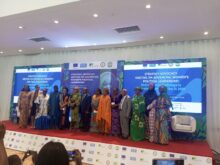
It will gather people who have skills and offer them an enabling environment to soar. From Pax Herbal, which deals with physical healing, we have now expanded the concept of healing to not just of the body, but social economics. So, that is the next stage for Pax Herbal. We are trying to say that people cannot be healthy when they are poor, hungry and unhappy. We are beginning to expand the concept of healing and we will do that by first studying our context and the qualities we have. There was some negativity in the presentations at the recent Pax Herbals workshop in Lagos as if the situation is bad, but we are more positive because there are lots of good things that are happening.
How is Pax Africana going to fill the gap?
Pax Africana is an initiative poised to change the way Africans see and do things. It is temporarily based at the Pax Hospital in Ikeja GRA Lagos until we set our own office. The idea is that the Pax Africana office will have a bigger conference hall so that the kind of programme and workshop we had recently can be held here. We will have the library, we will have the fellows. Dr Elumoka, one of the conveners of the recent workshop studied in Canada and she is a fellow. She is on six months fellowship. We have people like that who come to do their fellowship here with us. The aim is to reflect more deeply and to publish articles, and hopefully, we will have a journal for the centre and then, we are particularly interested in Africanized business models.
How far has your theory been accepted, especially by the West?
My second PhD is on Management of Technology and Information. So, I am keen on new models of business that is based on African worldview and that is what my book is. Capitalism is ok; it has done its own bit. But can we have a theory from Africa based on African culture and worldview. That is what I have done so far, the reception has been good. I was in London recently talking in Oxford about this concept. Yes, is there an alternative to capitalism and that is what we are trying to do. So, I am interested in a new model of business enterprise originating from Africa.
When you argue your case logically and analytically, and demonstrate it empirically, it will be accepted.
We should not also take it for granted that because we are in Africa we should present our case without logic and expect people to believe us. So, you need to make it more logical and analytical for people to appreciate it. I think the world is beginning to see, especially the West that globalization and capitalization is really not working the way they fashioned it. They now want to withdraw because they feel they are losing control. Having pushed us because we did not have a choice, we were forced into globalization, into capitalism and world free trade because it was favoring them, now that it is longer favoring them, they are now trying to review it. That is the dilemma we are in now, when free trade was favoring the West, they supported it, but now that every country is taking advantage of it, they are trying to kick against it. They said nationalism is not good that we should have transatlantic trade because it was favoring them. So, when the concept is favoring the bigger power, it is good and that is why Africa needs to come up with her own workable concept too. Economics is about development, we are not on the same level playing field with the west, African governments need to wake up the way Asia did and found its level today.
We need those in that field also to be more critical and not keep on accepting everything the West suggests. Economic policies are not written on gold, we should invent our own instead accepting the one by the West hook line and sinker. It is not enough to criticize, if you don’t like someone’s story tell your own. So, all these are what we are now doing at this centre.
How far has Pax Herbal Clinic and Research Laboratories gone in achieving its mandate?
We are now going into clinical trials for drugs on malaria in partnership with government agencies. We are working on that and then diabetes and hypertension. So, we see that we have to be thinking along that line. And then, how can we make these drugs available to the world, we are now taking up full automation of production processes, which will require more agriculture. So, we are now going into agriculture as a business because they are connected. We are going into manufacturing, doing it with the community as well as training them in organic farming. When you talk about herbal medicine, it embraces agriculture and you need farming to have the plants. There was a time everybody was going after Soursop leaf, and nobody was thinking of planting it. Two years ago, we said there will be a problem in five years time, there will be no Soursop anywhere because they said it cures cancer when you boil the leaf and eat the seed. So we went to plant 5,000 Soursop in a farm and we left it there because in five years there will not much left and there will be high demand for it. That is already a model of thinking ahead. But we are not gaining anytime from there now. That is what Pax Herbal is trying to do, we are thinking ahead. If herbal medicine must survive, farming and agriculture must also be developed. Those that are practicing it in Lagos are not thinking along that line. Tomorrow you may not find bitter-leaf available.
We want to expand the scope, and technology is very important in doing so. Pax Herbal wants to be at the center of this integral way of practicing healthcare.
What are the major breakthroughs in healthcare so far?
We have products that can compete with orthodox drugs, they truly work but the challenge for us is packaging and the laws in other lands regarding us. So, if government helps to project these uncommon health feats outside, it will add more mileage.
No doubt, our products are highly competitive, but we can’t do it alone, we are asking government to help us. There are breakthroughs but we always like the patients to do the talking because we are the manufacturers.
Are there improvements in the recognition and recommendation of herbal medicine by orthodox practitioners?
Yes there is. Now there is a lot of awareness by more people who get cured using our products. More medical doctors are using herbal medicine and prescribing it to patients. There is a new consciousness of herbal medicine. Things have changed, now we can all come together under one roof as herbal medicine practitioners and orthodox doctors to discuss peacefully as you saw in our recent workshop in Lagos. So, the awareness is great while at the same time, some herbal medicine practitioners are still living in the past, they want to do it the way it was done so many years ago, but we are bridging the gap.
How much menace is quackery to herbal medicine?
Quacks are everywhere; engineering, medicine among others. Buildings are collapsing. All, we need do is to put in place appropriate measures to check them. We need to do as much checks in herbal medicine as they do in orthodox medicine. That should be the action and not to condemn the entire herbal medicine because of quackery. This is the major challenge and perception we are trying to change, that people tends to link individual practitioners of herbal medicine with the practice itself, which is not objective. If a doctor makes mistake, he is penalized. But people can condemn individual practitioners who make mistakes and not the entire herbal medicine practice. Medical doctors do make mistakes, but if they see one herbal medicine practitioner who makes mistake, they say herbal medicine is bad. So, we are trying to make it more objective in such a way that you separate the system as from the individuals and to extract the knowledge from the individuals and put it into a body that people can now be contributing to for better awareness, coordination and result-oriented measures.
Is dosage still an issue in herbal medicine?
It is no longer an issue because we even going too much on the other side-orthodox. We are becoming more precise with specified dosage; tea spoon, table spoon among other measures. People in herbal medicine don’t need to imitate homeopathic way of Western medicine because western medicine is an extraction of active content, while herbal medicine is crude preparation. There is more consciousness and improvement on dosage anyway.
Besides the breakthroughs what are you challenges?
We have a lot of workers, but they are not much because we are operating at 25 percent of our capacity. If we were to operate at 50 percent we will have 500 to 1,000 workers. 100 workers is still small, we have huge potential for growth. So, for us, the issue is not whether there are challenges, rather the challenge that the potentials are so huge and we want to grow gradually in our own pace. So, the prospects are huge. We need capital to maximize our potential, I believe we will get the right people and not just people who want to put their money and get all the profit they want and take it away. We want investors who share our vision. That is why I said your philosophy is very important. I believe we will find the right ones at the right time.

Join BusinessDay whatsapp Channel, to stay up to date
Open In Whatsapp