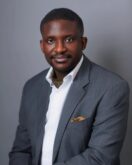
Chike Okafor, is a member of the House of Representatives representing Okigwe South federal constituency (Obowo, Ihite-Uboma and Ehime-Mbano LGAs, Imo State. He is also the chairman, House Committee on Health. In this concluding part of his interview with BDSUNDAY, Okafor, among other issues, said that some mistakes in the past may have been responsible for Nigeria’s current sorry state. Excerpts:
What is the Imo of your dream?
I align myself with the dream of the current government, headed by Governor Owelle Rochas Okorocha that Imo must be better. We could have done better and a lot more but let me put it this way- let’s go back to where Mbakwe was, let me ask you, all the subsequent governments before us, how would you rate them? Do you think they were able to measure up with Chief Sam Mbakwe’s legacies? Mbakwe built the design for Imo Airport, got the land; so subsequent governments took it over and then completed it. I stand to be challenged that any subsequent government has been able to match Mbakwe’s legacies until Rochas came. I stand to be challenged.
Imo State University dream was a multi-campus, he built it. We had Aba, we had Orlu, then we had Etiti but there was a governor that came and packed everything to where it is now. A look at the dream, Mbakwe could have killed the dream of a state university or taken it to Avutu. Nobody would have stopped him – Ambrose Ali University is in Ekpoma but Mbakwe did not do that because he wasn’t looking at himself. But the governor that moved the university that’s already in one campus and took it to his home town was looking at what he could get to his village, hence when they were creating Abia State, they included Uturu. Uturu is the first born of Okigwe, but because of the desire to move the university and appropriate it to Abia, they have to name Uturu to Abia whereas Uturu’s communities are in Imo. So, I said and I stand to be challenged that the man who moved the university did not mean well for Imo, he was really looking at what he will get to his home town. The only person I can tell you that has some bit of good vision was Evan Enwerem, who had to use his contacts under 1, 2, 3, months to relocate the university and put it where it is now, where FUTO was. FUTO was there but that facility was for the Federal Government College.
Under Mbakwe’s government, Mbakwe needed a Federal Government College and they told him they don’t have money to build structures, he went to Federal Government College and divided it into two and so we can have Federal Girls’ Government College. He needed a Federal Government College and the Federal Government said they would not be able to build; they didn’t have money to build as at then. He went and divided Government College Owerri that was already existing to get a Federal College. He said, take part of it and give me Federal Government College. Then they were now going to build Federal Government College where Imo University was and they said give me FUTO and they started building a permanent site where it is today at Ihiaba. So, Enwerem over the years has done some good jobs. He said give me part of the permanent site of FUTO and he built some blocks and we started there, as the Imo State University.
The only visible things you will see in Imo State after Mbakwe are the ones the present governor is doing now. Today, Imo can host any international event because we have an international conference centre of 3000 capacity. Today, we have a replica of the Eagle Square in Abuja as we have Hero Square here in Owerri. We have other projects; the Government House Owerri is no longer what it used to be. So, my dream for Imo is like I said, alignment with the current governor’s dream, Imo must be better.
How do you see the Nigerian economy?
At a point we were dependent on one revenue source and that was crude oil. There are factors when we speak economics; we say all other factors remaining constant. You are assuming that it can vary but you want to hold them constant and they begin to now postulate. Now, we do not control the oil market variables, OPEC is a regulator of the quantity and the price, so we are just a member among other 42 countries. You can’t come and fix the price and quantity we are to push into the market.
When we are crafting our budget we assume, let’s say they are selling at 32 dollars per barrel and we had budgeted at 40dollars per barrel, so you see because of one source, we would be in deficit. If we have been able to diversify our economy and then have other foreign exchange earning sources or windows, we won’t be where we are today, and that is what this current government is doing now. We may have to suffer in a short while but in the long run, we will see the benefits. We are trying to open up the real sector.
The government is also consciously regulating importation because in the last couple of years what we have always done is to fund our appetite. Everything we eat or use, including toothpicks, comes from outside the country. Don’t tell me that individuals are the ones importing but they are placing demands on the foreign exchange, which will further place pressure on the value of naira, vis-a-vis the balance of trade. So, assuming that we can look inwards and have some of these things that we are hitherto bringing from outside to produce locally, we will conserve the foreign exchange that would have been used to bring in these goods. That is what the government has started doing now; though that may not be easy but in the long run we will have an economy that is not only robust but encouraging to the outside world.
So, I think that what the president and those who are managing the economy have done is in the right direction, although they can do better, as a lot more needs to be done. We will do better. That’s where we are. In the paper I presented in a recent conference, I told them that there are so many things that we didn’t do right. If you go back to the time when a president of this country told us that we were in the peak of boom, that money wasn’t the problem but how to spend it, which led to sponsoring of programmes like the FESTAC 1977, etcetera and we are then looking for programmes that we could do, we were not looking at projects, we were not looking at agriculture. I know in this country before the oil when regions had their sources- the cocoa in the west, palm oil in the east, and then groundnut in the north- the country fared better. The regional governments were funding their budgets. But as soon as oil came, we went to sleep and they didn’t see where we are now.
A country like America has oil. You know I was shocked when I read that America has oil reserves that will last for 50 years, assuming that they stop buying now. The whole of Texas and California have untapped oil. I am talking about reserves, the one they have bought and stored for the future. If they say that they would not buy from any country for 50 years, they would not have any issue on oil. If it is in Nigeria, the man that comes in as the president will say, after all, I have five years or eight years let me open it up, and the entire thing would be squandered. That has been our story.
Are you satisfied with our budget processes?
Our budget processes had been bad before now. But if one really wants to thinker with budget processes, you really have to go and thinker with the constitution, because these thing are all in the laws of the nation. We (the National Assembly) sit down and appropriate when the president brings these thing (the budget) to us. We do a proposal. Here in Imo, I don’t know if you know when the governor ‘came in’ and said he didn’t want any yearly budget. So we have to change the law. So we had a four-year plan, budget where each year will dovetail into the next year. You now can look at the deliverables into the current year, before you look at the next year, you have to look at the project in the current year which you were not able to deliver hundred percent and you take it into the next year and then you complete it.
But what we have here now is a situation where you just jump into a new budget every year. We have uncompleted projects littered everywhere and we do not see them resonating in the next year’s budget. So that is it. I am in health and somebody comes to you and say I have this primary health care centre which we started 2007 and have been abandoned, why can’t we finish it. And why is it not captured in the next year’s budget, why? So the resources you put in that project in the previous year is actually wasted because you have not been able to realise the objective for that budget.
For instance, in the health sector for this year 2017, we did have a stormy section with the Ministry of Health. We said, we are not going to construct any new primary health care centre, rather we will go and do mapping and identify abandoned projects and put money to revitalise them and make them functional. So, there will be no construction because uncompleted, unfinished and abandoned projects litter all over. Assuming that every MDA does that, we will be looking at subsequent budget that are not only ambitious, but developmental, now that’s if you have a three-year to four-year budget plan; what it can do. But I don’t think that our current law in the country allows us to do that. That means we need to go back and look at the law and think of what to do to allow us have the kind of budget that will not just start and terminate in twelve months, but a budget document that will be a development and working plan for the nation, designed strategically in medium to long term tenures.

Join BusinessDay whatsapp Channel, to stay up to date
Open In Whatsapp