Business and Human Resource (HR) leaders are coming under rising pressure to rewrite the rules for how they organise, recruit, develop, manage, and engage the 21st Century workforce.
Experts say the traditional end-of-year appraisal, designed in the 1970s is proving ineffective. For instance, in 2015, 82 percent of companies surveyed by Deloitte, a leading professional services firm with speciality in audit, consulting, tax, and advisory services, reported that performance evaluations were not worth the time. Another study reported that 41 percent of companies found widespread manager bias, and 45 percent believed performance evaluations did not motivate employees.
Deloitte’s fifth annual ‘Global Human Capital Trends’ report and survey 2017, which reached out to hundreds of organisations, academics, and practitioners; among whom were 10, 000 HR and business leaders across 140 countries shows leaders are turning to new organisational models that highlight the networked nature of today’s world of work. The focus has shifted from talking about people to talking with people in open conversations.
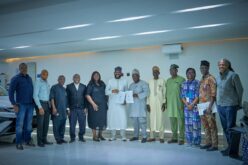
Joseph Olofinsola, consulting partner at Deloitte Nigeria noted that today’s workplace grapples with the huge gap between business functions and technology adoption. To change, organisations need leaders that are social in their thinking. The old paradigm will not help them make progress.
“We need to redesign and reorganise the leadership of organisations for the future. We are moving away from ‘who do you work for?’ to ‘who do you work with?’” Olofinsola said.
These new organisational models include innovation-based HR platforms, learning and career programmes driven by social and cognitive technologies and employee experience strategies that put the workforce at the centre.
The new rules which also constitute the latest trends in HR go beyond “reskilling” efforts or plans for new and better career. They require that organisations take a closer look at leadership, structures, diversity, technology, and the overall employee experience in “new and exciting ways.”
“Over the last five years, organisations have radically changed the way they measure, evaluate, and organise employee performance. Today, with much initial experimentation, continuous performance management practices are being deployed on a wide scale” Deloitte’s report stated.
From the report’s findings, while the digital revolution appears unstoppable and is disrupting traditional brick-and-mortar industries at the speed of light, business productivity is yet to keep pace with technological progress. Productivity growth remains low. In Nigeria, for instance, only 43 percent of organisations are preparing for the future of workforce and workplace.
These are critical issues that the ten trends in the 2017 report attempts to address. Aside leadership which ranks first, respondents to the survey said they considered career as the second most important trend. They alluded to the fact that the concept of career is being shaken to its core, driving companies toward “always-on” learning experiences that allow employees to build skills quickly, easily, and on their own terms. New learning models both challenge the idea of a static career and reflect the declining half-life of skills critical to the 21st century organisation.
Away from career, the report sought to establish that talent acquisition now represents the third most important challenge that companies face. Eighty-one percent of respondents to the survey said it was very important. The report pointed out the new breed of cognitive technologies radically transforming recruitment which is at the early stage of the digital revolution.
The fourth trend focused on changing culture and engagement patterns as leading organisations broaden their focus to include employee journeys, studying the needs of their workforce, and using net promoter scores to understand the employee experience.
Olofinsola said it is becoming clear that the appraisal system will not achieve organisations objectives; hence many are beginning to replace it. “Employee engagement is becoming holistic,” he said.
HR technologies however have not quite caught up, new approaches to performance management are working, and they are increasing productivity and changing corporate culture. Organisations are clamouring for more agile, diverse, and younger leaders, as well as new leadership models that capture the ‘digital way’ to run businesses.
Capturing the digital way however must be driven by a digitised HR. “This means going beyond digitising HR platforms to developing digital workplaces and digital workforces, and to deploying technology that changes how people work and the way they relate to each other at work,” the report stated.
Sadly, HR executives are not keeping up with these trends. The number of HR teams that believed their capabilities was good and excellent fell from 39 percent in 2016 to 36 percent in 2017.
Other trends include effectively employing data through analytics, ensuring workplace diversity, equity and inclusion, and considering the role of the future workforce, especially robotics in the workplace.
STEPHEN ONYEKWELU

Join BusinessDay whatsapp Channel, to stay up to date
Open In Whatsapp