In spite of high global demand for coffee and the commodity being the second most sought-after besides oil, Nigerian farmers are struggling to plant coffee seeds when peers in Ethiopia, Kenya, Brazil and Vietnam are reaping the gains of high commodity demand.
“Coffee has always been a neglected industry in Nigeria. There has not been support from the government in terms of funding, provision of fertilizers and land acquisition, which farmers in other countries enjoy,” Ibrahim Sadiq, chairman, National Coffee and Tea Association of Nigeria (NACOFTAN), told BusinessDay in a telephone interview.
“Price was down some years ago, so farmers felt there was no need planting it. What we need is government attention,” Sadiq said.
World coffee demand is currently above 150 million bags (of 60kg) in 2015 as against 135 million bags in 2011. The market value of the global market of coffee is estimated at $100 billion.
Nigeria produced 2,100 tons of unroasted coffee in 2013, a figure that is less than in 1966. The country recorded no export between January and July 2015, at a point Ethiopia, an African country with fewer than 100 million people, produced 174,000 tons of coffee, earning $1 billion from export.
Brazil, with about Nigeria’s population (200m people) earned $5.6 billion the same year while Colombia and Vietnam made $2.6 billion and $2.4 billion respectively the same year.Kenya’s coffee earnings rose 17 percent to $254.2 million during the 2013/14-crop season due to improved production and higher prices.
Farmers in Kenya benefited from subsidised fertiliser from the government during the period, helping them to raise production by a quarter to 49, 475 metric tons, according to government records. More than 150,000 farmers are involved in coffee production in Kenya.
Vietnam earned $2.4 billion in 2015 on coffee export, creating jobs for more than 1 million workers. Colombia is the second-largest supplier of Arabica coffee after Brazil, earning $2.2 billion from annual export in 2015.
The demand for coffee is driven by increased consumption of coffee in the United States by the Millennial, described as youths born between 1982 and 2000, which share more than one quarter of American population.
The drought in Brazil, which used to be the biggest exporter until 2016, raised coffee demand and price, thus encouraging supplies from Vietnam and Colombia.
A Taraba coffee farmer, Usman Ganduje, told BusinessDay that Nigeria has a lot of potential in coffee and can produce up to 10,000 tons if provided with cheap funds and market information.
“Others from Vietnam and even Kenya are enjoying because they have incentives. If we had been serious, we would have earned a lot of dollars from coffee,” Ganduje said.
“We need support, and we also need to access the market ourselves, because what we have is that traders come in and buy directly from farmers who do not have the capacity and funds to explore the global market,” he said.
The price of Robusta, Colombian and Artaabica species have risen above $200 per 50 kg bag. Euromonitor International said in 2016 that Nestlé Nigeria Plc dominates coffee in Nigeria in both retail volume and retail value terms with its Nescafé brand, controlling a 76 percent retail value share in 2015. Nestlé SA brands, imported by third parties other than Nestlé Nigeria Plc, make up another eight percent off-trade value share of coffee.
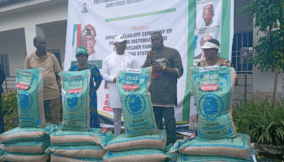
“Nigeria recorded zero percentage in coffee production for the first four months of 2015 despite the fact that coffee consumption by Nigerians has continued to increase,” said Hussaini Doko Ibrahim, director-general of the Raw Materials Research and Development Council (RMRDC), in July 2016, while presenting high-yield seeds to 5,000 Taraba farmers in July 2016.
“Nigeria has enormous potentials for tea production, especially in the Mambilla Plateau, but the total tea production in Nigeria is not important in the global market,” Ibrahim said, disclosing that the country’s production meets only 25 percent requirement of local tea packers.

Join BusinessDay whatsapp Channel, to stay up to date
Open In Whatsapp