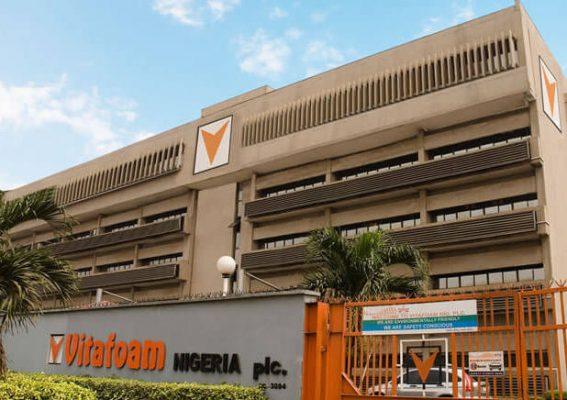
A shrinking economy has shown up in the numbers of Vitafoam Nigeria Plc as the foam maker recorded a loss on the back of weak sales.
The consolidated and separate financial statements for the year ended 30 September, 2016 of Vitafoam showed the company posted a loss after tax of N32.03 million from N71.98 million losses the previous year.
Earnings before interest taxes and amortization fell by 22.10 percent to N888 million.
The dent at the bottom line was as a result of a 19.55 percent drop in sales to N13.56 billion; even a significant reduction in inputs cots couldn’t stop gross profit from receding.
Vitafoams unimpressive results is a representation of the woes of manufactures in Africa’s most populous nation where a severe dollar shortage, decrepit infrastructure, and weak consumer discretionary spend are increasingly stunting growth.
“But we are all aware of how much power and infrastructure makes it difficult to do business in Nigeria,” said Taiwo Adeniyi, Group managing director of Vitafoam.
“For instance 90 percent of our raw materials come from outside this environment and you are telling me to continue to produce and make it available in this environment when l do not have a special window to access dollars,” said Adeniyi.
Analysts say it is irrational on the part of policy makers to ban 41 items from the official window when an enabling environment has not been created to produce most of the products.
The dollar shortage has hindered manufacturers from importing raw materials and machinery for purpose of meeting production. Consequently, many firms had to scale back on expansion plans while some shed jobs to stay afloat.
While the central bank has adopted a flexible exchange rate after pegging the currency for at N197-N199 for 15 months, companies still bemoan the currency shortage as they are forced to buy from the inaccessible black market.
The naira has been stable at N305 at the interbank market while it trades for N485 at the parallel market.
Nigeria’s economy contracted by 2.20 percent in the third quarter of 2016, according to data from the NBS. Inflation for the months of October accelerated to 18.30 percent, the highest in 11 years.
This means consumers had less money in their pockets to buy foams.
As a result of the economic downturn, Vitafoams’ margins were suppressed. Operating profit margins fell to 6.54 percent in 2016 from 6.76 percent the previous year. Finance costs however reduced by 12.07 percent to N895.05 million.
The company has total assets of N13.56 billion while shareholders fund stood at N3.50 billion in the period under review.
As a part of Vitafaom strategic plans, it merged with Vono Foams to for the purpose of synergy. It maintained a steady dividend policy as it board recommend a dividend of 12k in the period under review. This translates to a dividend yield of 4.72 percent.
The Nigerian foam maker’s shares were up 0.83 percent to close at N2.42 as of 4:00pm while market capitalization stood at N2.52 billion. Its year to date (YTD) was +0.83 percent, outperforming the NSE ASI -0.96 percent.
BALA AUGIE


Join BusinessDay whatsapp Channel, to stay up to date
Open In Whatsapp