The shift to the global oil order that happened at the end of 2016 may not be as sticky as you think.OPEC’s Nov. 30 deal in Algeria turned oil market expectations for 2017 on their head. Instead of a fourth straight year of rising global oil inventories, stockpiles look set to actually shrink.
The plan was to cut output by nearly 1.2 million barrels a day in the first half. That agreement was followed by a pledge from a group of non-member countries to trim their production by almost 560,000 barrels a day. This is still what’s expected.
These deals led the International Energy Agency and others to forecast that the long-awaited oil market rebalancing could begin almost immediately. But, as the agency warns, only if the agreement is implemented in full.OPEC’s members seem fully committed to the cuts, but, as I’ve written, the biggest threat could come from those countries who were left out of the deal. OPEC members Libya and Nigeria were exempt from the cuts and both have already made progress in restoring output curtailed by unrest.
Undermining OPEC Efforts
Restoring output in Libya and Nigeria could seriously erode the effectiveness of OPEC’s output cut.
If they meet their ambitious plans for further increases in the coming months they could seriously undermine the efforts of their fellows.
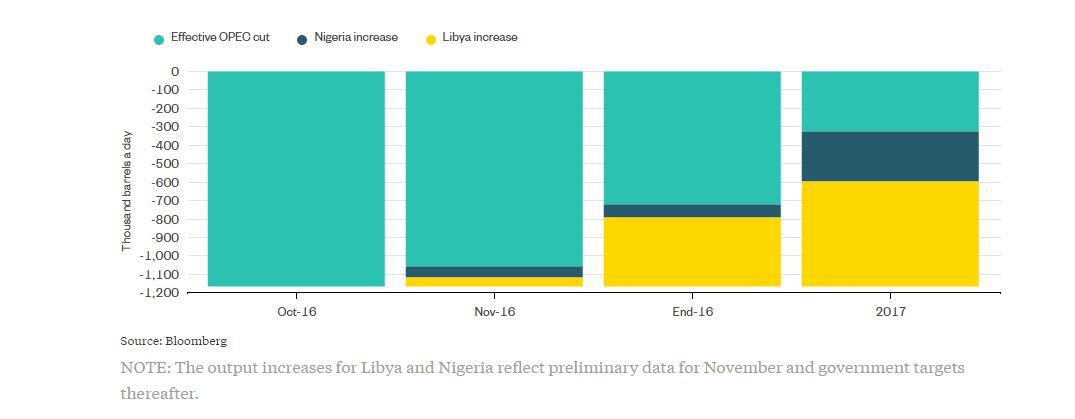
That could jeopardize the foundation of the November agreement and leave OPEC and its allies needing to consider a further cut even before the last one is fully implemented.

Join BusinessDay whatsapp Channel, to stay up to date
Open In Whatsapp