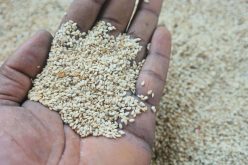
Nigeria’s quest for self-sufficiency in fish production is being threatened by high cost of quality feeds, which may widen the country’s food import bill.
Industry players who spoke to BusinessDay said high cost of fish feeds as a result of forex volatility has constrained importation of feeds and forced prices of fish to hit the roof tops, while also hurting Nigeria’s fish farming business.
“The situation is very bad for fish farmers because of the high cost of feeds in the market due to foreign exchange scarcity,” said Tayo Akingbolagun, national president of Catfish Farmers Association of Nigeria (CFAN).
“Three months ago, there was no single crumbles in the market and this forced a lot of farmers to abandon their farms while others sold theirs off. More than 95 percent of fish feeds in the country are imported,” Akingbolagun said.
He stated that aquaculture is one of the most viable sub-sectors in the agricultural sector and urged the government to address the issues in the fish industry to avoid shutting down of more businesses.
Fishing under the agricultural sector contracted 0.34 percent in Q3 2016 from 6.85 percent in Q2 2016 and 5.59 percent in Q3 2015, according to the GDP Q3 report.
“The biggest challenge fish farmers face is high cost of feeds,” Gbola Akande, executive director, Nigerian Institute for Oceanography and Marine Research, told BusinessDay.
“Fish feed is a critical factor in aquaculture. It constitutes 70 percent of production cost for fish farmers. Fish meal is been imported into the country and the FX issues have led to the increase in price,” Akande said.
Bamidele Onibalusi, chief executive officer of Denoli Farms said, “2mm of fish feed we usually buy for N5, 500 is now being sold for N9, 100. Despite the increase in feeds, prices of catfish still remain the same.”
“This is hurting the business of most farmers. As a result of this, a lot of farmers are closing their farms since it is no longer profitable,” said Onibalusi.
Nigeria’s aquaculture industry is largely untapped and beset with a combination of worsening piracy attacks, poor access to credit, lack of the requisite technical skills, unavailability of good quality and moderately priced fish feed, as well as lack of direct investment.
Gbola Akande, who was earlier cited, told BusinessDay that government still needs to create an environment that will attract investors in aquaculture, but admitted that there is an ongoing research from the government that could help reduce the cost of feeds.
Yemi Alade, a fish buyer at Mile 12 market in Lagos, told one of our correspondents, “Today, you hardly find fresh fish in the market. You find frozen fish mainly, which are not too good for us.”
Josephine Okojie

Join BusinessDay whatsapp Channel, to stay up to date
Open In Whatsapp