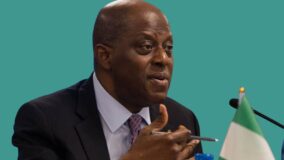
Obi Ejimofo, chief operating officer of Asoko Insight, has said that despite the micro-economic conditions in the country there are lots of on-going growth activities in different sectors of the economy beyond Oil & Gas.
Ejimofo made the observation in his presentation at the recently held 6th FBNQuest Investor Conference.
Speaking on ‘Navigating the growth cycle through under-invested sectors in the non-oil economy’, Ejimofo noted that there are immense opportunities in the middle market and that when it comes to diversification beyond the Oil and Gas sector, the hope is that these areas will be looked at seriously as major opportunities for growing the economy.
According to a recent study by the International Monetary Fund (IMF) the significant and prolonged drop in oil prices since mid-2014 has changed the fortunes of Nigeria and many energy-exporting nations around the world. Therefore, for Nigeria, which is heavily dependent on oil revenue, there is need for the government to pursue genuine economic diversification policies to take the economy out of the doldrums.
The dependence on the proceeds from the sale of crude oil was done at the expense of other sectors of the economy such as Agriculture, Technology, and Solid Minerals etc. that had contributed significantly to the economy.
The current prevailing economic situation is prompting the Federal Government to work harder to further diversify the economy as well as the country’s revenue base. The call for diversifying the Nigerian economy has been an ongoing concern, which many believe will combat poverty in Nigeria via job creation and most importantly alleviate some of the problems associated with the vulnerability of the Nigerian economy to the fluctuations in global oil process.
Diversification in the present Nigerian economic context simply means creating new avenues for economic growth. It involves the Nigerian government using the right strategy to boost revenue generated from other sectors of the economy. It however will not mean a total neglect of the oil and gas sector but finding ways to maximise revenue derivable from the sector, reversing the effects of the economic crisis and returning the economy to a growth path.
At the FBNQuest Investor Conference, Ejimofo in his presentation alluded to the FT report in October 2016 stating that the IFC estimates that “up to 84 percent of Small and Medium-sized Enterprises (SMEs) in Africa are either un-served or underserved” in terms of access to capital.
He also noted that it is important for Nigerians to start charting value chains that exist within the different sectors. He went further to identify three sectors in the economy with immense opportunities for growth as the Food & Beverage sector, the Agro-Processing sector and the Renewable Energy sector. For these sectors the recurring narratives over time will be capacity expansion, import substitution, local/regional expansion, backward integration and product diversification.
Under the Food & Beverages sector, Ejimofo identified companies that are using the recurring narratives to expand their businesses beyond its current scope while in the renewable energy and agro-processing sectors he highlighted companies that are currently under the radar today but will create competition within their sector in the coming years.
“There is a need for the government to create an enabling environment for the private sector to operate in these industries. Investment is needed from both local and foreign investors and the government needs to attract and facilitate private investment in selected areas. The Nigerian government needs to set out a workable plan that will concentrate on the most important and strategic areas that will yield the highest and quickest returns. They also need to increase the loss of confidence by investors and the general public by taking control of the situation,” he said.
According to him, “The state and local governments must also be involved in the diversification process by assisting the Federal Government in implementing policies that will move the country forward. The state and local governments can also be encouraged to come up with their own responses to the economic crises. This will help hasten the diversification process, reduce the over-dependence on oil revenues and lift the economy out of its current situation.
“Overall, there is a need for the Nigerian government to carry the public along in its response to the economic crises that is biting hard. The public needs to know what actions the government is taking to address existing challenges and the expected results of those actions.”

Join BusinessDay whatsapp Channel, to stay up to date
Open In Whatsapp