Last month, the World Food Day was observed globally. The central focus was the effect of climate change on food security and how to boost agricultural productivity. Climate change is regarded as a major threat to food supply with its adverse consequences on farmlands and livestock.
Globally, governments have consistently raised public awareness on the need to lessen the impact of climate change on smallholder farmers, who are mostly vulnerable to climate variability. In achieving this goal, experts have repeatedly called for a more synergetic collaboration between governments and the private sector in order to adequately tackle the challenges of climate change on food security.
Incidentally, world leaders, including Nigeria’s President Muhammad Buhari gathered in far away Morocco to proffer solutions to the menace of climate change. Tagged the United Nations Climate Change Conference, COP 22, parties to the conference deliberated on climate variability and its increasing challenges on food security, how to mitigate its negative effects on food security, and what can be done to strengthen the resilience of smallholder farmers.
At the Conference, Nigeria presented a paper on its unwavering commitment to implementing policy actions aimed at tackling climate change through environmental protection efforts. Back at home, some organisations have been at the vanguard of raising awareness about impact of climate change and actually going ahead to do something about it. Two of such organisations that have earned industry recognition in this regard are Shell Nigeria and British American Tobacco Nigeria Foundation (BATNF). The former’s recognition of climate challenges in Nigeria and its commitment to driving low-carbon business brightened its chances of clinching the award “Best Company in Climate Action” at the recently held 2016 Sustainability Enterprise and Responsibility Awards (SERA). BATNF, on its part, won the “Best Company in the Eradication of Hunger” in Nigeria award, as part of its sustainable development interventions.
Poverty and hunger eradication are some of the greatest challenges confronting the world today. Through collaborative efforts between the government and a few organizations such as BATNF, substantial progress has been made. Having identified the current challenges confronting capacity building for food security in Nigeria, BATNF refocused its policy interventions by leveraging on agriculture to transform the livelihood and businesses of rural farmers across communities in the country. The Foundation, through various strategic interventions, has made a strong statement of its determination to help the process of poverty eradication and environmental conservation. BATNF has supported rural farmers to be smarter about the challenges of climate change through its climate smart agriculture approach, which aligns with the main objectives of the Food and Agricultural Organization (FAO), including sustainably increasing agricultural productivity and incomes. The Foundation provides rural farmers with periodic training programmes that unlock smarter ways of tackling weather-related issues. The programmes also help farmers to build resilience to climate change. Through the training platforms, smallholder farmers have been able to substantially reduce and, or remove greenhouse gas emissions, where possible in several communities in Nigeria.
A report by the FAO reveals that one-third of food produced globally for consumption is lost or wasted, and a substantial part of this global waste occurs throughout the supply chain, from harvest down to final household consumption. In Nigeria, food production may not be the issue as Nigeria is blessed with fertile land and a huge and active population. However, experts have called for more proactive measures in managing post-harvest losses. It is believed that Nigeria sufficiently produces more than enough food to feed its citizens but the challenge is that most of the foods are lost due to poor post-harvest system.
In Nigeria, one of the first steps to tackling climate change will be to have closer collaboration between the governments and stakeholders in the agriculture sector to tackle the issue of food waste. This will further help in curtailing the environmental impacts of food waste, and more importantly, enhance food sufficiency. If we are able to store our foods properly post-harvest, it follows that we may not need to produce as much. Reports indicate that a large percentage of the tomatoes harvested in Nigeria are wasted, while the fruit baskets in Benue and Cross River bear eloquent testament to the inability of Nigeria to harness its agriculture productivity. In many reported cases, farmers are unable to evaluate the harvest from their farms.
Also, the effects of climate change on food production ought to be given a greater attention. This is because extreme weather conditions have the potential to create significant yield reduction despite effective farming practices and technological advancement. For example, in Sub-Saharan Africa, changes in the frequency and severity of droughts and floods have significantly impacted on the productivity of smallholder farmers whose efforts are pivotal to increased agricultural productivity. In a journal recently published by Field Science Reports, it was projected that crop yield in Africa may fall by 10 to 20 percent by 2050 or even up to 50 percent due to climate change.
Stakeholders have continued to harp on the need to protect rural farmers against the challenges of climate change in order to enhance food security. Experts have also urged industry stakeholders to adopt improved climate smart agriculture approaches, which align with the overall objective of FAO. In addition, they have called for measures that will sustainably increase agricultural productivity and incomes of farmers, while also adapting and building their resilience to climate change.
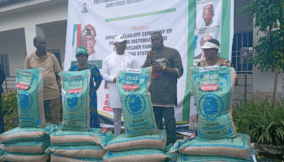
Chidi Ibe, technical committee member, BATNF, while speaking on interventions in the area of climate change, said the Foundation has been at the vanguard of addressing the issues associated with climate change as it affects smallholder farmers in rural Nigeria. He explained that through these interventions, the Foundation has substantially alleviated poverty among hundreds of farmers by equipping them with technical skills to withstand the hazards of climate change.
“The threat of climate change to national security, social stability and economic prosperity is evident. Anywhere you go, you see signs of effect of climate change or climate variability. There is need for national action to tackle the risk that climate change poses,” Ibe stated.
In addressing the fate of small-scale farmers who are most at risk of climate change, Professor Ibe observed that “despite any ambition for mechanization in the foreseeable future, food production will be guaranteed by smallholder farmers who contribute 90 per cent of food production in the country. Hence, the need to provide opportunities to enhance the wellbeing of smallholder farmers is a veritable route to the eradication of food shortage and poverty on a grand scale. It is a viable recipe for sustainable economic development.”
“Resilience of smallholder farmers to climate change can be achieved via easy access to weather information, more effective extension services, improved disaster preparedness and access to cost effective new technology. Farmers are more than victims of climate change impacts,” said Gernot Laganda, head, Environment and Climate Change Division, International Fund for Agriculture. Our experience shows that the smallholder farmers are an integrated part of the solution to global warming,” he added.
Modestus Anaesoronye

Join BusinessDay whatsapp Channel, to stay up to date
Open In Whatsapp