The Islamic State (IS) militant group has announced that its West African affiliate Boko Haram has a new leader.
Abu Musab al-Barnawi, who was previously spokesman for the Nigerian-based Islamists, is featured in the latest issue of an IS magazine.
It does not say what has become of the group’s former leader Abubakar Shekau.
He was last heard from in an audio message last August, saying he was alive and had not been replaced – an IS video released in April said the same.
Boko Haram, which has lost most of the territory it controlled 18 months ago, is fighting to overthrow Nigeria’s government.
Its seven-year insurgency has left 20,000 people dead, mainly in the country’s north-east.
In the interview in IS’s weekly Arabic magazine al-Naba, Mr Barnawi said his group “remained a force to be reckoned with” and said it had been drawing new recruits.
He described the group’s battle against West African states as a war fought by Muslims against “apostates” and “crusaders”.

Who is Abu Musab al-Barnawi?
- Little is known about Abu Mus’ab al-Barnawi, who appeared in a Boko Haram video in January 2015 as the group’s spokesman
- He wore a turban and his face was blurred out and it was filmed as a sit-down studio interview
- Unlike Abubakar Shekau his delivery in the Hausa language was considered and softly spoken
- Mr Shekau was often filmed in the open, surrounded by fighters, loudly proclaiming his threats, victories and giving rambling ideological lectures
- However, Mr Barnawi pulled no punches, warning that towns which resisted Boko Haram in its mission to create an Islamic state would be flattened
- He also spoke of being against democracy and foreign education
- In his most recent magazine interview, he again objected to the name Boko Haram, by which local people call the group, as it means “Western education is forbidden” in Hausa
- He maintained IS was still strong in the region and promised to continue fighting West African governments.
Mr Shekau took over as the group’s leader after its founder, Muhammad Yusuf, died in Nigerian police custody in July 2009.
Under his leadership Boko Haram became more radical, carried out more killings and swore allegiance to IS in March 2015.
In numerous videos, Mr Shekau taunted the Nigerian authorities, celebrating the group’s violent acts including the abduction of the more than 200 Chibok schoolgirls in April 2014.
Nigeria’s army has claimed to have killed him on several occasions, and he has not appeared in a video since joining IS.
Boko Haram at a glance:
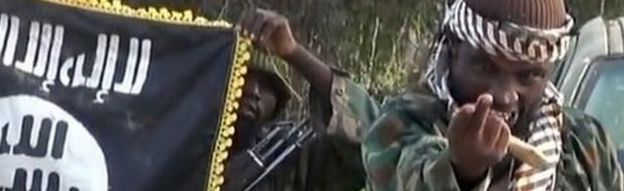 Image copyrightAFP
- Founded in 2002, initially focused on opposing Western-style education
- Launched military operations in 2009
- Thousands killed, mostly in north-eastern Nigeria, hundreds abducted, including at least 200 schoolgirls
- Joined so-called Islamic State, calls itself IS’s “West African province”
- Seized large area in north-east, where it declared caliphate
- Regional force has retaken most territory last year
Source: BBC

Join BusinessDay whatsapp Channel, to stay up to date
Open In Whatsapp