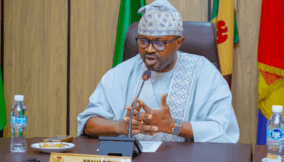
Grant Thornton says professional service firms can assist the Federal Government in its fight against corruption by tracking stolen assets from their point of origin to foreign jurisdictions, where they are kept so they can be repatriated.
Assets such as money, bank accounts, real estate, established as proceeds of corruption can not only be recovered but also systems that can ensure that best practices in financial management and risk controls can be put in place.
Gernot Hebestreit, Grant Thornton’s global leader for clients and markets, said this at a recent media briefing before the group’s 2016 Africa Regional Meeting hosted by the Nigerian arm of the firm in Lagos on Sunday.
“All over the world, there are facilities used to check corruption and Nigeria can benefit if it sets up these systems. Asset tracking technologies have improved in recent times and they offer real time monitoring,” Hebestreit said.
According to Hebestreit, the Federal Government assets, both physical and liquid (cash), can also be monitored using technologies, and contracts awarded can be monitored through quality control systems that professional firms install and monitor.
“Another important way professional firms can help the government is by tracing stolen assets. We can determine their point of origin and as well various vehicles through which stolen assets are hidden and uncover it,” he said.
President Muhammadu Buhari has made the war against corruption a key focus of his administration, leading to the successful prosecution of highly placed government officials.
Analysts at Control Risk state that Buhari’s anti-corruption drive is hinged on four key measure: a reorganisation of anti-corruption bodies into a single powerful agency; the removal from ministers of political control over awarding contracts; the introduction of a plea bargain system that will allow corrupt officials to return stolen funds to avoid prosecution, and a crucial structural reform programme for the oil and gas sector, the focus of many of the largest corruption investigations.
At the Anti-Corruption Summit hosted by Prime Minister David Cameron of Britain last month, President Buhari said the Federal Government would apply the Open Contracting Data Standard to major projects in the oil, transportation, power, health, education and other sectors as part of moves to fight corruption in contracting process.
The Open Contracting Data Standard (OCDS) allows for disclosure of data and documents at all stages of the contracting process using a general data model.

Join BusinessDay whatsapp Channel, to stay up to date
Open In Whatsapp