At a recent BusinessDay Capital Market Conference in Abuja, I found myself reacting defensively in my panel of discussants where I was a participant. The Pension Fund managers and other participants had raised a number of issues why they were unhappy with the Capital market and outlined what they will want to see in the market for them to be attracted back to make investments.
They complained that the bad performance of the equities market was a drag on their performance and would rather invest in the Government Bond Market where they see no risk and they can get better returns. They had raised issues about governance and growth. After the discussion session, I realized that they were right but the issues they raised where to me, all already well known and a number of steps where been taking to correct them. There is also evidence that the occurrence of infractions and other governance issues complained about were on the decline.
The last two reviews of the Capital market by the Dotun Suleiman Committees constituted by The Securities & Exchange Commission (SEC ) in the last 7 years particularly the ( 10yrs ) Ten Year Master Plan just concluded with an implementation Council put in place, is addressing all the issues . The current SEC management and the very diligently execution of the Master plan, has ensured that most of the market infrastructure required to make it work more efficiently, is now in place. Operators’ capitalization was recently increased, and under capitalized companies excluded from the market.
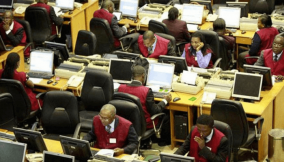
The Nigerian Stock Exchange and its trading Technology is one of the most sophisticated trading systems in Africa today. The Technology and the level of competence in the Exchange today have ensured very high standards. Both its trading and Settlement systems can be measured against any Exchange in the world. The NASDAQ enabled systems makes it world class. The Exchange management has also embarked on very elaborate reforms that include reviewing its market systems and trading rules. Listed Companies have better supervision and scrutiny today than at any time previously. They have also embarked on establishing a minimum Operating Standards (MOS) for its members and for all Brokers and have also revised and now stringently enforce its listing requirements and trading rules. A number of steps have also been taken to ensure Investor protection. Even though there is a lot of work yet to be done, the market and its institutions are now in a better place and the operators are also much stronger at least, before the recent market down turn that has also significantly reduce market capacity.
My defensiveness was based on these changes that were already manifesting positive results. It was not to say that the issues raised were not important or were not there. Even though some have not been fully addressed yet, the work was on going. My point was that there were more fundamental problems facing the market. These issues were more about the economy and the uncertainties as a result of policy ambiguities that has impacted the market negatively.
In my opinion, the biggest problem confronting the market today is the issue of running a Capital Market that has no Capital. This has been further magnified by the recent market crash and the difficulty of the economy.
The market lacks liquidity because it does not have a natural source for funding its business. This is the fundamental flaw, and the reason why the market is not performing its role. The market is too small to be able to make any impact.
The Capital market is a market for long term capital and the Nigerian market has a history of not having long term funds. Over 70% of the Nigerian Industry deposits for instance, have tenors of 180 days or less. It will surprise you to know that accounts with N1m deposits in Nigeria banks in total, is less than two million depositors. In order words there are not more than two million cash millionaires in the whole of Nigeria as revealed by the NDIC report on banks. The economic growth of the last ten years has done very little for the market. The recent crash of the Nigerian Stock Market which saw the market capitalization collapse from N13.2 trillion ($82bn) to a little over N7 trillion ($23bn), means that the market which was considered small has now even gotten smaller.
Where we are in the Nigeria Capital market Industry was exactly where the Nigerian Banking Industry was in 2004 when Professor Soludo the then CBN Governor decided to do something about it. He imposed a minimum Capital for Banks to be N25 billion. This Capitalization requirement meant that consolidation will have to take place and it did. The Banks suddenly discovering the need for Capital and all went to the Stock Market to raise money. The capital raised was in several Billions and the positive impact of the Capital raise, brought liquidity into the Stock market. It also exposed it for the shallowness. The 89 bank operators became 25 and because the Banking industry has a natural funding base of deposits from the public, it quickly attracted deposits from investors who have become confident to put their money in well capitalized banks. The small Banks of yesterday have in 10 years become major banks competing throughout Africa. The new capital ensured modernization of the industry. Its strong Capital based also allowed it to quickly embrace Technology. Today, Nigerian Banks are in league with some of the most advanced banking systems in the world.
The second wave of reforms was embarked upon by Sanusi Lamido Sanusi the current Emir of Kano who completed the modernization of the Nigerian Banking system.
The Nigeria Capital market will not thrive unless there is sufficient Capital to drive its business. The CBN must act and extend its role of the Bank of last resort to the Investment Banking (Universal Brokers) category of the Capital market, if it was to get the necessary support to make it fulfill its role of helping to develop the market system that will efficiently allocate capital and trade risk. The small size of the market inhibits its growth. If does not have the liquidity it needs, all of its other functions are also inhibited. The best way to make the market get funding will be to license larger intermediaries in the market ( the Investment Banks / Universal Brokers) to have access to the CBN discount widow and the Repo market. These Investment Banking Institutions must be given access to the Discount Widow to discount their securities and Repo when they need capital to trade. The infusion of this size of Capital will enable the market work more efficiently and will provide the much needed liquidity to trade securities in the market. The framework has now been put in place by FMDQ Securities Exchange. They have demonstrated in the past, its competence in creating good systems that has allowed traders to trade market instruments. The Ten year Master Plan also recommended that a Universal Broker category be created and funded by the CBN widow.
This was the category of market intermediaries that was created in Malaysia that has enabled that market to rapidly grow and now ranks as one of the major markets in the world. The Association of Issuing Houses (AIHN) has championed this and has held meetings with Central Bank of Nigeria (CBN) and has also made proposals to it for consideration. AIHN has also requested that the CBN open Treasury Bills market to these Investment Banking / Universal Broker Category of the market to compete with other Banks. Investment Banks /Universal Brokers will trade as the whole sale traders in both the equities market and the Money markets, taking large positions as whole sellers and making markets, thereby providing the much needed two way quotes to keep the market active and liquid. When it has excess securities it needs to fund its trade, it will go to the Discount market of the CBN to do a Repo and bring the cash into the market, while the CBN hold the securities.
The CBN has nothing to lose in holding the Securities. It can also sell to other brokers if there is default. The time to act is now. The market has considerable value and the average PE ratio of 9. It is an ideal market position for the CBN to quickly open this widow and allow the market to get the funding it needs to function. A booming Stock Market funded by the Discount Widow, will lift the entire financial market and the under lying Securities. The Assets Repo will always be there to support the loans from the Discount widow secured against it. A booming Stock Market creates wealth all around. Retail investors can be encouraged to trade through Funds/ Collective Investment Schemes where they will have Fund managers who can better protect Retail investors as they spread the Risk over a larger number of investors and there by the entire economy benefits. A wealthy stock market encourages confidence and consumption is greatly improved. Foreign Capital inflow will resume once they see local investors making money in the market. The recently relaxed Foreign Exchange environment should encourage the return of outside investors.
Funding and improved trading conditions will also eliminate sharp practices in the market. Nobody remembers now the crisis that was in the Nigerian Banking Industry in 2004, when major Banks frequently had their certified Drafts instruments drawn on them or issued by them were frequently returned unpaid from clearing, because they did not have the money to cover their positions. The major complains about Banks then, was the sharp practices by operators. That has now changed to accusations of greedy Bankers. The lack of capacity for the market particularly the lack of liquidity to underwrite the market and trade it is the principal reason why the Capital Market cannot play its role.
It is therefore a welcome step for the National Assembly joint Committees on the Capital Market to be doing a two day conference to explore ways to make the market play its role. Our Capital market and its size to GDP is one of the lowest when compared to other markets. The major issue is liquidity, and only the CBN has the size and the system to deliver it. Securities trading is a sophisticated activity and requires the right leverage to make the market work. Through the arrangement now in place with FMDQ, there will be a smooth process for Universal Brokers/ Investment Banks to crisis cross the money and the Capital markets for either underwriting or trading liquidity. All other issues will be addressed when there is liquidity for the market. The Listing market will always be moribund unless there is sufficient capital to underwrite the securities issued and sufficient liquidity to also support its trading in the secondary market. Any recommendation coming out of the conference without making liquidity provision the high point will be a waste of time and resources.
We congratulate the leadership of the National Assembly for understanding that the Capital Market is in the heart of development. We must do everything to make it work for all us. Spending money to bail out market operators after crashes is not the way to go. Put a proper funding in place for the market and it will always correct itself when it goes to extremes.
Victor Ogiemwonyi is the CEO of Partnership Investment Plc and current president of the Association of Issuing Houses of Nigeria (AIHN).
VICTOR OGIEMWONYI

Join BusinessDay whatsapp Channel, to stay up to date
Open In Whatsapp