Four months after the increase in electricity tariff in Nigeria, the Federal Government Tuesday admitted that electricity supply in the country has remained epileptic.
This comes as the Nigerian Electricity Regulatory Commission (NERC) blamed the National Assembly over the electricity hike early this year.
Recall that the NERC had commenced 45 percent increase in electricity tariff with effect from February 1, 2016. The situation unsettled many Nigerians, especially consumers paying with estimated bills, while manufacturers called for constant power supply and provision of prepaid meters for the people before hike in electricity tariff.
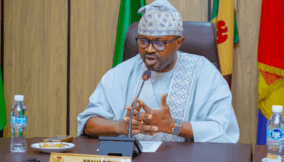
Appearing before the Joint Senate Committees on Labour, Employment and Productivity and Power, Steel Development and Metallurgy, Minister of Power, Works and Housing, Babatunde Fashola, called for understanding amongst Nigerians.
The public hearing was sequel to a motion on the hike in electricity tariff.
While admitting that this is a transition period, the former Lagos State Governor said three-year period is not enough to evaluate the gains of privatisation of the power sector.
Citing the example of the privatisation of the telecoms sector, Fashola said Nigerian consumers would enjoy the dividends of the privatisation of the sector on a long term basis.
According to him, with the Electric Power Sector Reform (EPSRA) Act of 2005, which established the NERC and subsequent privatisation of the power sector in 2013, it will take time for the benefits to be reaped.
“I am mindful of the difficulty that our people face in terms of their need for power. We should give it a little more time to evolve. There is a lot of learning going on there.
“I don’t know if three years is enough but I think that this system can work”, he said.
He cited countries like India, Mexico, China, South Africa and Brazil that have taken similar measures and reaped the dividends much later.
Recall that a month after the tariff increase took effect, power generation crumbled to zero megawatts on Thursday March 31, 2016.
But the minister said to boost the capacity of Distribution Companies, the United States through its Power Africa project, on Monday granted support to discos to the tune of $9million for technical advisory capacity to the discos.
He added: “It is possible that some discos may not have the technical capacity, it is possible that some of them may not have the financial capacity. There were institutions here when those decisions were taken. The Senate should stop lamenting over yesterday and move on.
“In terms of control, we are moving from a period where there was no NERC to a period where we have to create a private regulator just like you have the NCC in telecoms. It will take time; everybody is learning.
“I come from a view that you don’t sanction these people unless you have given them all the tools to work. Government Ministries, Departments and Agencies owe these people. Tariffs were set on assumed level of power supply; government had not delivered on that power supply. So, the fundamental assumptions for performance are also not there. And government can’t deliver that power, partly because of vandalisation of gas pipelines. So, what moral authority do we have if we haven’t kept our side of the bargain? But we are insisting on performance because we have asked them to submit their audited accounts over the last three years. Some have complied; some are yet to do so. The way to rank and then sanction is to set performance target”.
In his submission, the Acting Chairman NERC, Anthony Aka, said the Electricity Power Sector Reform Act enacted by the National Assembly empowers the Commission to increase electricity tariff.
He pointed out that while the Act stipulates that consultations be made with stakeholders before hike in electricity tariff, it didn’t specify which of the stakeholders should be involved.
The increase in tariff, he maintained, will boost investment in the sector.
“If the tariff wasn’t increased, the electricity situation in the country would have worsened. We have given them a cost reflective tariff. They don’t have any excuse not to perform”, he argued.
However, the National Union of Electricity Employees and Trade Union Congress denied being part of any negotiation with NERC on the matter.
Aka also revealed that Abuja Disco was ordered to refund N50million to consumers for over-billing.
Chairman, Committee on Labour, Suleiman Nasif, his counterpart in Power, James Manager expressed disappointment about the current power situation in the country.
To the committees, nothing has changed, as the tariff increase was meant to satisfy some private pockets to the detriment of the masses.
Other members of the committee: Sabi Abdullahi, Clifford Odia, Stella Odua and Mohammed Hassan share the same sentiment.

Join BusinessDay whatsapp Channel, to stay up to date
Open In Whatsapp