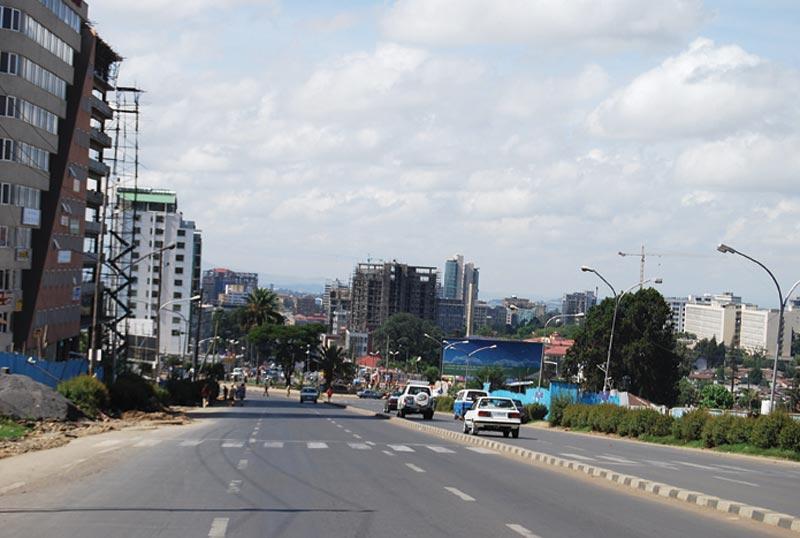
The unattractiveness of Nigeria as an investment destination was reaffirmed by UK’s professional services and advisory firm, Ernst & Young (EY), with its survey findings ranking the $492 billion economy at number fifteen, the lowest in years, and Ethiopia at the top spot, among twenty African countries with alluring markets and growth potentials.
In the 5th series of its “Africa Attractiveness Index (AAI) , EY cited that despite being the most resilient economy in Africa, lower scores on business enablement, governance and human development pillars suppressed Nigeria’s overall ranking.
“Given the scale, complexity and fragmented nature of the African continent, making well-informed choices about which markets to enter when and via which mode will be more critical than ever,” Michael Lalor, EY’s Lead Partner Africa Business Center said.
“We are at an inflection point in terms of the structural evolution of most African economies; decisions made and actions taken now will determine which of these economies consolidate the gains made over the past decade as a platform for sustainable growth in coming decades, and which of them begin to slide backward.”
Despite moving a spot upward to rank at 169 of 189 countries on the 2015 ease of doing business index, Nigeria remains 28 spots below its average rank at 141.88 between 2008 and 2015, BusinessDay investigations show.
Charles Robertson, global chief economist and head of macro strategy at Renaissance Capital, says although the administration of 83 year old former military leader, Muhammadu Buhari, is moving in the right direction to address the country’s ranking on the ease of doing business index, capital controls in the nation remain the elephant in the room, constituting a scare for foreign investors.
“There is likely to be more money from equity investors in Egypt in 2016 than in Nigeria because the Egyptian currency is not as overvalued as the naira,” says Robertson.
“Policy makers in Egypt are not even finished (with currency devaluation) yet because the currency is still too strong, though not as strong as the naira.”
Foreign Direct Investment (FDI) inflow to Africa in 2015 was an estimated $38 billion, down 31 percent from $54 billion recorded in 2014.
As FDI flows dipped last year, African economies bled. Nigeria-Africa’s largest, hobbled off with $3.4 billion, as inflow dipped 27 percent from $4.7 billion in 2014.
Flows into South Africa- Africa’s second largest, also fell 74 percent to $1.5 billion last year, from $5.7 billion in 2014.
“Equity investors have $2 billion less than the $2.5 they might have if they were tracking the MSCI index and overweight Nigeria.
Not only is Nigeria $2 billion short, the $0.5bn left in the country is under threat too,” Robertson added.
Morgan Stanley Capital International (MSCI) only retains Nigeria on a special status, after it considered ditching the country due to government’s capital controls.
JPMorgan Chase & co and Barclays Plc have already dropped Nigeria’s bonds from their local-currency emerging market indexes, due to the inadequate liquidity in the foreign exchange market, which has made it difficult for foreign investors to buy and sell securities, BusinessDay investigations show.
“From an investment perspective, the next few years may be challenging – this is not because the opportunities are no longer there, but rather because these opportunities are likely to be more uneven than they have been,” says Sugar Palanee, Africa markets leader at EY.
“It is now more important than ever for organizations and investors, who sometimes place great emphasis on shorter term economic growth trends, to adopt a granular, fact-based approach to assessing investment and business opportunities for the long-term.”
Though growth in Africa has relatively slowed, two-thirds of Sub-Saharan African economies are still growing at rates above the global average, and will remain the second fastest-growing region in the world for the foreseeable future, after Emerging Asia, according to the EY report.
This is supported by the year-on-year increase in FDI project numbers in Africa in 2015 that occurred in a context in which the total number of FDI projects globally dropped by 5%. In fact, Africa was one of only two regions in the world in which there was growth in the number of FDI projects over the past year.
High growth economies like Tanzania, Uganda and Ethiopia are all ranked in the top 10 in terms of macroeconomic resilience, with Ethiopia at number 1, but are also relative underperformers on other longer-term focused dimensions.
LOLADE AKINMURELE

Join BusinessDay whatsapp Channel, to stay up to date
Open In Whatsapp