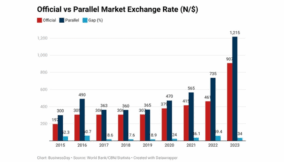
Buhari where is the change?”, “devalue already now!” are just some of several similar sentiments echoed by Nigerians the length and breadth of the country. Consequently it begs the question: is a devaluation of the naira a one drop solution? A panacea of sorts?
The reality is that the continued repetition and dissemination of such sentiments make for a problematic point of departure, especially since several elements perpetuating this assertion are either doing so from a position of ignorance, or are more informed as to the wider ramifications of such a move and are wilfully being economical with the truth.
A key point to note is that macroeconomics, and the numerous theories that underpin its policy decisions are in of themselves indeterminate; effectively one action in isolation or subsumed within an elaborate plan will not guarantee the desired outcome.
The long and the short is that the decision whether to devalue or not is not a panacea to solving Nigeria’s economic problems.
In truncated form, Nigeria’s heavy reliance on its crude oil leaves it vulnerable to exogenous threats like the inevitable volatility of global oil prices and its consequent effect on the government’s ability to fulfil its annual budget without having to resort to IMF/other borrowings.
Any responses to the effect of diversification being a solution to the aforementioned reliance are correct, but in order to reduce importation reliance on consumables such as tomato, sugar, pencils (to name some of a few), it will take a long while to materialise, not least because of the inevitable resistance from vested interests that benefit from the income of imports. Getting to a point of manufacturing enough products/growing enough commodities to satisfy domestic demand will be a remarkable achievement, let alone producing surplus for exportation.
The naira shouldn’t be devalued because it will exacerbate the existing issue of inflation which at its most recent estimation (March 2016) was 12.8%, up from 11.4% the previous month. Due to the squeeze on dollar availability and its adverse impact on the private sector, if Nigerians think they have it bad now due to limited jobs and slow wage growth rates, they’ve seen nothing yet. What is likely (but not 100% certain) is a devaluation will beget stagflation where by a concomitant rise in inflation and the unemployment rate occurs. This should be anathema to the regular Nigerian.
The only circumstances under which a devaluation can benefit a country is where the country is either an exporting-based economy, or has been building up capacity for exportation. In such an instance, a devaluation of its currency, which consequently makes exports cheaper, can precipitate greater growth, increased number of jobs, greater business/private sector investment owing to healthy market sentiment and overall, a buoyant economy. Unfortunately Nigeria is not at this stage present, thus it cannot expect to reap the aforementioned benefits from an imminent devaluation.
In closing, it is recognised that a devaluation will predominantly benefit the foreign businessmen and women in Nigeria who benefit from exporting their produce, owing to the aforementioned cheaper exports, as well as the few indigenous businesses/investors who similarly stand to benefit. However, make NO mistake about it, the majority of regular Nigerians will suffer as a result. Western and external pressure to devalue mostly suits foreign interests and as such Nigerians should be reticent in co-signing such a move. Although this piece is not necessarily an endorsement or condemnation of Buhari’s tenure hitherto, he is very right to resist such sustained pressure to devalue the naira, and consequently can be considered to be demonstrating strong leadership credentials thus far in maintaining his stance.
Harold Eluma-O’Brien

Join BusinessDay whatsapp Channel, to stay up to date
Open In Whatsapp