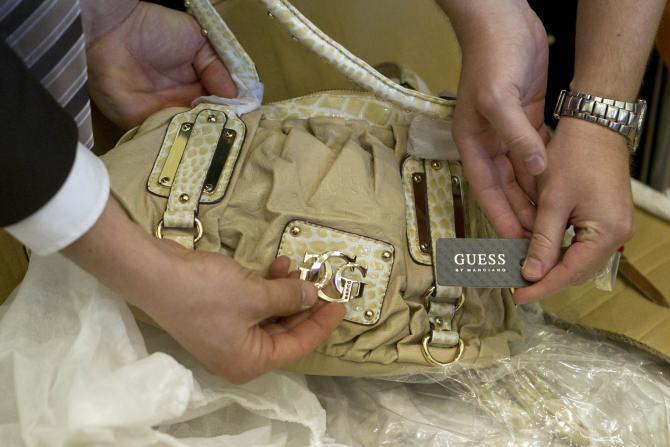
Imports of counterfeit and pirated goods are worth nearly half a trillion dollars annually, or 2.5 percent of global imports. The US, Italian and French brands are the hardest hit, and many of the proceeds go to organised crime.
This is according to a new report by the Organisation for Economic Corporation and Development (OECD) and the European Union’s Intellectual Property Office (EUIPO).
Named “Trade in Counterfeit and Pirated Goods: Mapping the Economic Impact Findings” the report made these findings by using statistical analysis and extrapolating from a global dataset of almost half a million seizures from 2011 – 2013. The report comprises all physical goods, which infringe patent, trademarks and design rights, and pirated goods that breach copyright.
The goods analysed consist of machine parts, chemicals, handbags and perfume. Footwear appears to be the most infringed. Counterfeit goods can endanger lives – auto parts that fail, pharmaceuticals that make people sick, toys that harm children, baby formula that provides no nourishment and medical instruments that deliver false readings.
The report estimates that international trade is “controlled” by counterfeit and pirated goods, and also outlines that in 2013 the international trade in fake goods represented 2.5 percent (total imports in world trade in 2013 was $17.9trn) of world trade or “as much as” $461 billion.
Fake imports into the EU amounted to a maximum of 5 percent of all imports in 2013, which was as much as €85 billion ($96.3bn).
Many brands are hit by counterfeiting and piracy, although Ray-Ban, Rolex, Nike and Louis Vuitton “seem to be more intensely targeted,” according to the report. Chinese companies’ IP rights have been “frequently infringed,” the report said.
Countries hit hardest by trade in fakes are: United States, Italy, France, Switzerland, Japan, Germany, United Kingdom, Luxembourg, Finland, Spain, Belgium, and China.
Most of the fake goods originate from China, Turkey, Singapore, Thailand, India, Morocco, United Arab Emirates, Pakistan, and Egypt.
Doug Frantz, deputy secretary-general at the OECD, said: “The findings of this new report contradict the image that counterfeiters only hurt big companies and luxury goods manufacturers. They take advantage of our trust in trademarks and brand names to undermine economies and endanger lives.”

Join BusinessDay whatsapp Channel, to stay up to date
Open In Whatsapp