It came as a surprise to many a few weeks ago when a gender equality bill was voted down by the Nigerian Senate (which comprises 7 women and 102 men).The bill, which sought to guarantee equal rights in education, marriage and inheritance, was rejected for not being ‘part of our culture and tradition’ and‘unNigerian’. The components outlined in the bill are fundamental human rights enshrined in the Universal Declaration of Human Rights – articles 2, 7 and 8 and embedded in the Nigerian constitution. The need for further outlining the rights of women and gender equality should be a pressing issue for Nigeria. Approximately 30% of women experienced physical or sexual violence in 2013. Furthermore, child labour and child abuse were highest among women (61.8% and 75.7% respectively of all children forced into labour or abused).
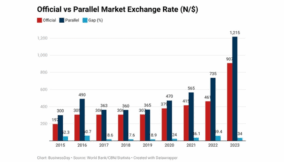
This bill comes at a critical low point in our country’s economy. There is a major economic crisis compounded by rock bottom oil prices (petroleum exports account for 90% of Nigeria’s export revenue). The Naira has plummeted by 118% against the dollar in the past 12 months. We are facing consumer price inflation driven by foreign exchange restrictions and high and fluctuating parallel market foreign exchange rate. Beyond the oil-dollar situation, over 70% of Africa’s largest population live in poverty. Youth unemployment is at an all-time high of at least 50%. It is at this critical standpoint that Nigeria voted against a bill – a move that threatens to leave half its population – 80 million people out of vital sectors of the society and economy.
If gender equality as a human right is indeed considered ‘unNigerian’, the economic argument for gender equality may be more effective as a first step in the broader rights based struggle. The economic argument for gender equality is strong and well recognized globally. The World Bank considers gender equality as smart economics. IMF considers gender equality “an economic no-brainer”. The fund says getting more women into well-paid jobs raises overall income for countries and reduces income inequality. According to the Food and Agriculture Organization, giving women the same access to farming resources (including land) as men could increase agricultural output in developing countries by up to 4% and lift over 100 million people out of hunger. It is worth noting that one of the clauses in Nigeria’s rejected bill was on widows having equitable share in the inheritance of her husband’s property – something that currently does not happen in most instances.
In concrete terms, if women in Nigeria were able to participate fully in the economy (equal to men), GDP would grow by $258 billion dollars by 2025, or approximately 50%.This works out as an average of $7 billion dollars per state. Such a significant growth in the national pie will lead to follow-on effects at the state level – larger federal allocations, and new investments and business growth which will drive internally generated revenue. Given patchy government tax collections, downgraded GDP projections for 2016, and reduced state allocations in line with the stagflation currently experienced, including women could be a game changer for Nigeria’s economy. Combine this economic impact with the impact of women’s inclusion in political participation and decision-making – when women have more than 30% of the seats in political bodies, countries are more inclusive, egalitarian and democratic – and it is clear that passing the amended bill is necessary for Nigeria’s growth.
So, how can we ensure the gender equality bill passes the next time? To reap the benefits of gender equality, advocacy efforts to support state governments must be accompanied by grassroots efforts for change to be sustainable. There has been much back and forth on why the bill failed. Perhaps it was the packaging of the bill as being specifically about gender equality, rather than human rights more broadly. However, this event marked a clear need for change at the highest levels as well as at the grassroots. Where women’s organizations such as Project Alert, Country Women Association of Nigeria (COWAN), Federation of Muslim Women’s Associations in Nigeria (FOMWAN) and others have been operating for decades, continued government-level advocacy at the state level requires further investment. While perhaps controversial, Nigeria may be too large to start with country-wide advocacy efforts. States have autonomy and will in the end execute National and state policies—so we should make the lives of women living across the 36 states more equitable, working with those interested in reaping the economic returns to equality and upholding human rights in addition to those states that are led by progressive Governors.
At the state level, advocacy efforts must have strong government commitment from state leadership, be well resourced, ensure partnerships with other ministries (in addition to the ministries of women’s affairs.) Rwanda is a great example of how this can work to transform a country. In 2015, Rwanda was ranked 6th globally on an annual ranking of the world’s most equal countries for men and women. In Rwanda, presidential buy-in for gender equality is extremely high. As a result, the ministry for gender and family promotion is well-resourced. The national gender policy also ensures that gender is mainstreamed in all sectors (as gender is a cross-cutting issue in all ministries, not just in the gender ministry – agriculture, land, labour etc.) This can be contrasted to the Lagos State Ministry of Women’s Affairs and Poverty Alleviation (MWAPA) which is mandated to implement gender policies and realize the state’s will to enhance gender equity and women empowerment but is severely under-resourced. The Ministry’s budget spending in 2014 was 1.37 billion Naira, representing less than 3% of the States’ total expenditures, compared to the Ministry of Waterfront Infrastructure Development with 13.6 billion, the same year. Across all state ministries, Women’s Affairs and Poverty Alleviation Ministry has one of the lowest budgets compared to other ministries.
At the grassroots level, in working with rights based and empowerment organizations and cooperatives such as Project Alert, Country Women Association of Nigeria (COWAN), Federation of Muslim Women’s Associations in Nigeria (FOMWAN) and others, local communities need to be educated about the bill and mobilized to support it. First it’s about educating the office holders and community members, particularly men, women, teachers, health care workers, and religious leaders about the potential impact of gender equality on their lives. Next, it requires translating this information into political and electoral power. One avenue may be to develop scorecards on the candidates who have the best track record on gender equality. While the electoral process is complicated and has many issues, providing even this level of information would elevate the discussions around elections beyond party and tribe, which current dominate.
With time, it’s about changing the level of engagement at the highest levels. Women’s involvement in decision making is very limited. For example, only 6.4% of representation at National Assembly is held by women, against 93.6% for men. At the local government area, women hold only 11.5% of leadership positions.
Nigeria cannot afford to further constrain the growth of half of its citizens if it wants the country to progress economically, socially and politically.
Nneka Eze and Tania Beard

Join BusinessDay whatsapp Channel, to stay up to date
Open In Whatsapp