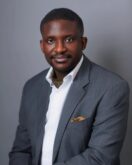
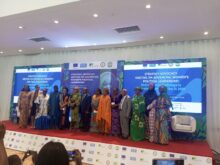
OBAFELA BANK-OLEMOH, special adviser on education to the Lagos State governor, speaks to CHARLES IKE-OKOH on the state government’s unique proposition to change the state’s education landscape. The chat took place in Mauritius during the grand opening of the African Leadership University.
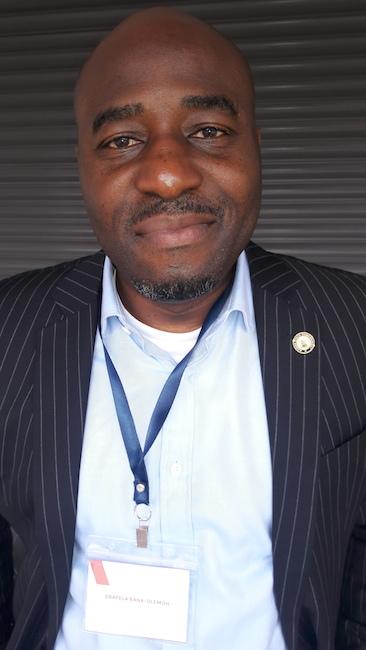
How did you first make contact with the African Leadership University you seek to replicate their model here in Nigeria?
It all started in November when Graca Machel and Fred Swaniker came to Lagos and met with His Excellency, the Governor of Lagos State. I was also part of that team and at that meeting they shared with us the vision of the African Leadership University (ALU) to spread all around Africa and also to set up a campus in Nigeria. They picked Lagos as where they will like to put the campus. The governor was excited about that and promised his full support for that.
As a follow-up to that, we have been working together. I was invited to come to Mauritius for this event and that’s why I am here today. It has been quite enlightening to see how far they’ve come. I think it has been gratifying to meet the Nigerian contingent, 25 of them. They are all here on full scholarship. Most of them came in here from Nigerian universities and the difference for them has been unbelievable. The way their minds have changed, the learning outcomes they are going through, I think it is something that has been enlightening. Engaging with them and the feedback from them has been very refreshing. That just speaks to the fact that education is changing. The structure that brought us to where we are today needs to change with the global economy, where every citizen is not contesting for economic opportunities just within their boundaries but globally – across Africa, across the world – that means that our educational system must produce global citizens that can compete across the world.
Also enlightening is to see the way they run their classes where you see students working in groups, challenging views, working on projects and they spend four months in the calendar year working in a corporate organisation. With this system you are going to end up with well-grounded graduates that are ready to work.
For us, as country and as a state, I think it is very critical. All said and done, I think it is a great opportunity for Nigeria and for Lagos, whereby we are able to facilitate a campus like this in Lagos, Nigeria.
One of the things I love is the diversity. I have met everybody on this trip. I met a Ghanaian, someone from Zanzibar, Swaziland, Tanzania, Algeria and Tunisia and it is wonderful. It speaks to the fact that for us to rescue our continent it must be done by Africans. And for you to want to do it you must care about your continent. This helps to bring different people together, to understand our differences and ultimately show that we don’t have differences and that we have more in common, more things bring us together than separate us.
Speak to us on the type of impact this type of education will make in Nigeria generally. Will it make other institutions rethink their curriculum and their processes if eventually ALU comes to Lagos?
For me, why I say that the Lagos State government is very passionate about this is because we need to change the way we look at education totally. The process we have now needs to change. People are reimagining and rethinking education. Yes, we have challenges in our system as it is; nevertheless, we need to start asking ourselves, what are the things that we need to be doing right now to be ready for the next ten years?
I think a school like ALU being in Nigeria will speak to that. One, it changes the landscape, it makes all other universities, federal, state and private, ask themselves what they can do differently. And that is what we need.
We need to keep challenging ourselves to see what we can do differently. Ultimately, who benefits? Nigeria benefits because the more leaders we create, the more well-grounded graduates we have, and the better for this country. The more thinkers we have, the better for us. The more problem solvers we create, the better for the country. More problems are solved as we create this class of people. A programme like this ultimately will give us problem-solvers and that is what we need. We need people that don’t talk about problems but solve problems. I think that is critical that it will change the system, challenge the system and what we have already in our tertiary institution space and force everybody to begin to do things differently.
What is the motivation for the Lagos State government to bring this type of education to Nigerians?
Lagos always tries to lead and innovate. Once it’s done, other states pick it up and that’s good for Nigeria. Lagos is uniquely poised to do that.
Now, one of the things that His Excellency has charged us to do with education in Lagos is to increase access to knowledge for the average Lagosian and the average Nigerian and to do that we need to think outside the box. As a state this fits into what we are trying to do and that is why we are passionate about it. What are we trying to do? We are working very hard to improve on our infrastructure because that is key, but every government does that every year. But what are we going to do differently? One, we intend to do a lot of work in our library space. People ask, do we still have libraries? Yes, we still have libraries. Over the next one year to two years, we want to be able to say that the state libraries and the libraries in Lagos are the best not only in Nigeria but in Africa and which can compete with any library in the world and we are succeeding in that.
We have done something in Agege. Right now if you visit our library in Ilupeju, it’s being totally redone by Custodian and Allied Insurance. We seek support from the private sector to adopt a library and what we have done as a state is to give them minimum standard to work with, which must include modernizing the infrastructure. It includes changing the facade, the toilet, books, building solar panel and inverter in the place; there must be 24-hour internet system in that place.
So that is what you are going to see at the Ilupeju Library when it is completed. Work is ongoing. It will be finished this month. We are replicating that across all our libraries. GTBank has adopted the library at Herbert Macaulay (Yaba, Lagos), FCMB is taking up the library in Agege. We are talking to a lot of corporate organizations to also take up all the libraries. So we are hoping that in the next one year plus you are going to have world-class libraries in every part of the state. So that’s about increasing access to education.
But we are not stopping there. We are taking that into our public schools too. We have a project called ‘Project 350’, which aims at encouraging private sector to pick up libraries and ICT centres in our public schools. We are already successful in that aspect also. ARM and PwC have taken up that challenge. In the next three years we want to say that over 360 libraries and ICT centres in our schools are world-class. That is all about increasing access to knowledge.
We also want to put knowledge at the finger-tips of every Lagosian, wherever they are, regardless of where you are from, your economic background, it doesn’t matter. We are trying to say, can we put the curriculum from Primary One to JSS 3 online? Wherever you are and you are stuck and can’t solve your algebra question, your parents can’t help you and you can’t afford a lesson teacher, just go on to the website using your phone. Go there, click on Primary Six, click on improper fractions, there is a video there to take you through. Those are the things that we are thinking and those are things that we are going to do.
The ALU model also looks into that. Ultimately, we are working very hard to reinvent LASU and LASPOTECH, we are restructuring our two colleges of education; the government has approved the restructuring of two colleges of education. It is like you said, what government should do is to create a level-playing ground for everybody, raise the standard. As far as government is concerned, as long as the standard is raised by one school, it forces everybody to climb up and the average Lagosian benefits.
Let’s talk about university accreditation. Why would the NUC foot-drag on granting accreditation to institutions like ALU? Is it the culture of rigidity?
I’ve been speaking to ALU and Graca Machel, the widow of the great Nelson Mandela who is also involved in this process. The next step is accreditation for ALU and I’m confident that they will get accreditation. I don’t think anybody will say ‘No’ to a model like this.
The Lagos State government is committed to assisting the best way it can to see that the process is fast-tracked. ALU is willing to go even as far as bringing key officials within the NUC to Mauritius to see what is being done and meet with the Nigerian students and contingent and see how their lives have changed. So that is the next step – that’s the major thing we need to do. We will be working with them to see that we achieve that over the next month. I think we are all partners in this, BusinessDay and Lagos State government and the Federal Government. Because ultimately, Nigerians will benefit and if Nigerians benefit, that is progress for our country.
If ALU comes to Lagos, where will it likely be sited?
The key thing for us is once they are in Lagos, they are in Lagos. It means that Lagosians, Nigerians have access to quality education. One thing we want to do in Lagos is promote educational tourism in Lagos. We have University of Lagos, LASU, LASPOTECH, and YABATECH, but we want more tertiary institutions in Lagos. We want to create an environment for them to come in and set up in Lagos. My job in education for Lagos is to create an environment where anybody that wants to do anything in education does it at a standard that is world-class – because we have to ensure that we are world-class. Nigerians deserve world-class institutions in this country.
Let me say this. Out of a budget of N600 billion plus, over 17 percent of that went to education, the highest ever anywhere in this country. That’s huge. And what we try to say and do? We are speaking to the issue we need to speak to, we are speaking to the innovation of our schools, our school libraries; we are speaking to greater access to knowledge, to online, to using technology and to bringing education closer to every Lagosian. We have a quality assurance unit in the state that is focused on quality assurance of all our schools, both private and public. We know that these are critical things that we must do.
Training impacts positively and hugely on the students; how much of your budget goes into research funding on campuses?
What we are trying to do is to bring alumni associations to be more involved in schools. It is critical and that’s a resource that we are not using well. In the US, for instance, schools are funded through the alumni endowments. Graduates of the schools leave their fortunes to the schools. We need to start getting to that level. There is a conscious, deliberate effort to do that. We want to do that with LASU. We are working on a new project which I can’t disclose at the moment. It is essentially about how we can bring the school alumni closer to the school. There is funding there. We are looking at two new models and setting strategy to crack the models. We know them and we are going to use these resources to solve these problems – in the area of ensuring that there is more funding for research, more funding for infrastructure, more funding for ICT.
CHARLES IKE-OKOH

Join BusinessDay whatsapp Channel, to stay up to date
Open In Whatsapp