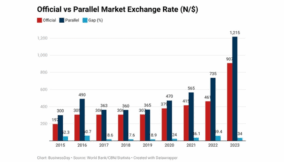
This is an appropriate time to declare an economic state of emergency on cattle production industry in Nigeria. The impressions it gives do not reflect the truth and realities on the ground. The industry has not exhibited signs of life in the past three decades. Its existence did not manifest any attributes of growth. We cannot, as a country, account for the birth rates, death rates, prevalent sickness, production (meat, milk, hides and skin), sales, slaughters and population of those involved in the industry. We can only depend on ‘guesstimates.’ As at 2007, a report had it that Nigeria was a potential market for 1.3 million tons of milk valued at about $3 billion. Dairy imports were valued at $275 million in 2006. For basic discussions, assuming the population is held static since then, the demand for dairy products remaining inelastic, we can assert, with a naira-dollar exchange rate of 200, that the dairy imports are currently N60.5 billion, while the potential (that could create opportunities) stands at N660 billion.
But our existing cattle producers stand nowhere near meeting even an infinitesimal proportion of this potential, let alone contributing anything meaningful to reduce the huge import bill on dairy production under the current management system for cattle. Our animal breeds are presently unable to produce any substantial volume of milk to meet a significant proportion of our national requirement. Nor do they compete well in terms of fertility. These pose challenges while also presenting myriads of opportunities. But they require that some basic foundations be laid, and very urgently through various interventions such as upgrades in breeds, improved nutrition and better health services to ensure better performances. Recently, Governor Umar Ganduje of Kano State unveiled his programme of artificial insemination in cattle, to increase and improve production within his domain. That was a commendable start, which needs to be taken further, ensuring it is result-oriented.
Nigeria needs to cut down on annual dependence on importation of dairy products. The major dairy-related companies in Nigeria, including those in operation for upwards of four decades, are wholly import-dependent. They need to be made to commit to local production as opposed to importing raw materials and simply packaging within our country. They should be made to evolve ways of producing a given percentage of their installed capacities locally on an incremental basis over a period of years. For instance, they could be tasked with producing 10 per cent in the first year, 20 per cent in the second year, 40 per cent in the third year, 60 per cent in the fourth year, 80 per cent in the fifth year, and zero importation in the sixth year, with full production from home source.
The survey conducted under the Resource Inventory Management (RIM) in 1992, gave the estimated nationwide population of cattle in Nigeria as 13.885 million (or approximately 14 million). Without prejudice to any of the issues relating to the statistical methods involved, and the obsolescence as a result of the time lag since then, this can be regarded as the most authentic report on livestock population before and after 1992. Twenty four years after, Nigeria has not generated any other official figure. Now, we could have some ideas, using the 1992 figure for the present analysis, ignoring its obsolescence and the human demographic dynamics since then, holding other variables constant. If Nigeria has 14 million heads of cows (young, old, males, females, healthy or sick) for a median value of N60,000 per head, we should have N840 billion worth of industry, from cattle alone, ignoring goats and sheep. But this does not show anywhere in Nigeria’s economic radar and is insignificant compared to Brazil’s cattle population in excess of 200 million.
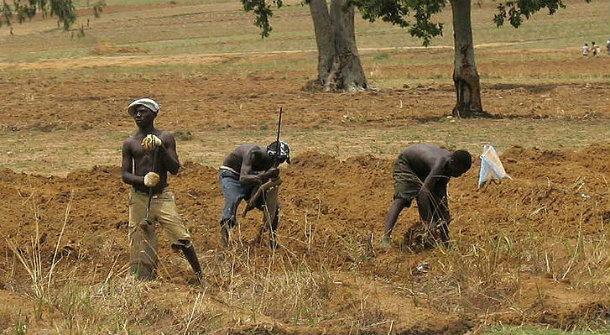
The traditional holders of this enormous wealth (if indeed the figure was anything to go by) are not known to the tax administrators, investors in the food industry, bureau of statistics, researchers, do not feature in the formal sector, and the growth rate or decline rate of their industry cannot be accounted for. Because they are constantly on the move, no single state can lay claim to the ownership of their stock (with the attendant possibility that their stock could be a subject of duplication in population records). A clear value chain is yet to be established for the cattle industry, as the nomads move live animals instead of moving meats. It is hard to subject animals on the move to agricultural insurance, as records need to be kept and these records need to be verifiable before claims can be settled if need arises.
A clear value chain is yet to be established for the cattle industry as the nomads move animals instead of meat. It is hard to subject animals on the move to agricultural insurance, as records need to be kept. These records need to be verifiable before claims can be settled if need arises. Disease transmission is a natural consequence of their uncontrolled movement, thus making disease control a difficult task. It is therefore difficult to ascertain the national health status of these cows, especially as they also move freely through the borders between Nigeria and neighbouring countries. For a country that desperately needs to generate funds from diversified sources, it is time to bring cattle industry under scrutiny and explore ways of deriving revenues from the cattle rearers.
The vulnerabilities of these cattle rearers usually escape official attention. The environmental temperatures, rainfalls, disease-causing agents, rustlers, etc, are hardly accounted for in an industry presumed to be of multibillion naira worth. This calls for urgent policy and institutional changes that could properly position the venture as a business rather than a product of bequest or as a way of life. The physical capital inherent in cattle industry needs to be put in the appropriate context for the benefit of the rearers, the consumers and the government.
Professionals are not involved in most of the activities of the nomadic cattle rearers as the animal owners prefer to do things their own ways. They buy drugs and vaccines in the open markets and administer these by themselves. They sell off sick animals to butchers for salvage slaughter rather than treating them. They sell pregnant animals for slaughter, often due to their inability to determine whether or not such animals are pregnant, a situation that could be prevented under intensive rearing. They employ crude methods in feeding, housing and caring for their welfare. No law appears effective in keeping these farmers bound to any standard operating procedure. This might explain why the opportunity for Nigeria to export beef to Europe was lost to Botswana at the peak of the Mad Cow Disease in the late 90s.
Sadly, a few known commercial cattle farms are not doing too well to justify their existence, especially as the farm owners did not make their money from farming but set up herds as mere pastime. Apart from the owners’ mindsets and business approaches, the macroeconomic factors (importation policy) are major hindrances. Many of them are known to indiscriminately import foreign breeds of animals into Nigeria for cross-breeding with the local breeds, a situation that has created a problem of unreliable breeding database, or none at all. To end the constant nuisances posed by nomads, governments at the federal state and local government levels have to act in cooperation. What is the big deal in creating a business around cattle rearing? Setting aside areas where grazing fields, paddocks and housing for the animals is an urgent task that must be done. Doing it is, however, desirable and possible as means of dousing social tension, creating opportunities and producing animal food in a modern and sustainable way.
Olukayode Oyeleye
Dr. Olukayode Oyeleye is the media adviser to the Minister of Agriculture

Join BusinessDay whatsapp Channel, to stay up to date
Open In Whatsapp