

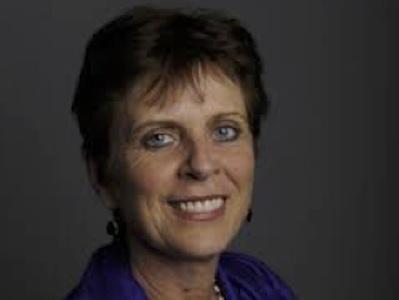
Just days into what is possibly the biggest job in British academia, Oxford university’s vice-chancellor finds herself in the midst of national controversy. The storm over whether the ancient seat of learning should still honour the Victorian colonialist Cecil Rhodes, whose statue adorns the frontage of Oriel College, is something Louise Richardson would rather not spend too much time talking about.
“This whole discussion is a distraction from the much bigger issues,” she says as she tries to steer clear of a matter that feeds into a broader debate about whether campus life is becoming overly sanitised. “I’ve got a strong record on universities as places where ideas, objectionable ideas, need to be heard and need to be countered.”
Rhodes, the founder of Rhodesia and De Beers, was a major benefactor of Oriel and endowed the Rhodes scholarships enjoyed by former US president Bill Clinton and generations of other bright overseas students. His detractors focus on the darker side of his colonial exploits, such as his brutal exploitation of African workers .
“What’s positive about this whole Rhodes Must Fall movement is that it’s drawing attention to our history,” she ventures. “We need to confront our history, we can’t pretend it didn’t happen and I think if this encourages students to go to the Bodleian [library] and look at the archives of the Rhodes period, there are some fabulous archives there both about colonialism and about the contemporary anti-Rhodes movement when he was alive.”
An outspoken opponent of the second Iraq war, Prof Richardson attributes her coyness today to a desire not to inhibit a free and open debate on the matter, as well as an unwillingness to be divisive so soon after her formal installation in the job on January 12.
Later in the week, though, she drops the caution and calls for the statue to be left where it is, albeit with the addition of a plaque to explain the context.
The first woman to head the university in its more than 800-year history, Prof Richardson faces much bigger issues than old statues in her new job. Her “passionate commitment” to education, to opportunity and social mobility, and to freedom of expression and inquiry might ring hollow coming from anyone else. But her own rise from humble origins in County Waterford in Ireland to one of the most prominent roles in British public life suggests that she means what she says and that those are values she will promote.
The only one of seven children in her family to attend university — Trinity College Dublin — Prof Richardson’s career began to flourish when she gained a scholarship to study at the University of California, where she gained an MA in 1981.
A political scientist, her academic specialism in the study of terrorism helped her rise to prominence in the US after 9/11 while at Harvard. By 2009, she was back in the British Isles, at the helm of the University of St Andrews in Scotland, where she was also the institution’s first female vice-chancellor.
Getting this job at Oxford was the one thing, she says, that prevented her from returning to the US after finishing at St Andrews. She is here for at least the next seven years, though her office still has an unlived-in, Spartan feel in a concrete office block that would look more at home in cold war East Berlin than among the centuries-old pale yellow stone buildings typical of the city. Prof Richardson anticipates that her legacy will be to have “made the institution a bit more flexible, bit more agile, less bureaucratic”.
One of the things that St Andrews and Oxford have in common aside from a long history is “being associated with privilege”, she says. Improving access to her new university will be a priority, although she says she has not encountered any resistance from colleagues when it comes to opening the doors wider to students from deprived backgrounds.
“There’s a great deal more we have to do and I speak as somebody from a background where most people didn’t go to university,” she says, although “attracting talent” rather than social reform seems to be her motivation.
The university says that about 34 per cent of applicants that it accepts from the UK are from target schools or target areas, up from 31.5 per cent in 2010. Prof Richardson says that for many children “it’s too late” for Oxford to intervene near the end of their secondary education. However, as with the controversy over the Rhodes statue, she does not want to be too categoric so soon in her post. “Of course we can do more and we will do more but I would say — I’m here in week two.”
Financially too, Prof Richardson has set her sights on improving Oxford’s standing. Here, she looks across the Atlantic to where elite US institutions outmuscle their British counterparts often by a ratio of 10:1. Oxford’s endowment fund is currently at about £2.3bn, although its semi-autonomous colleges together may have about as much again.
Given the international competition for students, staff and facilities, Oxford intends to raise its game and, while unlikely to reach the level of Harvard’s $36bn endowment fund, join the US institutions in the $20bn-plus league. This is not a “Richardson declares she is going to raise $20bn”, she adds, but more a reflection that Oxford will “need to be able to compete very seriously at this level”.
As these institutions become global super brands, does she worry that money and market forces are corrupting or distorting the essence of education?
“I dislike the marketisation of education . . . this sense that I’m paying so much in fees therefore I’m a customer. I don’t like that. I don’t think we have that problem at Oxford, but I’ve seen the incipient growth around the country of this attitude . . . We’re not a market.”
All of which puts Prof Richardson — and many others at the helm of Britain’s universities — on a collision course with the UK government, whose green paper on higher education reform seeks to create a clear distinction between research and teaching and to give students customer-like powers over their lecturers. Her concern arises not because she thinks Oxford students are dissatisfied with the quality of teaching, but because of the risk that any such reforms might impose “yet another layer of bureaucracy” and introduce simplistic metrics to compare performance.
There are many changes that Prof Richardson would like to see take place now that she has the “amazing opportunity” of running Oxford, ranging from more attractive immigration policies to lure and retain students in the UK, to promoting a more nimble decision-making process throughout the university’s labyrinthine structures.
She gives the sense that, despite being in a bigger job, she is not going to shrink from tackling the sexism and “antediluvian views” she sometimes encountered at St Andrews. And if there is one thing she hopes to achieve during her time in Oxford, it is to instil greater ambition among women.
“I’ll be honest; it would be disingenuous to deny the symbolic significance of the appointment of a female vice-chancellor. I really hope that will encourage our students and our young academics to be more ambitious.”

Join BusinessDay whatsapp Channel, to stay up to date
Open In Whatsapp


