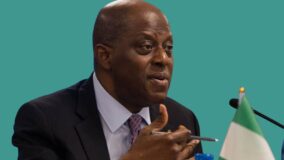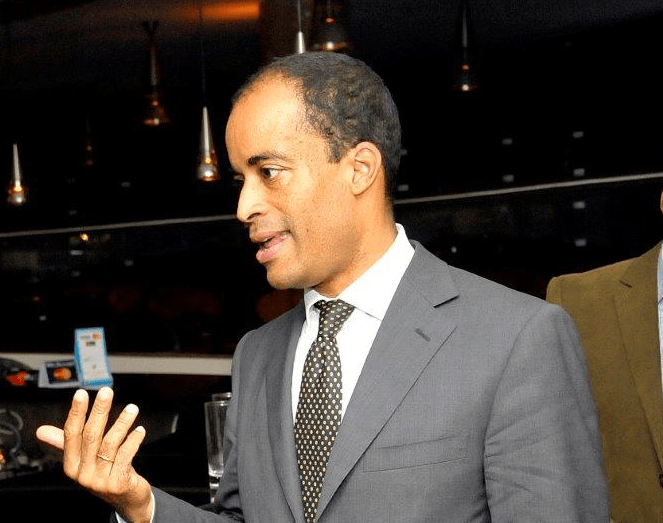
Phillip Ihenacho, the CEO of Seven Energy, the indigenous integrated gas development, production and distribution Group, spoke in an interview on the side line of Nigerian Economic Summit Group (NESG) 2015 on how to tackle the challenges of gas delivery in Nigeria in order to drive Nigeria’s economic growth.
Nigeria is endowed with gas but utilisation of this resource has been slow. What are the challenges and hurdles that Seven Energy has faced in pursing the vision to monetise Nigeria’s gas resource?
There have been many challenges and hurdles but we think that the effective utilisation of Nigeria’s large gas reserves is a good problem to have. Nigeria sits on an incredible 179 Tcf of gas (2013), the largest proved gas reserves in Africa. Unfortunately, when it comes to utilisation and production, Nigeria is lagging behind with 14 percent being supplied to the domestic market, approximately 38 percent exported as LNG, 24 percent flared and the remainder re-injected, used as fuel, or processed into liquefied petroleum gas or gas liquids.
The initial challenge that we encountered is the necessity for long-term infrastructure. This requires long-term investment and convincing investors that the investment in Nigeria’s gas infrastructure will pay off.
The second challenge we faced was to develop several reliable off-takers and what they are willing to take and pay. The investment in infrastructure and the gas off-takers go hand in hand, because investors need to invest in a commercially viable operation.
As 70 percent of demand for gas in Nigeria comes from the power sector, we need to see this sector commercialised with commercial electricity tariffs that bring money into the system. However, Seven Energy does not rely solely on the power sector. We currently supply gas to multiple customers such as factories producing cement and fertiliser.
The major challenge for Seven Energy and the country is the success of the power sector. This is crucial for Nigeria’s economic development. We are hopeful that the current government will build on from power sector reforms of previous governments and establish willing buyer/ willing seller commercial tariffs to ensure that the system is monetised.
How do you address the social issues in the pricing mechanism of gas?
Actually, the social impact of a commercial and reliable gas supply is very positive. It means that remote areas and villages could be electrified in the future. People in these remote areas are currently using firewood or small diesel generators and as we know, diesel is about four times more expensive than using gas. We see this on a macro-scale with our industrial customers, where we are significantly reducing their cost of energy by supplying gas as opposed to diesel and other substitutes. When a customer pays for gas, they are paying in part for the gas infrastructure such as pipelines that is required to connect their location but even when you factor that cost in, it is still far lower than burning diesel. If more independent operators were given access to gas acreage in order to develop gas businesses to supply the domestic market, this will have a big social impact on Nigeria. As the gas price becomes more commercial, the IOCs too will come to the party. We are in an environment that is blessed with plentiful gas and over time, provided a commercial price is paid for the gas, the supply will come to meet the demand.
We have seen an increase in gas prices yet we still have gas power plants that are idle without supply. What is the problem?
If there is a power plant that is willing to pay a commercial price for gas, the first thing that we consider is its location; Seven Energy will then have to drill for gas, process it and build a pipeline to connect the customer. This takes time and money. We are seeing the incentives now but the resulting development does not happen overnight. What you are seeing are independent companies like Seven Energy and Seplat investing and developing gas infrastructure for the future but all of these initiatives are based on commercial viability. In the past, IOCs made investments in gas infrastructure with the objective of ‘good citizenship’ and the associated tax benefits that came with that. What we want is for the gas infrastructure industry to become profitable on a stand-alone basis, which is starting to happen. Companies will then start investing in gas infrastructure and distribution as a commercial business not just for good corporate citizenship purposes. We need companies that are specialist in developing gas infrastructure and transporting it which is a different animal from upstream exploration companies that we are used to seeing in Nigeria. The increase in prices is yielding results, but building gas infrastructure takes time.
How much has Seven Energy invested in gas infrastructure and over what period?
In our primary area of operation, we have invested over $800,000,000 in gas infrastructure. That is in the area between Port-Harcourt and Calabar and up to Aba. We have invested in pipeline infrastructure which, once we complete the next phase, will mean we have a pipeline network of over 250 km and a processing plant that can process in excess of 200 million standard cubic feet a day of gas. This is a substantial investment and by next year, we will have invested over one billion dollars. It is not easy to raise capital for infrastructure and the success of our business is essential for Nigeria to continue to attract further investment in the sector. Success will bring further capital.
We have invested on the basis of long-term off-take agreements with Ibom Power, UNICEM – the Lafarge cement factory and Calabar NIPP. These agreements are 10-20 years in duration. Ideally these contracts are backed up by credit enhancement or guarantee, for example the World Bank is working with us on Calabar NIPP.
I believe that Nigeria needs to unlock money for the private sector and this can be facilitated by working with organisations like the World Bank and African Development Bank to enhance credit and provide some sort of guarantee to create credit worthy long-term contracts.
As an operator in the gas sector, how do you deal with pipeline vandalism?
The building of gas infrastructure is a long-term investment; at least a 20 year investment. The importance is the long-term relationships that you develop with the communities where you operate. We focus a lot of our time on building these partnerships and we employ as many people as we can locally.
We also focus a lot of attention on education around the dangers of tampering with a gas pipeline. The gas pipelines that are vandalised quite often are vandalised out of error. We have been successful in protecting our infrastructure but not through around-the-clock security but through the support of our right-of-way communities and community education programmes.
Fiscal terms for gas were embedded in the Petroleum Industry Bill (PIB). Should the government remove them from the PIB and pass them separately?
The PIB was incredibly ambitious and it was criticised from many angles due to its scope. It might be a solution to take out elements and deliver them as standalone pieces of legislation. I believe that the new government is looking at ways of doing that. I think there is a real sense of pragmatism going forward and I hope that is the way things go.
What incentives can the government give to help scale up existing players in the gas sector and encourage investors?
There are a few key things they can do. Firstly, the Production Sharing Contract (PSC) terms for gas need to be made clear. Favourable fiscal terms are important to encourage investors and incentives are required here.
Secondly, to make the gas industry successful, the power sector needs to be bankable and commercial. The government needs to make sure that the power sector is a financially viable and that the power generating companies have sufficient revenue to pay for gas supply. That is fundamental. The government is moving in this direction but it needs to be a key focus and the entire value chain needs to be critically assessed.
The third thing the government could do is to try to encourage the sale of assets and the redistribution of held assets that are not being developed, to companies that are willing to invest. For example, in the Gulf of Mexico there is a licensing round once every six months or at least annually. The development of an open and transparent bidding and licensing process that happens on a regular basis would make a big difference.

Join BusinessDay whatsapp Channel, to stay up to date
Open In Whatsapp