It is another Monday morning. And Nigeria continues to struggle with its democracy. The struggle, if we may reiterate, is an endless phenomenon. What this means is that at every stage of a nations life, there must be challenges. These include the absence of a large middle class, the problem of choice-less democracy, and a media whose trappings, despite its historic past, are less than wholesome.
On this note, it relevant to examine the psychological variables which are supposed to drive this democracy. Studies of democracies elsewhere are definitive about the fact that democracy is essentially driven by the middle-class. Unfortunately, as a concept, the middle class is a very shifty and ambiguous political animal. Its manifestation even appears to vary from one social formation to the other.
One clear way of seeing this is to compare the middle class in Nigeria to the middle class in, say, the United States. Clearly, what obtains is a contrast.
Moreover, the middle class in Nigeria, and by extension Africa, is not grounded in local realities. Rather, most of the studies on the middle class in Nigeria tend to be seen largely in dollarized terms.
For instance, the African Development Bank contends that anyone with more than $2 a day to spend can be classified as middle class. Meanwhile, The Economist asserts that about half of this middle class live on less than $4 a day.
One obvious implication of the immediate foregoing is that in view of the perennial swings of the dollar, there is something inherently inaccurate about using a foreign currency to determine class affiliation in Nigeria.
Even then, another study by the South Africa Standard Bank contends that in the whole of Africa, there are just 15 million middle class people in 11 sub-Saharan Africas biggest economies. According to the report, almost a third of these live in Nigeria. What this means is that, if this report by Standard Bank is anything to go by, Nigerias middle class number around 5 million people. The miniscule profile of this can be appreciated from the fact that Nigeria has a total population of around 170 million.
In a sense, there is cause for despair here. This is because the middle class, especially in terms of advocacy and other civil society activities, help to facilitate democracy and democratization. But in a country of 170 million people, what really can 5 million people do?
In the same mood of pessimism, we may as well also examine the role of the media in Nigeria’s democratic experience. Here, the outlook was initially rosy. Indeed, there was the assertion that the media during colonial rule did a lot to keep the colonial masters on their toes. It must be said here that chroniclers have a revered place for the media in Nigerias political and colonial history.
Unfortunately, and in contemporary times, the situation is no longer so. Over time, the media has degenerated to a point in which an incestuous relationship has developed between the media and the political class. Meanwhile, matters have not been helped by cowboys who are the new proprietors in the industry. The upshot is that journalists’ salaries are not paid, and reporters have to virtually fend for themselves. This is a situation that is certainly not conducive to the deepening and strengthening of democracy.
Meanwhile, it looks as if we have spoken too soon. This is in view of the interesting revelations as regards which media house got what from the Dasuki largesse. The episode is certainly not one of the finest hours in Nigerian journalism. If the watch-dog has been so severely compromised, then where is the hope for our democracy?
This particular issue has certainly led to another one, namely, a certain level of apathy on the part of Nigerians. On this note, there is in fact a huge disconnect between the government and the governed. It is a situation in which the politicians, for too long, have been allowed to dance to their own music with minimal participation from the people. As someone has aptly put it, it is like trying to clap with one hand.
Even then, since choice is very central to democracy, it is pertinent to ask here: what are the real choices available to the Nigerian people in terms of who represents them? As things stand, we have two major political parties: the Peoples Democratic Party and the All Progressive Congress. Since these two parties are mere fractions of the political class, they are in fact nothing but Siamese twins. The implication is that, in reality, the voter is really faced with nothing but the proverbial Hobsons choice. What if the voter by way of choice is not keen on both of the parties?
This is why, as a matter of urgency, provisions should be made for independent candidacy. There is nothing really strange in this. We may as well recall here that in the first republic, there was real choice in the sense that provision was made for independent candidacy.
Taken together, there is a lot of basis for pessimism here. But as we enter into a new year, such pessimism will be misplaced. Rather, these problems should be recognized for what they are – to be taclked. They are not insurmountable as Nigeria continues in its endless democratic journey.
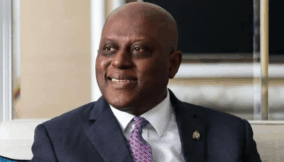
Prof Soremekun, a previous Ford Foundation, Fulbright and Rockefeller scholar, is a Visiting Member of the Editorial Board, BusinessDay.

Join BusinessDay whatsapp Channel, to stay up to date
Open In Whatsapp