Roads have reopened abandoned trade routes, hospitals are regaining lost accreditation, an airport is preparing for international cargo operations and a digital city is nurturing tomorrow’s technology workforce. Tope Omogbolagun examines how Imo State is attempting to reinvent itself through infrastructure, healthcare and innovation.
A few years ago, motorists approaching the Akokwa-Uga corridor in Imo State had little choice but to slow to a crawl, weave through makeshift diversions or abandon the route altogether.
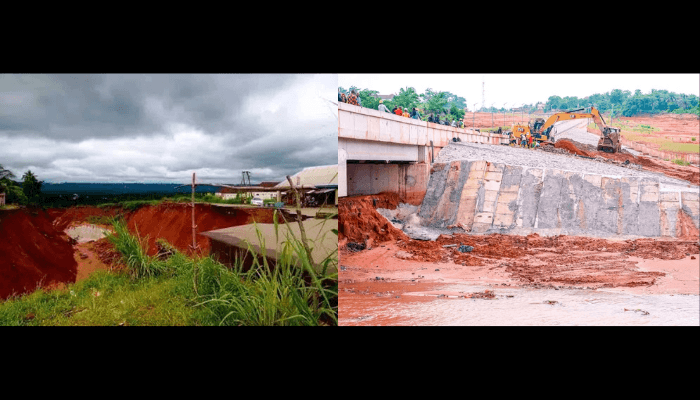
Gully erosion had carved through the highway, cutting communities off from one another and disrupting the movement of people, farm produce and commerce.
Today, the same stretch tells a different story. Fresh asphalt now overlays what was once a nightmare, solar-powered streetlights illuminate sections of the road, and heavy construction equipment is gradually giving way to free-flowing traffic.
But roads are only part of the story.
Across Imo State, another transformation is unfolding, one that stretches from an expanding international cargo airport and revitalised teaching hospital to a Digital City where young people are being introduced to artificial intelligence, drone technology and the skills driving the global knowledge economy.
Together, the projects form the backbone of an ambitious attempt to reposition the state as both a logistics gateway and a technology hub in Nigeria’s South-East, while illustrating how federal reforms and state implementation are increasingly intersecting to shape development outcomes.
The projects were among those showcased during a media tour organised under the Renewed Hope Ambassadors initiative, where journalists traversed the state to inspect investments in transportation, healthcare, education, technology and urban renewal.
For Imo State officials, the developments reflect a governance model built around collaboration with the Federal Government.
“This road links more than seven communities and several local governments,” Declan Emelumba, the Imo State Commissioner for Information, Public Orientation and Strategy, said while inspecting the reconstructed Owerri-Mbaise-Umuahia road.
“Before now, it was horrible. There were potholes everywhere, but today you can drive through smoothly.
“It is a federal road executed by the state government on the understanding that the Federal Government will reimburse us.”
That partnership extends beyond one highway.
The Owerri-Okigwe road, another critical commercial artery connecting Imo to neighbouring states, once symbolised decades of neglect. According to Emelumba, motorists spent between two and three hours navigating failed sections of the road, with many forced onto bush paths because entire portions had become impassable.
“Today, the same journey takes only a few minutes,” he said.
“This road connects more than six local governments and serves as an important commercial corridor.
“Farmers can now move produce to Owerri much more easily, businesses are spending less time on the road and economic activities have improved significantly.”
Perhaps the most dramatic example of engineering intervention is the Orlu-Mgbee-Akokwa-Uga federal road, where massive gully erosion had literally split communities apart.
Standing beside a newly constructed bridge spanning the reclaimed erosion site, Emelumba recalled that for nearly a decade residents had little choice but to navigate dangerous alternative routes.
“If you had come here three or four years ago, there was simply no road. The erosion had cut this place into two,” he said.
“It took courage, vision and determination to undertake a project of this magnitude because it required enormous resources.
“But the governor insisted that restoring this road was critical because it links Imo with Anambra and serves as an important commercial route.”
Engineers supervising the project explained that extensive land reclamation, river diversion and bridge construction were required before road works could commence.
The significance of these investments goes beyond shorter travel times.
Roads remain the arteries through which commerce flows, particularly in a region where trade dominates economic life.
Better connectivity means agricultural produce reaches urban markets faster, transportation costs decline and businesses become more competitive.
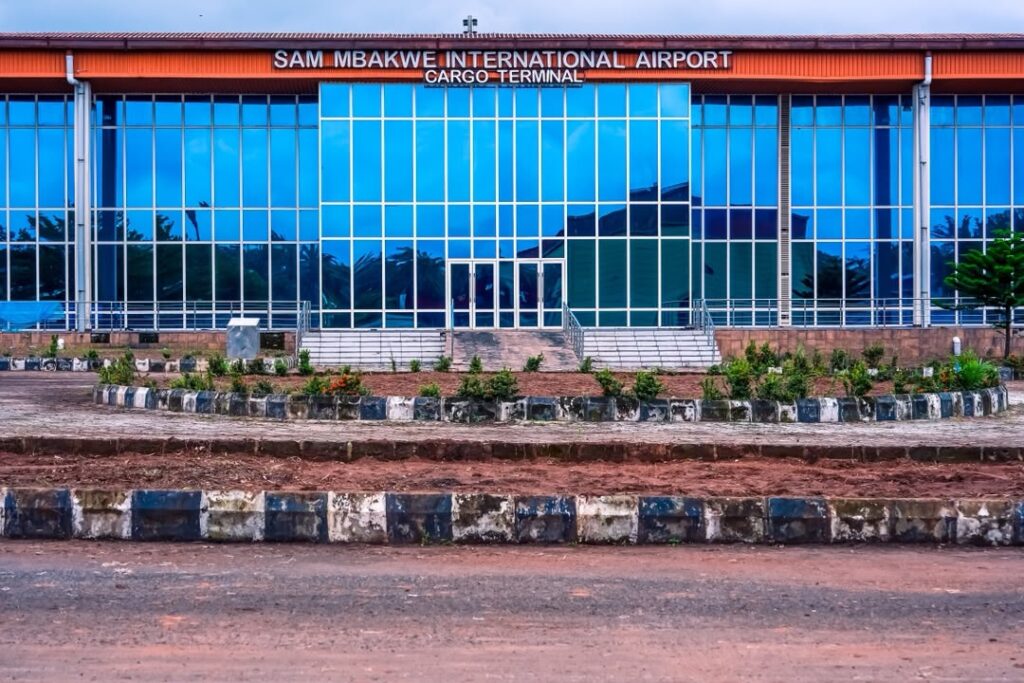
The same philosophy underpins another flagship investment, the expansion of the Sam Mbakwe International Cargo Airport.
The facility is being transformed from a largely passenger airport into a regional cargo hub capable of handling wide-bodied international aircraft.
Airport officials explained that the runway is being extended from 2,700 metres to 3,200 metres, allowing aircraft such as the Boeing 747 to operate comfortably while meeting international standards.
Beyond the runway, a cargo terminal equipped with multiple warehouses is nearing completion.
The project is expected to reduce logistics costs for businesses that currently move imports through Lagos before transporting them hundreds of kilometres inland.
“Igbos are naturally traders,” Emelumba stated.
“Having a cargo airport here means our businessmen and women can bring in goods directly instead of relying on distant ports. That will reduce costs, create jobs and stimulate economic activities across the South-East.”
He also disclosed that Afreximbank is establishing a quality assurance centre within the airport to certify export products before shipment, an initiative expected to strengthen regional exports and improve access to international markets.
If transportation provides the arteries of development, healthcare represents another pillar of the state’s transformation agenda.
At the Imo State University Teaching Hospital in Orlu, officials point to investments that have reversed years of institutional decline.
Victor Samson, the Executive Assistant to the Chief Medical Director, recalled a period when consultants and resident doctors left because of inadequate funding and deteriorating infrastructure.
Today, he says, the story has changed.
Modern laboratories, specialist equipment, improved infrastructure and solar-powered electricity have restored confidence among both healthcare professionals and patients.
Among the flagship projects are a heart transplant facility, an upgraded oxygen plant and a 200-bed infectious disease centre being developed through a partnership involving Seplat Energy, the Nigerian National Petroleum Company Limited and government institutions.
“At one point this hospital supplied oxygen across the South-East,” Samson said.
“Our patient inflow has increased tremendously because people now have confidence in the services we provide.”
He added that the state has carried out more than 4,000 free surgeries through annual medical intervention programmes, including hundreds of thyroid surgeries conducted during recent outreach campaigns.
Beyond physical infrastructure, another intervention restored academic accreditation that had left several batches of medical students stranded.
“When this administration came into office, the medical school’s accreditation had been withdrawn and several sets of students could not graduate,” Emelumba explained.
“The governor intervened, the accreditation was restored and those students completed their programmes.”
Education has equally received renewed attention.
The conversion of Alvan Ikoku College of Education into the Alvan Ikoku Federal University of Education marked the culmination of a decades-long aspiration that successive administrations had pursued without success.
For the state, the upgrade represents more than a change of name.
It brings expanded academic programmes, employment opportunities and increased federal investment into one of Nigeria’s oldest teacher-training institutions.
Yet perhaps the boldest statement about Imo’s future is neither a road nor a hospital.
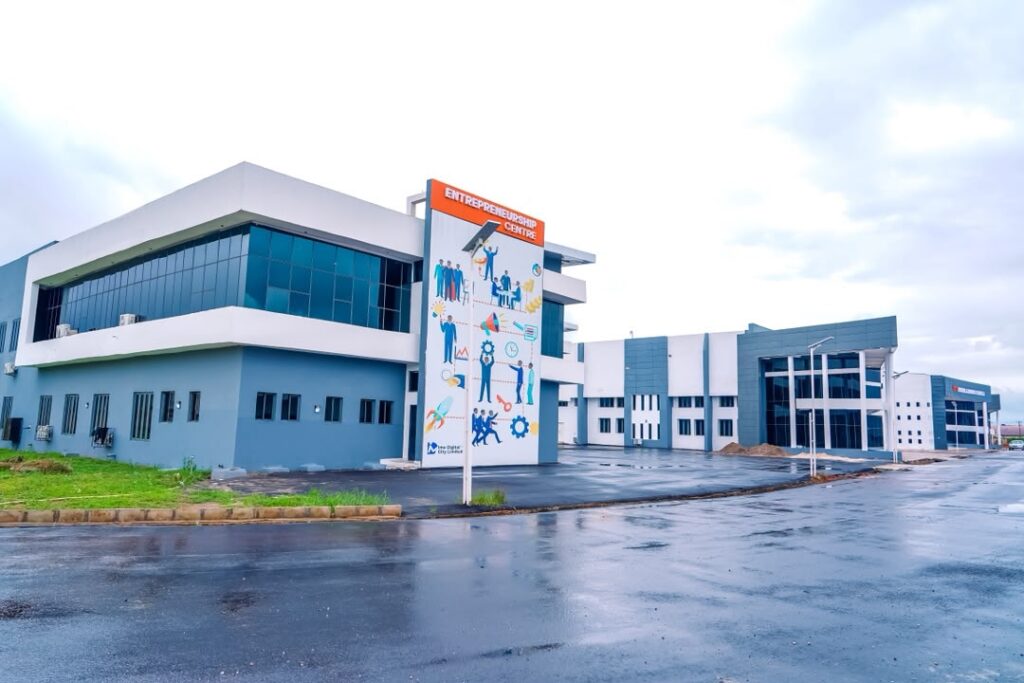
It is the Imo Digital City.
Unlike conventional infrastructure projects, the Digital City seeks to prepare the state for an economy increasingly shaped by technology, innovation and artificial intelligence.
Designed as a technology ecosystem rather than simply a collection of buildings, the facility is expected to house innovation hubs, digital skills centres, drone technology laboratories, telecommunications companies and advanced technology enterprises through a public-private partnership model.
Guiding journalists around the facility, the Commissioner for Digital Economy and E-Government, Dr Chimezie Amadi, described the Imo Digital City as one of Governor Hope Uzodimma’s flagship investments in technology, innovation and youth empowerment.
He said the facility was established as an innovation hub and digital entrepreneurship centre to nurture the next generation of technology professionals and entrepreneurs.
According to Amadi, over 75,000 young people have been trained under the state’s Skill Up Imo programme in areas including digital literacy, software engineering, cloud computing, cybersecurity, artificial intelligence, robotics and the Internet of Things (IoT).
“Many of them have secured jobs, launched startups or are providing digital solutions for businesses and government agencies,” he said.
A major attraction within the complex is the ImoSys digital device assembly plant, where trainees assemble smartphones, feature phones, tablets, routers and monitors.
Officials said the plant currently has the capacity to produce up to 1,000 phones daily, with operations running in two shifts.
Amadi said the initiative was designed to promote local manufacturing while equipping young people with practical technical skills.
“We are promoting indigenous manufacturing of digital technology equipment,” he said.
“It is helping to reduce dependence on imported finished devices while building local technical capacity.”
Beyond manufacturing, the Digital City houses robotics, drone and artificial intelligence laboratories where trainees learn coding, robotics and drone operations.
The commissioner said startups within the hub are already developing technology solutions for transportation, education and security, including AI-powered vehicle tracking systems.
“The world is moving towards digitisation and automation,” Amadi said.
“Our goal is to build a smart economy that drives digital governance, innovation and job creation.”
For members of the Presidential Media Team, it became the defining moment of the inspection tour.
“We saw quite a number of mind-boggling projects, but when we got to the Imo Digital City we all took a pause,” said Sunday Dare, Special Adviser to President Bola Tinubu on Media and Public Communications.
“I’m not sure any of us had seen that kind of investment before. Beyond the buildings, it is the concept behind it, the public-private partnership, artificial intelligence, drone technology, telecommunications, phone manufacturing and digital skills development. It demonstrates clear thinking about preparing young people for the 21st-century economy.”
According to Dare, the project reflects an understanding that economic competitiveness will increasingly depend not only on physical infrastructure but also on digital capacity.
“It is a foresight that deserves commendation. Leaders must prepare for the challenges of the digital age by providing infrastructure that allows innovation to thrive.”
The Digital City is expected to train young people in artificial intelligence, robotics, drone operations, software development and emerging technologies while attracting private technology companies capable of generating employment.
Dare himself experienced the innovation ecosystem firsthand.
“I had never flown a drone before,” he said with a smile.
“So I took a five-minute crash course from one of the instructors, and afterwards I was able to fly one myself.”
Governor Hope Uzodimma believes these investments would not have been possible without the fiscal reforms introduced by President Bola Tinubu.
“When I assumed office in 2020, after paying salaries, the state had barely N100 million left,” he said.
“After the reforms, allocations increased significantly, and we chose to invest those resources in roads, hospitals, electricity, education and technology instead of propaganda.”
He said internally generated revenue has grown from less than N400 million monthly to nearly N6 billion, while the state’s debt profile has declined substantially.
The governor also highlighted improvements in electricity generation and distribution, noting that Owerri now enjoys locally generated and distributed power under the state’s electricity initiative.
For him, infrastructure is not simply about constructing roads or buildings but about laying the foundation for economic competitiveness.
The emerging picture is one of a state attempting to balance immediate infrastructure needs with longer-term investments in human capital and innovation.
Roads reconnect markets. Airports facilitate trade. Hospitals strengthen public health. Universities develop talent. Digital infrastructure prepares young people for industries that are still emerging.
Whether these projects ultimately deliver the economic transformation envisioned by their promoters will depend on sustainability, private-sector participation and continued investment.
But one thing is already evident.
Imo’s development narrative is no longer being written solely in kilometres of asphalt or cubic metres of concrete.
Increasingly, it is also being measured in broadband connectivity, digital skills, innovation ecosystems and the ambition to compete in a technology-driven global economy.
For a state long associated with commerce and entrepreneurship, that may prove to be its most consequential investment yet.

Join BusinessDay whatsapp Channel, to stay up to date
Open In Whatsapp