

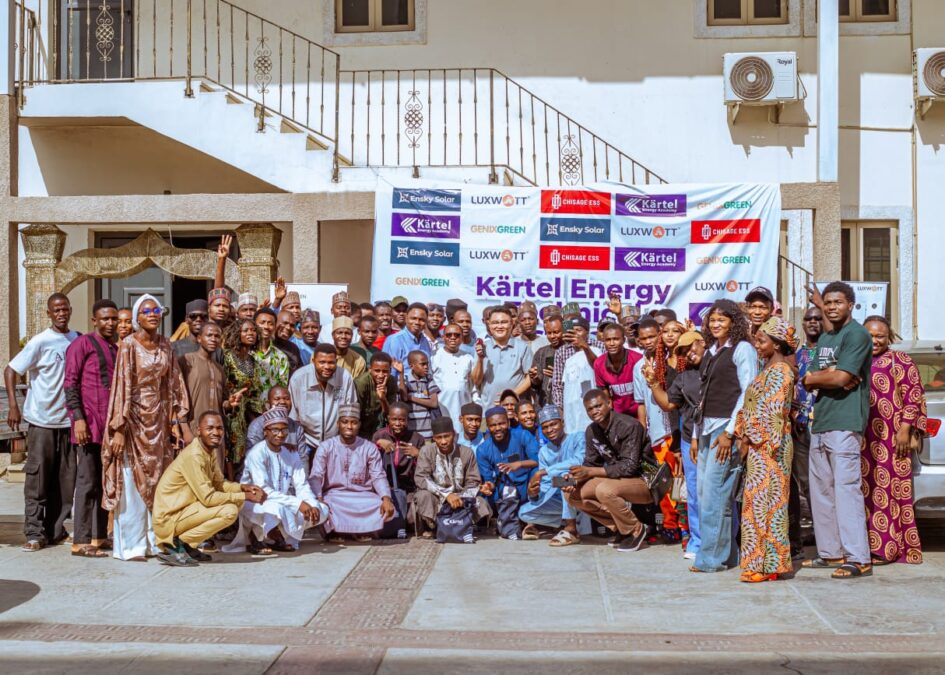
Kartel Energy Limited has trained more than 1,000 solar installers, engineers and entrepreneurs across six Nigerian cities this year, part of a bet by the domestic equipment maker that closing a widening skills gap will determine how fast the country’s renewable energy market can grow.
The company’s 2026 Technical Masterclass, now in its second year, ran from mid-May through late June, moving through Benin City, Kaduna, Kano, Abuja, Ibadan and Asaba. The free program drew installers, dealers, distributors and renewable-energy hopefuls for sessions pairing classroom instruction with live equipment demonstrations.
Nigeria’s solar market has expanded rapidly as households and businesses seek alternatives to an unreliable grid, but industry executives say the pool of technicians capable of handling increasingly complex installations has not kept pace. This year’s curriculum leaned heavily into high-voltage solar systems, their applications, installation requirements and the commercial openings they create for contractors bidding on larger projects.
“At Kartel Energy, we believe that empowering people with knowledge is just as important as providing quality products,” Ola Ogunsemowo, chief executive officer said. “Through the Masterclass, we are investing in the people who will drive the future of clean energy in Nigeria.”
Ogunsemowo said the push reflects a broader shift in what the market demands. As adoption climbs, he said, customers are asking for systems that go beyond basic backup power, requiring installers versed in advanced inverter technology and higher-voltage configurations. Poorly executed installations, he added, carry safety risks and can undercut confidence in solar as a serious alternative to grid power.
“The Masterclass provides participants with practical knowledge that keeps them ahead of industry trends while improving the quality and safety of solar installations across the country,” Ogunsemowo said. “Ultimately, a better-trained workforce translates into greater customer confidence and a stronger renewable energy ecosystem.”
The company said it built the program without a fee specifically to avoid gatekeeping technical education behind cost, a barrier it argues has historically slowed the emergence of qualified tradespeople in Nigeria’s power sector.
Attendees also got exposure to products from Kartel’s sister brands, GenixGreen, Luxwatt, Ensky and Chisage ESS, spanning residential, commercial and industrial energy equipment, giving participants a wider view of the hardware they may eventually sell or install.
Ogunsemowo said the company expects the training pipeline to pay off within five years, producing a cohort of technicians capable of delivering installations to international standards, launching their own businesses, and generating jobs in the process. He framed the effort as one piece of a larger contribution to narrowing Nigeria’s persistent power deficit through distributed, renewable capacity.
He called on graduates of the program to apply modern installation techniques and hold to professional standards on every job, arguing that the operators who invest in continuous learning will be best positioned as the market matures.
Founded in 2019, Kartel Energy has built a footprint supplying inverters, lithium battery systems and solar panels designed for Nigerian conditions, grid instability, voltage swings and high ambient heat, with physical locations in Lagos, Abuja, Kano, Kaduna, Ibadan, Benin City and Onitsha. The company says technical training will remain part of its strategy as it works to expand its share of a market still short on skilled labour.


Join BusinessDay whatsapp Channel, to stay up to date
Open In Whatsapp

