
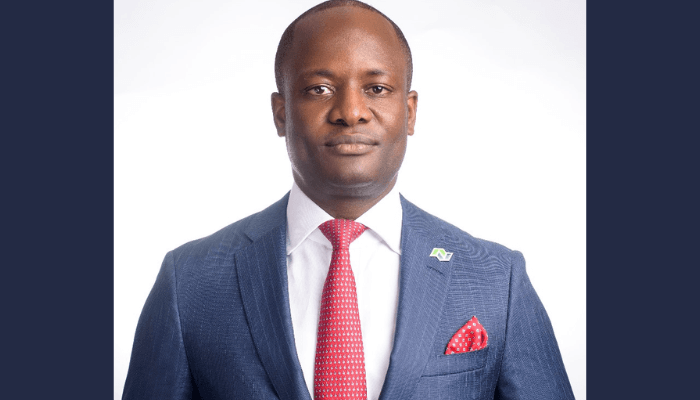
Artificial intelligence could become one of the biggest drivers of Nigeria’s next phase of economic growth and investment, according to Temi Popoola, group managing director and chief executive officer of NGX Group.
Industry experts have said that achieving that ambition will require Nigeria to increase investments in infrastructure, computing capacity, talent retention, and regulatory enforcement.
Speaking on Nigeria’s economic outlook, Popoola identified artificial intelligence as one of the sectors expected to shape the country’s next wave of macroeconomic expansion and capital formation, positioning the technology as a strategic pillar for long-term economic transformation.
His optimism comes as Nigeria records measurable progress in AI readiness because the country climbed 31 places in the Oxford Insights Government AI Readiness Index 2025, moving from 103rd in 2023 to 72nd globally, making it one of the top-performing countries in Sub-Saharan Africa.
Similarly, Nigeria has launched a National AI Strategy, rolled out the 3 Million Technical Talent (3MTT) programme, and recently introduced the National AI Scaling Hub (NAISH), backed by the Gates Foundation, to support AI adoption in the public sector.
Startups like Moniepoint and Flutterwave have revolutionised digital payments, while companies like Awarri focus on building foundational AI data infrastructure specifically for Africa. This blend of AI and financial technology is driving financial inclusion and operational efficiency across the continent.
Ekene Ahuche, founder of Hipstarr and a streaming economics analyst covering Afrobeats and emerging markets, said the real issue is not if Nigeria is ready for AI but whether the country’s infrastructure can keep pace with demand that already exists.
“The more interesting question isn’t whether Nigeria is ready. It is whether infrastructure can catch up to demand that’s already proven,” Ahuche said.
Drawing parallels with his research on Nigeria’s music industry, he noted that Lagos consistently ranks as the biggest streaming city for Afrobeats globally, yet the industry’s royalty systems, payment infrastructure and data architecture have failed to evolve at the same pace.
“My research on Afrobeats streaming found the same pattern. Lagos is the number one streaming city on virtually every major track, yet the infrastructure around royalties, data and payment rails still lags far behind where that value actually sits. What Temi Popoola is describing is essentially the same gap, but at a national scale.”
According to Ahuche, Nigeria has already demonstrated meaningful progress through initiatives such as the National AI Strategy, MTN’s AI data centre in Ikeja and the federal government’s 3MTT programme.
“The bottleneck is no longer power or ambition alone. It is retention. We train people and then lose them to remote jobs that pay in dollars. That’s the number policymakers should be watching.”
Akande Adedayo, specialist solutions architect at 54pay Technologies, argued that Nigeria remains a long way from building the infrastructure required to compete globally in AI.
“There is growing concern regarding the development of AI infrastructure within the current Nigerian climate,” he said. “Nigeria still faces a prolonged journey toward establishing robust cloud infrastructure, and at our current pace, matching global AI computing capacity feels nearly unattainable.”
He identified unreliable electricity as the country’s biggest obstacle, alongside inadequate technical expertise and an accelerating brain drain.
“Skilled local talent continues to migrate abroad, creating a vacuum that is difficult to replace in the short term. Nigeria must aggressively train a new generation of technical professionals faster than they leave.”
Adedayo also urged developers to prioritise AI systems designed specifically for Nigeria’s realities rather than attempting to replicate resource-intensive global models.
“We need locally engineered, edge-computed AI solutions tailored to our infrastructure constraints. At the same time, government must make strategic investments in reliable power because industrial-grade electricity is foundational for running AI data infrastructure.”
Beyond infrastructure, experts say governance and trust will determine whether AI adoption scales across sectors.
Oluwajuwon Omotayo, founder of Comply54, said Nigeria’s recent launch of the National AI Scaling Hub is an encouraging development because it links AI innovation with public-sector challenges, but sustained investments in local compute infrastructure, high-quality datasets, governance capabilities and AI skills will determine whether the country can deploy AI at scale.
Nigeria possesses the entrepreneurial ecosystem, youthful workforce and policy momentum to become one of Africa’s AI leaders.
For artificial intelligence to evolve into the economic engine that the NGX’s CEO envisions will depend less on ambition than on the country’s ability to build the infrastructure, retain talent and establish trusted governance frameworks that allow AI to flourish responsibly.


Join BusinessDay whatsapp Channel, to stay up to date
Open In Whatsapp