…Renewable energy funding portfolio hits $1.23bn, says REA boss
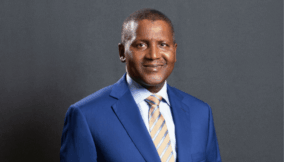
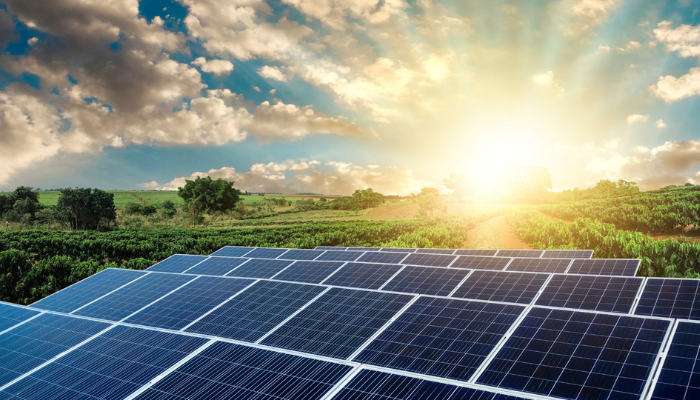
Abba Aliyu, managing director, Rural Electrification Agency (REA) has disclosed ongoing efforts to expand Nigeria’s solar manufacturing capacity to 3.7 gigawatts by 2027, as the exportation of locally assembled solar photovoltaic (PV) panels to Ghana kicks off.
Aliyu disclosed this while hosting a bilateral benchmarking visit by the Zanzibar Utilities Regulatory Authority (ZURA) in Abuja on Thursday.
According to Aliyu, the long-term goal is to reduce dependence on imported solar products, attract Chinese manufacturers to set up in Nigeria and build a stronger domestic value chain around renewable energy equipment.
The agency maintained that the mini-grid program and the broader electrification strategy are central to Nigeria’s goal of achieving universal electricity access by 2060.
According to Aliyu, the total fund available to the agency for the implementation of renewable energy project has expanded to $1.23 billion, driven by a blend of budgetary allocations, regulatory surpluses, and major international development finance.
He explained that the sources of funding for the implementation of electrification projects includes the federal government, development finance institutions and donor bodies. He added that other sources are the Inland grants from bilateral partners.
“The REA receives five sources of funding for the implementation of electrification projects: Appropriation from the Federal Budget by the National Assembly, Surpluses and 2% from the Regulator’s (NERC)tariff structure operational cost, Funds from Development Finance Institutions and Donor Bodies, in-kind grant from bilateral partners and intervention funds from FGN,” he said.
Speaking on issues around the implementation of a cost-reflective tariff with the mini-grid customers, Aliyu said they pay cheerfully because it is cheaper than fueling their private generators.
“The cost-reflective tariff challenge as a perception of the media that escalates the story even when the customers pay N250 per KW willingly. The customers prefer it to fueling their private generators that cost N600 per KW,” he said.
Aliyu recalled that the agency created the Renewable Energy Service Companies (RESCOs) to deploy the mini-grids, adding that some of the RESCOs now have capacities that dwarf those of the DisCos.
Aliyu said, “Very soon, these RESCOs, they will now be as big as the DISCOs. Because some of them now manage a portfolio of 30 megawatts of capacity. Some of our DISCOs receive less than 60MW.
“So imagine when we finish our integrated mini-grids and we move in. Some of these RESCOs will have a capacity of close to over 100 megawatts. Portfolio generation, distribution, metering, connection capacity of over 100MW.”
In his remarks William Gboney, World Bank consultant supporting ZURA, described Nigeria as one of Africa’s leading countries in off-grid electrification and mini-grid regulation.
Gboney said the benchmarking visit was organised to enable Zanzibar’s electricity regulator to learn from Nigeria’s experience in off-grid regulation, geospatial planning and project implementation.
He noted that universal electricity access now goes beyond grid connectivity, stressing that power supply must also be reliable, affordable and capable of supporting productive economic activities.


Join BusinessDay whatsapp Channel, to stay up to date
Open In Whatsapp