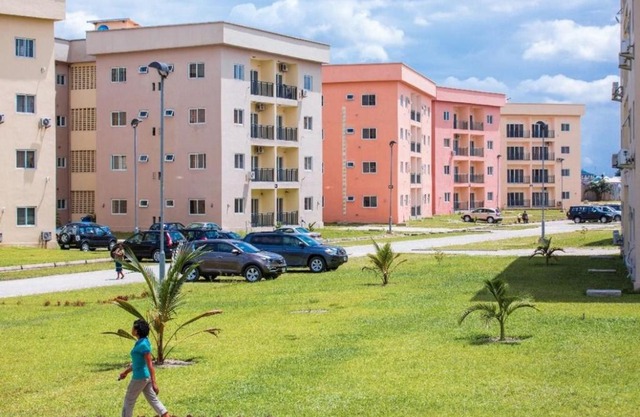
Stakeholders in Nigeria’s housing sector have called for a fundamental rethink of the country’s mortgage system, urging policymakers and financial institutions to design financing models that accommodate millions of informal sector workers who remain excluded from homeownership opportunities.
The call was made during a panel session at the BusinessDay Abuja Real Estate Conference 2026, themed “From Policy to Projects: Mobilising Capital for Sustainable Real Estate Development,” where industry leaders agreed that expanding mortgage access beyond salaried workers is critical to reducing Nigeria’s housing deficit.
Speaking at the conference, Goodwill Nwoke, Managing Director and Chief Executive Officer of Pinco Estate Managers, said the country’s housing challenge cannot be addressed without creating financing solutions for artisans, traders, transport operators and other Nigerians who earn their livelihoods outside the formal employment system.
According to him, while developers require affordable financing to build homes, prospective buyers also need accessible mortgage products tailored to their income realities.
“We cannot talk about housing without talking about funding and financing.
“As much as we want to make housing affordable, if funding is not available for developers, delivery will remain difficult. At the same time, mortgage access must be extended to informal workers, the carpenter, the bricklayer, the petty trader. They are Nigerians too, and they need decent housing,” Nwoke said.
Nwoke noted that the current mortgage ecosystem largely serves formally employed workers with verifiable salaries, leaving a significant portion of Nigeria’s workforce without viable pathways to homeownership.
Also speaking, Mujahid Usman, Senior Financial Analyst at the Ministry of Finance Incorporated Real Estate Investment Fund (MREIF), said the fund is working to broaden access to affordable mortgage financing through partnerships with banks and mortgage institutions.
He disclosed that MREIF is finalising plans to launch a non-interest housing fund aimed at promoting financial inclusion while attracting more Nigerians into the mortgage market.
According to him, the proposed fund is awaiting final approval from the Minister’s Office.
Usman explained that MREIF has already facilitated more than 2,020 mortgages worth over N140 billion through participating financial institutions, with mortgage rates fixed at 9.75 per cent, repayment tenures of up to 20 years and a minimum equity contribution of 10 per cent.
He, however, acknowledged that the majority of beneficiaries are salaried workers because lenders require borrowers to demonstrate stable and verifiable income before approving mortgage applications.
“We also finance entrepreneurs, but many informal business owners struggle to prove their income because they do not keep audited financial records or proper documentation,” he said.
To improve affordability, he said the scheme allows spouses to combine their incomes while applicants can also include other legitimate income sources when applying for mortgage facilities.
Usman stressed that creating transparent investment structures and strong governance frameworks remains essential for attracting long-term capital into the housing sector.
“The money is available, but investors need confidence. Once there are credible structures and proper oversight, more institutional and international investors will be willing to commit capital to housing,” he said.
For low-income Nigerians unable to qualify for conventional mortgages, Oluwatosin Abraham, Founder and Chief Executive Officer of Thrift2Landlord, advocated alternative savings-based models that allow households to gradually acquire land before seeking financing for construction.
She said the company’s 10-month savings programme enables subscribers to make regular monthly contributions toward purchasing land, thereby creating an affordable entry point into the property market.
According to Abraham, the initiative has attracted both Nigerians in the diaspora and workers within the country, including couples who combine their incomes to achieve homeownership goals.
She urged young Nigerians to begin investing in emerging communities such as Kuje and Gwagwalada in the Federal Capital Territory before rapid urban expansion drives land prices beyond their reach.
“The average Nigerian wants to own a home, but affordability remains a challenge. We encourage people to start with land ownership because once you secure land, you’ve taken the first major step toward becoming a homeowner,” he said.
Abraham noted that subscribers who enroll during pre-launch phases are insulated from inflation-driven price increases throughout their payment period, making long-term planning easier despite rising construction costs.
Beyond financing, stakeholders identified professionalism and better market intelligence as essential ingredients for improving housing delivery.
Bature Ali Mohammed, President of the Nigerian Institution of Estate Surveyors and Valuers (NIESV), argued that Nigeria’s biggest housing challenge is not necessarily inadequate funding but the failure to align investment decisions with actual market demand.
According to him, many developers continue to build expensive luxury homes in areas dominated by low-income households, resulting in high vacancy rates and poor returns on investment.
He said certified estate surveyors and valuers possess the market data required to guide developers on where to build, what types of houses to construct and appropriate pricing levels.
“Nigeria is not short of money. The challenge is professionalism. If developers engage qualified professionals from the beginning, they will make better investment decisions and deliver houses that people can actually afford,” Mohammed said.
He also called for stricter adherence to professional valuation standards, noting that reliable property valuations are critical to attracting pension funds, insurance companies and international investors into Nigeria’s real estate sector.

Join BusinessDay whatsapp Channel, to stay up to date
Open In Whatsapp