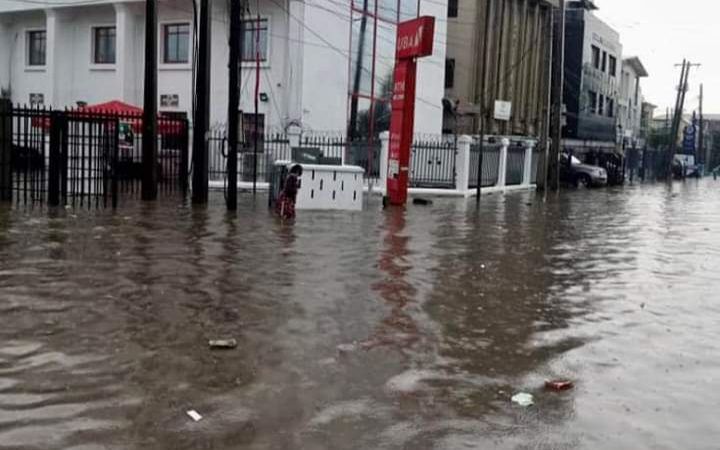
The numbers are not just large; they are also scary. The impact is as deep as it is pervasive, while the cost is enormous. This is the story of flood incidents in Nigeria that have left citizens, especially those living in coastal cities, in dire situations.
Flooding has been quite devastating this year. Lagos, a city that prides itself as Centre of Excellence, has been sufficiently humbled as homes and entire communities, in some cases, were submerged while government activities were disrupted and businesses paralysed.
Many city dwellers have testified that they had never seen anything like the flooding of the past few days in recent history. However, whatever has happened so far is not enough for anybody to forget what was seen across states in 2025.
In 2025, it was a crisis that resulted in significant loss of lives, disruption of businesses, destruction of farmlands, and displacement of communities. Families were also dislocated.
That was the year 232 people died, 607 were injured, and over 315,000 were affected by severe flooding across the country, according to data gleaned from the National Emergency Management Agency (NEMA) flood dashboard.
That same year, floods affected 86 Local Government Areas in 25 states, with 113,367 people displaced from their homes. The most affected states include Lagos, Adamawa, Akwa Ibom, Imo, Taraba, Rivers, Delta, Abia, Borno, and Kaduna. The disaster left 42,301 houses damaged and over 48,000 hectares of farmland destroyed.
That was 12 whole months ago. Nobody did anything; nobody changed anything, and this is why 2026 is not changing the narrative; instead, it is stubbornly planning to surpass the record, with Lagos taking the lead.
Lagos is already experiencing severe flooding in 2026 due to heavy rainfall, blocked drains, rapid urbanisation, rising sea levels, and ageing infrastructure. Some schools of thought add poorly designed road infrastructure, citing the Lagos-Calabar coastal highway.
Heavy rainfall since late June 2026 has caused widespread flooding across the state, which prides itself as Centre of Excellence, submerging roads, stranding vehicles, and disrupting daily life in multiple neighborhoods, including Lekki, Victoria Island, Ikoyi, Surulere, Ikeja, Alimosho, and Badagry.
For many residents of the city, their houses are no longer homes as floodwaters have entered homes, damaged property, and caused temporary power outages, while commercial activities and transportation have been significantly affected.
The flooding has been exacerbated by tidal locks in coastal areas, preventing stormwater from draining into lagoons and the Atlantic Ocean.
Though some residents blame the flood, which humbled the Centre of Excellence and brought it to its knees, on the usual heavy downpour and blocked drainage, those who live in the coastal areas of the state point accusing fingers at the coastal road.
“I don’t have evidence to attribute the flooding to the coastal road construction, but in all my 10 years of living in this area, I had not seen the kind of water level that I have seen this year,” a resident of Ajah who identified himself simply as Muhammad, told BusinessDay in an interview.
According to him, the flood was up to his waist, which means it could easily swallow school children, adding that six days after, the flood is yet to subside, which was why many schools and businesses in the area closed down temporarily.
In Ilaje, Ajah, another resident called Blessing, said the heavy rainfall had submerged roads across the community. “Everywhere is flooded because of the rain. The streets are under water,” she said.
The case against coastal road
Whereas Sola Enitan, a lawyer and an estate surveyor and valuer, is worried about the fresh demolition of buildings along the coastal road to check flooding, a consultant engineer, who did not want to be named, dismissed David Umahi, the Minister of Works’ defence and excuses as political and unrealistic.
Umahi has been trying to absolve the coastal road of any blame for the flooding of the surrounding communities, insisting that the flooding was a result of the non-implementation of the Lagos master plan by the state government.
The anonymous engineer stressed that the minister will definitely come back and do the right thing because, according to him, “water, though boneless and without a shadow, never negotiates.”
He contended that the coastal road will definitely be redesigned with time, noting that the engineers who designed its present form underestimated the volume of water going into the Sea all along that coast apart from the estuary outlets at Bonny Camp and Epe.
“The geographical reality is that right from Oworonshoki to Epe southwards, you have a vast delta marking the collapse of small streams and the Ogun River. All these flow into the Lagos Lagoon, which is actually a portion of the Atlantic Ocean partly surrounded by land.
That mighty volume of water is pressing southwards gently, seeping underground and in streams into the Atlantic. What the coastal road has done is to close in everything exactly as a dam would. The road, in real terms, is a weak, low dam, running all across the length of the Lagoon right after the Bonny Camp estuary,” the engineer posited.

Join BusinessDay whatsapp Channel, to stay up to date
Open In Whatsapp