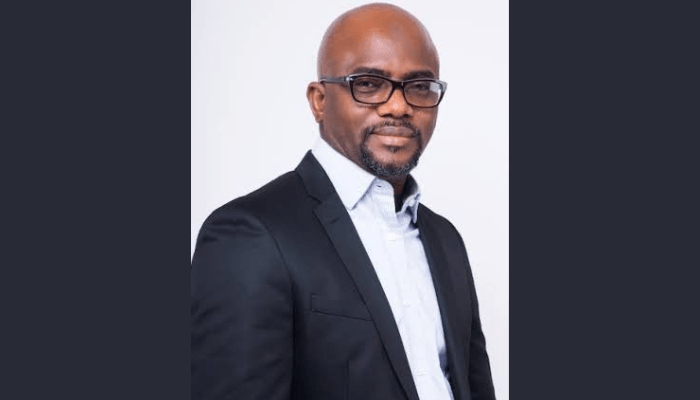
Lanre Adisa, the MD/Chief Creative Officer of Noah’s Ark Communications, is the President of the Association of Advertising Agencies of Nigeria, AAAN. The association is set to chart a new path for the advertising industry at its forthcoming conference. In this interview, Adisa, who is also the Chairman of Heads of Advertising Sectoral Group, HASG, speaks on industry issues, efforts to bridge the talent gap and application of AI in advertising and the need for agencies to evolve to remain relevant. Daniel Obi brings the excerpts.
The theme of the AAAN annual conference this year is “AdVolution: The end of advertising as we know it and how to win what comes next.’ Does this suggest that traditional advertising is ending?
It’s a very interesting theme at a very interesting time. I wouldn’t posit that what we call traditional advertising is gone. No. Instead, it has evolved. At some point when digital came on the scene, some people referred to some agencies as ‘digital’ and ‘traditional’, respectively, but the truth of the matter is that digital is a reality that we’re dealing with. It’s about advancement. At a point in time, radio and TV were big innovations. What will never change is the need to communicate. All these things offer platforms to communicate. What we’ve always known as traditional advertising is fast evolving. Technology is advancing at a pace we’ve never seen before. With the emergence of AI, a whole lot of things have been disrupted.
Part of what technology has also done is reduce the entry barrier, empowering people to generate their own content. Almost everybody is a content generator of sorts. We are also moving from what is considered the creative industry to more of a creator economy, where people can actually create their own community and monetise whatever they create. So, there are careers today that we never thought were possible. And there are careers that are also packing up.
That’s what we’re dealing with now. It is about how well we are embracing this challenge. And how fast are you evolving as a business? That is what this conversation is about.
Why hold the conference in Lagos this time?
We actually planned to be in Ogun State, but about the time we were making the plan, a couple of things happened concerning security and all of that. So we felt the pulse of our people, and we thought maybe it’s better to step that down and be in Lagos just for the sake of everybody.
On the theme, what opportunities does it present for Nigeria’s advertising industry to compete more effectively on the global stage?
I think beyond competing on the global stage, it is being more alive to the reality that we’re dealing with, that the competition has gone beyond just agencies. Almost anybody anywhere can be your competitor. A time will come when an agency, for instance, in Uganda or somewhere, can come to work here, and I can also do the same. So, there are so many things happening around us beyond technology as well. This means one cannot afford to do things the same old way. That’s what we’re telling ourselves. It is a wake-up call to that reality and to discuss what the opportunities are.
When things happen like this, you have two options for reaction. You are either scared, or you see the opportunities and ask how you can make the most of this. That is why we are having this conversation with a larger community.
As AI dominates the advertising industry operations, though not only the advertising industry but even banking, how much do clients need you?
Very good question. You know, the worst mistake any client or any company can make is to say that because they now have AI, they don’t need an agency.
I’m not saying they cannot use AI. But in reality, AI can help you take care of some drudgery that is repeated and all of that, but AI cannot take away the human thinking that you need to make the difference. So, when every client has AI, you as an agency have to position yourself as the differentiator.
I’m not against AI. You can’t run away from AI, but AI is a tool. It needs my human ingenuity to make sense of that tool. We cannot push away the human factor. A human being has some intuition that AI does not have.
President, do you think that with AI some agencies will cut staff?
Every business will have to determine how they want to move forward. But there’s a role for AI, and there’s a role for human beings. AI will probably help you in doing certain things, and it will make sense to invest in such tools. But it is not just about the tool.
In your view, what skills and capabilities must advertising professionals develop to remain relevant in this era?
I think, in line with what we’ve been talking about, anybody in this business must embrace technology and must be open to new tools. Like people keep saying, the problem is not necessarily just about AI, but it’s about getting the prompts right. There are AI prompt engineers. Now you also have to create space for technology in the midst of what you’re doing. You must have people on your team who are on top of the game as you guys change. Clients have the funds; they can acquire anything. On our part, we also need to be abreast of new thinking. So even if the client acquires them, the client will still need you to be the one who will help to navigate their way forward.
You said agencies and their staff need to embrace technology. How do we go about this? Where is the training academy? Where are the schools?. How do we create this ecosystem?
The fact that the competition for talent today is much fiercer than before. It’s not just about agency to agency now. It’s agency to client and agency to tech business. People can also sit in their own corner and work remotely for anybody anywhere in the world. So you’re also competing with people like that. We have people who are also coming for Nigerian talent from across Africa, because perhaps Nigerian talent is cheaper for them than whatever they have where they are.
Now, we are also blessed with human talent in the art space, music, filmmaking and comedy, and we’re all going to be taking talent from the same source.
But how do we make advertising or marketing communications attractive to those young people? I think that’s where the challenge is. So, on our part as AAAN, we are in a collaboration with the Red and Yellow School, South Africa. The intention is to expose our people to world-class training.
This is a school that is ranked as number one in Africa and the Middle East today, based on the Loerie’s ranking. And there’s a whole lot that we can gain from that collaboration. It is open not just to advertising agencies; it’s open to the industry. Because if we’re able to also help the client and help other people in marketing and ourselves, then I think we will reduce this thing about just taking whatever is available.
Does that mean that your relationship with Henley of the UK has ended?
I’m not sure if I want to put it that way. I think there’s a pause in that regard. It does not mean we will never go back there. So if we think that there’s a need for us to still go back and have something with Henley, we don’t have an exclusive clause that will stop us from dealing with another person.
Media agencies are still stuck to old models. Because what you hear in the advertising industry is ‘brief’. Are there other models media agencies can develop to survive?
Well, there’s nothing wrong with waiting for a brief. That’s the way the business is. Lawyers also are waiting for their briefs as well. But having said that, we can also think ahead and do proactive work. And we’ve done that for our clients, to say, We think there’s an opportunity here; let’s exploit it. So that’s what that partnership should engender.
There are models that will probably also be tied to how productive you’ve been. So there might be a performance thing tied to what you do.
There are people that can also give you access to some minimal kind of equity or something. But that necessarily doesn’t happen here.
There’s a whole lot that can happen in our industry, depending on who you’re dealing with. So, the industry needs to think differently.
In an era dominated by influencers, content creators, retail media, and social commerce, what role will traditional advertising play in the future?
I think we should stop saying traditional things. There’s nothing wrong with these influencers. It is how you use them.
If you’re just using them because they’re just popular, what impact will they have on your brand at the end of the day? If you cannot measure that, then what you’ve done is just help to grow the brand of the influencer, not your own brand. Because they are brands in their own entity. People will watch whatever it is they have entertained. But if, after the entertainment, people are not thinking of your brand, something is wrong. And who can guide you? Again, your agency partners will suggest how to engage them without taking over from your brand.
When we were working on Airtel in Noah’s Ark, the people that we used for the Airtel commercials did not at any point overshadow Airtel as a brand. So, the brand comes first. If, in whatever you do with influencers, your brand doesn’t come first, you are helping to build the brand of the influencer, not your own brand.
Tell me more about the annual meeting/conference coming up July 23 in Lagos.
The annual meeting is happening on the 23rd and 24th. We’ll have our business session on Thursday, 23rd, and we will have the conference the following day, Friday, 24th. And there will be dinner and awards in the evening later on that Friday as well. We are expecting a couple of people from the industry and government officials. We’re going to have a very robust conversation, which we hope people will embrace enough to participate in and share their own views. We don’t want to just make it a talking shop. What we expect is that the thoughts from these conversations should start helping us to come to some decisions, some policy, as an industry.

Join BusinessDay whatsapp Channel, to stay up to date
Open In Whatsapp