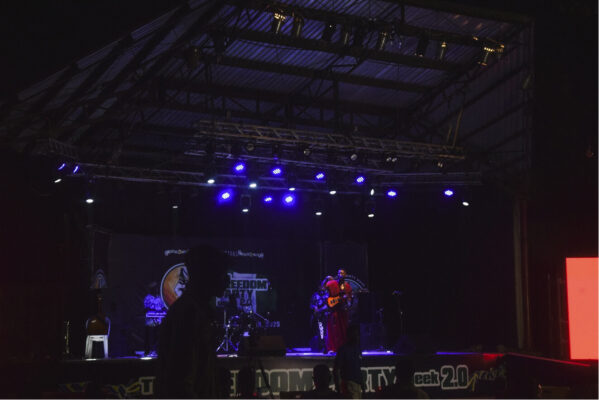
For too long, performing arts in Nigeria have been viewed through a narrow lens. Dance, theatre and cultural performances are often treated as extracurricular activities or forms of entertainment, appreciated during festivals and school events but rarely recognised as serious pathways to leadership, entrepreneurship and national development. Meanwhile, some of the very qualities that today’s economy demands – discipline, creativity, communication, teamwork and resilience – are first cultivated not in boardrooms but on the stage.
The conversation around education and employability frequently centres on science, technology and business, while the performing arts are relegated to the margins. This perception overlooks an important reality. Across Nigeria and beyond, the performing arts have produced individuals whose influence extends far beyond theatres and cultural festivals into business, education, public service and community leadership.
The journey of Egbaiyelo Abisola Ololade offers a compelling example of why the performing arts deserve greater recognition.
The stage builds more than performers.
Some people discover their purpose later in life. For Abisola, it began with dance.
As a young pupil, she joined her primary school’s Arts and Cultural Group, participating in cultural displays and Entertainment Week activities. By secondary school, she had become actively involved in the Literary and Debating Society, helping to organise entertainment programmes while representing her school in inter-school dance competitions.
These experiences did more than nurture artistic talent. They introduced her to discipline, preparation, collaboration and the confidence that comes from performing before an audience. Every rehearsal demanded commitment. Every performance required teamwork. Every mistake became an opportunity to improve.
These are not merely artistic virtues. They are leadership skills.
In a society that increasingly speaks about developing soft skills for young people, the performing arts have long provided one of the most effective classrooms for building them.
Theatre is a school of leadership
Choosing to study performing arts with a specialisation in dance was a natural progression, but university expanded her understanding of what performance truly meant.
Rather than limiting herself to acting or dancing, she immersed herself in every aspect of theatre production, from costume design and makeup artistry to stage management, technical theatre, orchestra coordination and sound production.
Her philosophy was simple.
“I never wanted to understand only one side of theatre. I wanted to understand how every performance comes together, from the first rehearsal to the final curtain call.”
That perspective reflects an important lesson often overlooked in discussions about arts education. Theatre is not simply about performance. It is about systems.
Every successful production depends on planning, logistics, communication, time management, budgeting, leadership and coordination. Every participant understands that individual brilliance means little without collective execution.
These are precisely the qualities organisations seek in today’s workforce.
Culture is more than heritage. It is an economy.
After graduation, Abisola continued her artistic journey with established dance theatre companies, performing both traditional and contemporary Nigerian dances that celebrated the country’s rich cultural heritage. She also expanded into film and television, featuring in several Yoruba Nollywood productions and working alongside respected actors and filmmakers.
Her artistic work has taken her beyond the stage into cultural institutions and community initiatives in different parts of Nigeria, where she has supported programmes promoting indigenous arts and cultural education. As a representative of her Ilaje cultural heritage, she continues to participate in activities that preserve traditions for future generations.
Her participation in TheatreMania conferences in the Republic of Benin further reinforced another important truth: culture remains one of Africa’s most effective instruments of regional collaboration and cultural diplomacy.
Nigeria’s cultural festivals provide further evidence of this reality. Events such as the Ojude Oba Festival and the Calabar Carnival have evolved beyond traditional celebrations into platforms that attract tourists, stimulate local economies and create opportunities for dancers, actors, choreographers, costume designers, artisans, event managers and other creative professionals.
These festivals demonstrate that culture is not merely about preserving the past. It is also an economic asset capable of generating employment, attracting investment and strengthening national identity.
The boardroom is not far from the stage.
Perhaps the strongest argument for the value of the performing arts lies in what happened next.
Abisola eventually transitioned into business leadership as the managing director of an education and travel consultancy helping students pursue international educational opportunities.
At first glance, the move may appear dramatic. In reality, it was entirely logical.
“Theatre teaches leadership in ways people often overlook,” she explains. “You learn communication, teamwork, time management, adaptability, emotional intelligence and how to solve problems under pressure. Those are the same qualities required to lead successful organisations.”
The rehearsal room became preparation for strategic planning. Coordinating productions became experience in managing people. Solving unexpected challenges during performances became training in decision-making under pressure.
Her story challenges the assumption that artistic careers and business leadership exist in separate worlds. Increasingly, employers value creativity, collaboration and adaptability as much as technical expertise. These qualities are cultivated naturally within the performing arts.
Preserving culture in a Digital Age
Despite the demands of corporate leadership, Abisola has remained committed to the arts.
She continues to mentor children in primary and secondary schools, introducing them to dance, acting, cultural appreciation and performance techniques. She believes that exposure to the performing arts helps young people develop confidence while strengthening their appreciation of African identity.
“The future of our culture depends on what we teach today’s children. When a child learns traditional dance or performs a stage play, they are not simply entertaining an audience; they are preserving history.”
Technology has also created new opportunities for cultural preservation. Digital platforms have enabled African dance, music and theatre to reach audiences across the world, expanding appreciation for traditions that were once confined to local communities.
Yet increased visibility also brings responsibility.
“Our responsibility is not only to perform culture”, she says. “It is to preserve its meaning.”
That distinction matters. Authenticity should remain at the centre of every effort to modernise Africa’s cultural heritage.
Time to rethink the performing arts
Nigeria’s creative economy continues to grow, yet performing arts education still struggles for the recognition accorded to many other disciplines. Too often, artistic education is viewed as an alternative rather than an asset, despite the industry’s contribution to employment, tourism, cultural diplomacy and entrepreneurship.
The country cannot continue to speak about innovation, youth development and economic diversification while overlooking one of its most effective platforms for nurturing creativity and leadership.
Stories like Abisola’s remind us that the performing arts do far more than produce dancers, actors or entertainers. They produce communicators, innovators, entrepreneurs, educators and cultural ambassadors capable of making meaningful contributions across multiple sectors.
The stage, after all, is more than a place of performance. It is a place where confidence is built, discipline is learned, creativity is refined and leadership is rehearsed.
The applause may fade, the curtains may close and the lights may dim. But the lessons acquired on the stage continue to shape lives long after the performance ends.
That is why the stage never truly leaves those who have embraced it. More importantly, it should never leave the national conversation about education, leadership and development.

Join BusinessDay whatsapp Channel, to stay up to date
Open In Whatsapp