

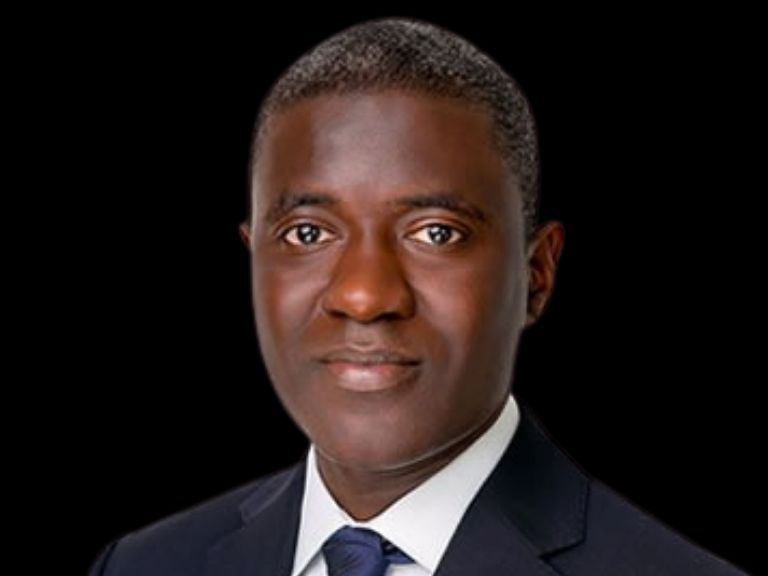
Aminu Maida, Executive Vice-Chairman and Chief Executive Officer of the Nigerian Communications Commission (NCC), has warned that Africa risks losing opportunities in the global digital economy if countries on the continent fail to develop a coordinated telecommunications strategy.
Maida gave the warning at the opening of the 7th Ordinary Session of the Conference Preparatory Committee (CPC) of the African Telecommunications Union (ATU) in Abuja on Monday.
He said Africa’s digital ambitions require a collective approach that would enable the continent to influence global telecommunications policies, standards and investment decisions.
Maida said Africa’s influence in global digital governance would depend less on the size of its delegations and more on the quality, technical strength and consistency of its positions.
“Preparation is not merely a procedural step, but the foundation upon which influence is established,” he said, urging African countries to move beyond participation at global forums and play a more active role in shaping decisions that affect the future of telecommunications.
The meeting comes ahead of the 2026 International Telecommunication Union (ITU) Conference, where global priorities and leadership direction for the telecommunications sector will be determined.
Read also: NCC issues 46 MVNO licences, begins review of rules to spur market competition
Maida said African countries need stronger cooperation among regulators and policymakers on key areas including spectrum management, artificial intelligence governance, data protection, universal access, digital identity, cybersecurity and digital infrastructure development.
He warned that these issues cannot be effectively addressed by individual countries because of their cross-border implications.
“No administration can address these challenges effectively in isolation. Our regulatory cooperation must therefore become more continuous, more technical and more institutionalised,” he said.
The NCC chief executive called for sustained collaboration among African countries through national focal points, regular technical coordination meetings and shared access to research and evidence to support common positions at international negotiations.
He also urged African experts to participate more actively in ITU study groups, technical committees and regional preparatory processes, noting that global telecommunications standards are often developed before major conferences.
“Our objective in Africa is not to resist global standards. It is to help shape standards that are globally sound and sufficiently informed by African realities,” he said.
Maida said the growth of mobile connectivity, digital financial services and internet adoption across Africa has increased the need for the continent to play a greater role in shaping global technology rules.
He said the success of the Abuja meeting should be measured by Africa’s ability to achieve stronger alignment ahead of ITU PP-26, establish mechanisms for continued cooperation and improve participation in global telecommunications decision-making.
Earlier, Nadungu Gagare, Permanent Secretary of the Federal Ministry of Communications, Innovation and Digital Economy, said the meeting would support Africa’s digital transformation agenda.
Gagare said recommendations from the committee would provide a basis for decisions at the forthcoming ATU Conference of Plenipotentiaries and strengthen the union’s capacity to support digital development across the continent.
“As we navigate an era of rapid technological advancement and digital innovation, the importance of collaboration among member states has never been greater,” he said.
John Omo, Secretary-General of ATU, said the committee’s work was important in ensuring that African countries present coordinated positions during international telecommunications negotiations.
Omo said ATU membership had increased from 49 to 52 member states, while associate membership grew from 50 to 56 organisations, with 18 academic institutions participating in the union’s activities.
Read also: NCC pushes for specialised tech skills as Nigeria enters new phase of digital transformation
He said the union had recorded progress in broadband expansion, satellite communications, spectrum coordination, internet governance, rural broadband development, cybersecurity and the resilience of Africa’s digital infrastructure.
However, Omo raised concerns over irregular payment of membership contributions by some countries, saying the funding challenges were affecting the organisation’s ability to plan and implement its programmes.
He said the upcoming conference would provide an opportunity to review ATU’s governance structure, legal framework and financial obligations to align with its expanding responsibilities.
The conference is expected to elect members of the Administrative Council and select a new Secretary-General for the 2027–2031 tenure.
The ATU Conference Preparatory Committee meeting brought together representatives from African governments, regulators, industry stakeholders and academic institutions to discuss the continent’s telecommunications priorities ahead of global digital policy discussions.

Join BusinessDay whatsapp Channel, to stay up to date
Open In Whatsapp


