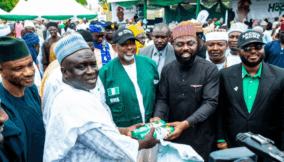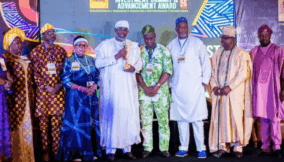
Efforts to advance sustainable buildings and climate-resilient cities in Nigeria are being undermined by fragmented initiatives and a lack of coordination among stakeholders, the Green Building Council Nigeria (GBCN) said on Wednesday at the opening of the Future Cities Summit 2026 in Lagos.
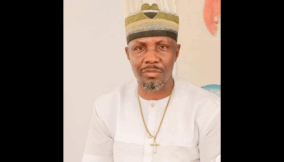
Speaking at the summit themed “Building the Future: Scaling Sustainability for Greener Cities,” Danjuma Waniko, president of GBCN, said Nigeria is not short of sustainability initiatives, innovation or policy interventions, but lacks the framework needed to connect and scale them.
“The real issue is not that nothing is happening, but rather it’s an issue of disconnectedness and fragmentation,” Waniko said.
“We have many different people and organisations who are doing great work in this space. But it often feels like there is no connective tissue. There is no clear framework connecting our efforts,” he added.
Read also: Africa’s borderless economy is outgrowing its financial infrastructure, says tech expert
The two-day summit, organised by the GBCN, brought together policymakers, developers, financiers, academics, urban planners and climate experts to discuss pathways to building sustainable and resilient cities.
Waniko noted that sustainability activities are taking place across government institutions, the private sector, academia and local communities, but their impact remains limited because they are often implemented in isolation.
“They are often scattered. They are not visible enough. And so ultimately, even though a lot is happening, these things are not reinforcing one another and they are not delivering impact at the scale we would like,” he said.
According to him, one of the central questions confronting the sector is why years of discussions, policies and projects have not translated into the scale of transformation needed to address climate risks and rapid urbanisation.
“Why does awareness not translate into action? Why does the finance that is available not reach the projects that need it? Why do policies remain on paper? Why do good ideas struggle to become normal practices?” he said.
He added that the summit was designed to foster practical discussions on housing, climate resilience, urban growth, sustainable construction materials and financing mechanisms.
Representing Governor Babajide Sanwo-Olu at the event, Oluwasegun Williams, senior special assistant on urban development, said Lagos’ rapid population growth continues to place significant pressure on infrastructure, housing, transportation and environmental systems.
“Every day, thousands of people choose Lagos because they believe in its promise,” Williams said while delivering the governor’s address.
“That confidence inspires us, but it also reminds us that growth must be carefully planned, responsibly governed and sustainably managed.”
He described Lagos as Africa’s largest city and one of the continent’s fastest-growing urban economies, noting that the challenge is not whether the city will continue to grow but how to ensure that growth remains inclusive and environmentally sustainable.
“The real question is, how do we ensure that our growth remains inclusive, resilient, environmentally responsible and economically sustainable?” he said.
Williams highlighted several infrastructure projects undertaken by the state government, including rail and water transportation systems aimed at reducing congestion and carbon emissions.
According to him, the Blue Line Rail carried more than 3.5 million passengers in 2025, while the 37-kilometre Red Line is already moving thousands of commuters daily.
He also pointed to the state’s Omi Eko water transport initiative, which involves the deployment of electric ferries and upgrades to terminals and waterways.
On climate adaptation, Williams said Lagos has upgraded more than 40 critical drainage channels and implemented flood management measures to protect over one million residents exposed to flood risks.
The summit also featured discussions on sustainable housing, urban resilience, green finance and the development of a national decarbonisation and resilience roadmap for Nigeria’s building and construction sector.

Join BusinessDay whatsapp Channel, to stay up to date
Open In Whatsapp