The shrinking of Lake Chad is not just an environmental problem; it is a humanitarian catastrophe, while others see it as a lack of opportunities for young people, especially for communities that depend on the lake for fishing, farming, and herding. The lake has become a matter of survival rather than sustainability.
This dramatic reduction, driven by climate change, has caused devastating social, economic, and environmental consequences for Nigeria, Chad, Niger, and Cameroon. Over the past decades, the lake has shrunk by more than 90 percent, transforming from a vast inland sea into scattered ponds and marshes.
The effects of the lake’s decline have also contributed to regional insecurity. As a result, the environmental crisis has become linked with violent extremism, creating a vicious cycle that threatens regional peace and stability.
The Lake Chad basin, once a source of peace and stability among nations, is now a hotspot of insecurity and ecological disaster.
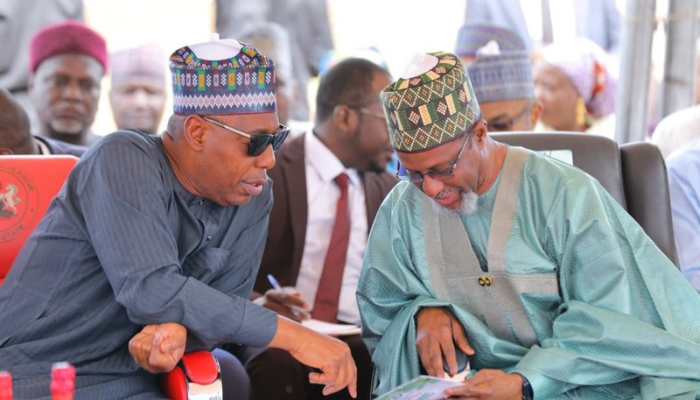
Speaking during the flag-off of the four million tree-planting campaign in Maiduguri, Balarabe Lawal, minister of Environment, described the receding inland Lake as a major catastrophe; however, while acknowledging the frantic efforts of Governor Zulum’s administration to reduce climate change impact in the state, it is worthy of emulation by other state governments.
“I think Governor Babagana Zulum is the hero of climate change campaigner; he has done so much to protect nature. I heard him say that Borno State has enacted laws prescribing stiff penalties for deforestation, but enforcement remains a major challenge. I think, it is only Borno State has enacted these laws. This is commendable and I urge other states to emulate this noble cause to protect our environment.
“We need stronger collaboration among the international community to restore Lake Chad, because of its importance to humanity and the global ecosystem,” he said.
Lawal, therefore, urged non-governmental organisations to complement government efforts in addressing environmental challenges, while calling for closer collaboration among state governments and agencies, including the National Agency for the Great Green Wall (NAGGW) and the Agro-Climatic Resilience in Semi-Arid Landscapes (ACReSAL) project, to tackle desertification and climate change.
The initiative aims to promote the adoption of clean cooking energy, reduce dependence on firewood, curb deforestation, and improve environmental sustainability across the state.
“Borno State Government commenced the 2026 Tree Planting Campaign with the planting of four million seedlings as part of efforts to combat desertification and mitigate the adverse effects of climate change.
Lawal, who launched the four million seedlings, said,” This ceremony goes beyond the planting of trees; it represents a renewed reaffirmation of our collective commitment to restoring degraded landscapes, combating desertification, conserving biodiversity, expanding Nigeria’s forest cover, and strengthening our capacity to address the impacts of climate change.”
According to him, Zulum also intensified its clean energy campaign by distributing 21,000 free cooking stoves and cylinders to primary school teachers and staff of the Borno State Environmental Protection Agency (BOSEPA).
“This is a laudable initiative; you can’t ask people not to fell without providing alternative means. Giving free cooking stoves and cylinders to teachers and environmental vanguards is commendable.”
He disclosed that the headquarters of the National Agency for the Great Green Wall had been relocated to Kano to strengthen efforts to combat desert encroachment, adding that the agency’s Director-General had commenced operations from the state.
Speaking at the event, Governor Babagana Zulum said the environmental degradation has continued to fuel poverty, displacement and conflict in the state, stressing that sustainable development cannot be achieved without a stable ecosystem.
According to him, Borno’s location within the Sahel belt has made the state particularly vulnerable to desertification and the adverse effects of climate change.
“We will continue to work with national and international partners to protect our environment through tree planting, ecological restoration and climate resilience initiatives,” he said.
He commended the Federal Ministry of Environment for donating cash and other intervention materials to mitigate environmental challenges in the state, while also acknowledging the support of the ACReSAL project.
Governor Zulum announced that 23,700 cooking gas cylinders would be distributed free of charge to teachers and environmental vanguards across the State’s 27 local government areas in phases.
The first phase of the programme will provide 5,000 cooking gas cylinders and clean cooking stoves to beneficiaries in Maiduguri Metropolitan Council and Jere Local Government Area, with the remaining beneficiaries in the other 25 local government areas receiving theirs subsequently.
According to Zulum, “Our administration firmly believes that environmental restoration must remain an integral component of our rebuilding and recovery agenda. As we rebuild communities affected by conflict, we must also restore the ecosystems that sustain them. Sustainable peace and sustainable development cannot flourish in a degraded environment.”
“For us in Borno State, this campaign carries even greater significance. As a frontline State within the Sahel region, we continue to experience the harsh realities of climate change, including desert encroachment, dwindling vegetation, rising temperatures and environmental degradation. These challenges threaten agriculture, food security, water resources and the livelihoods of millions of our people.”
He urged beneficiaries of the free cooking stoves and gas cylinders to use them effectively and to refrain from using firewood, noting that the initiative aims to promote clean energy, improve public health, and protect the environment.
“The 5,000 cylinders we’re distributing today are just a flag-off. All the 21,000 primary School teachers will benefit. They are making a lot of sacrifice, and we need to support not only to discourage the use of firewood and tree felling but to improve health,” he said
A similar gesture was also extended to 2,500 staff members of BOSEPA, with the governor urging them to remain dedicated to protecting the environment and ensuring a cleaner, healthier, and more sustainable Borno State.
A dummy cheque for N112.5 million was presented to the beneficiaries, with the governor explaining that the funds would be used as vouchers to refill gas cylinders at designated locations, making it easier for beneficiaries to adopt clean cooking practices without the immediate burden of refill costs.
Some of the beneficiaries commended the Zulum administration for gifting her and other colleagues free cooking stoves and gas cylinders, saying, “I am deeply grateful to the governor for this wonderful gesture. The cooking stove and gas cylinder will go a long way in reducing the financial burden on my family, especially with the recent hike in filling a gas cylinder.”

Join BusinessDay whatsapp Channel, to stay up to date
Open In Whatsapp