Nigeria is losing an estimated $2.5 billion every year to malnutrition, placing lawmakers under renewed pressure to translate budget approvals into measurable improvements for millions of vulnerable women and children.
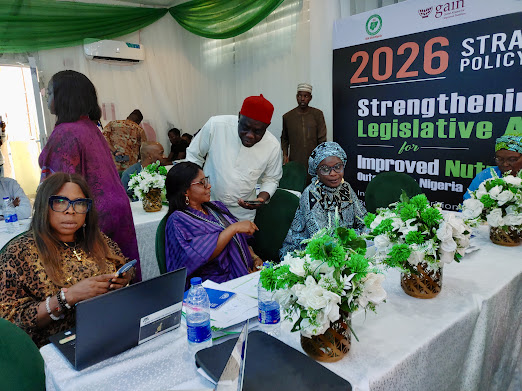
The warning came at the 2026 Strategic Policy Dialogue on Strengthening Legislative Action for Improving Nutrition held in Lagos, where federal and state lawmakers, development partners, nutrition experts and civil society organisations called for stronger legislative oversight, increased domestic financing and the speedy passage of the proposed National Nutrition Bill.
The meeting concluded with participating states adopting fresh commitments to strengthen nutrition governance, financing and accountability.
Read also:
Speaking during the dialogue, Chike Okafor, chairman of the House of Representatives Committee on Nutrition and Food Security, described malnutrition as one of Nigeria’s biggest but least acknowledged economic crises.
According to him, data from the World Bank shows the country loses about $2.5 billion annually to malnutrition through lower productivity, rising healthcare costs and diminished human capital.
“According to the World Bank, Nigeria loses about $2.5 billion annually to malnutrition. That is 12 percent of our GDP gone to reduced productivity, healthcare costs and lost potential. To put it plainly, malnutrition costs Nigeria more than oil pipelines and power outages combined. Nutrition is not a special welfare issue; it is an economic issue,” he said.
Okafor noted that Nigeria’s Human Capital Index stands at just 0.36, meaning a child born today will realise only 36 percent of his or her productive potential under current health and education conditions.
He said the country continues to grapple with alarming nutrition indicators, with 32 percent of children under five stunted, 7.1 percent wasted and 58 percent of women of reproductive age suffering from anaemia.
“These are not just health statistics; they are indicators of lost economic potential,” he said.
Beyond the statistics, discussions at the forum centred on what participants described as Nigeria’s recurring governance failure like approving nutrition budgets without releasing funds, implementing programmes inconsistently and conducting weak oversight over ministries and agencies responsible for nutrition interventions.
Okafor challenged both the National Assembly and state legislatures to move beyond passing budgets to ensuring approved allocations produce measurable outcomes.
He urged state assemblies to establish dedicated nutrition budget lines, ensure prompt release of approved funds and require quarterly performance reports from implementing agencies.
“We must move from appropriation to outcomes,” he said.
The accountability message echoed resolutions contained in the communiqué issued at the end of the two-day policy dialogue, where participants agreed to institutionalise legislative nutrition champions, strengthen budget tracking, hold periodic accountability sessions and increase oversight of nutrition spending.
Sunday Okoronkwo, the executive decretary of the Civil Society Scaling Up Nutrition in Nigeria (CS-SUNN), identified inadequate financing as the biggest obstacle to addressing malnutrition despite years of policy development.
According to him, Nigeria already has national nutrition strategies and action plans, but implementation continues to suffer because allocated funds are either insufficient or not released when due.
“Nigeria has strategies, has plans. But when it comes to financing these strategies and these plans, you find that at times money is allocated, but when the time comes for release, it’s really a challenge,” he said.
He explained that the policy dialogue was organised to present lawmakers with evidence showing why nutrition financing deserves greater legislative attention.
“We are here to put before them the statistics, the numbers. We are here to make a case for those who cannot speak for themselves, so that adequate financing and money will be put aside to fund nutrition interventions that will turn the tide on the current nutrition situation we have in Nigeria.”
Despite the challenges, Okoronkwo said advocacy efforts were beginning to produce results.
He disclosed that more than 20 states have adopted six-month paid maternity leave policies, while state governments have committed and released over N7 billion through the Child Nutrition Fund, enabling Nigeria to leverage nutrition commodities valued at more than N14 billion through support from development partners.
Also speaking, Uju Rochas-Anwukah, the senior special assistant to the president on Public Health and Focal Person for Nutrition in the Office of the Vice President, said the Federal Government had introduced the Nutrition 774 (N774) initiative to eliminate fragmented implementation of nutrition programmes across the country.
According to her, previous interventions often operated independently, resulting in duplication and inefficient use of limited public resources.
“Nutrition 774 is not another government programme but a national convergence architecture created to harmonise nutrition interventions across the federal, state and local government levels,” she said.
She disclosed that 417 local government areas have established Food and Nutrition Committees, while nine states have inaugurated State Councils on Nutrition.
However, she warned that Nigeria still has about 19 million stunted children, with malnutrition continuing to reduce educational attainment, labour productivity and long-term economic growth.
She urged lawmakers to pass the proposed National Nutrition Bill, strengthen budget allocations, ensure timely release of approved funds and institutionalise legislative oversight of nutrition programmes.
Similarly, Osita Okonkwo, country director of Nutrition International in Nigeria, argued that nutrition should no longer be viewed solely through a public health lens but as a national economic investment.
He said investment in nutrition remains one of the highest-return development interventions available to government because it improves educational outcomes, workforce productivity and long-term economic performance while reducing healthcare costs.
He called on federal and state legislatures to strengthen nutrition-sensitive laws, protect nutrition financing, promote food fortification and intensify oversight to ensure public investments translate into measurable improvements in people’s lives.
The dialogue ended with participating states including Adamawa, Bayelsa, Cross River, Enugu, the Federal Capital Territory, Gombe, Jigawa, Kebbi, Sokoto and Zamfara, making state-specific commitments to strengthen nutrition financing, establish nutrition departments, implement six-month paid maternity leave, improve budget releases and adopt the Federal Government’s Nutrition 774 initiative.
The communiqué reaffirmed that while Nigeria has made progress in strengthening nutrition governance, malnutrition remains a major barrier to human capital development and that stronger legislative leadership, adequate financing and effective oversight will determine whether the country’s nutrition commitments finally move from policy documents to measurable outcomes.

Join BusinessDay whatsapp Channel, to stay up to date
Open In Whatsapp