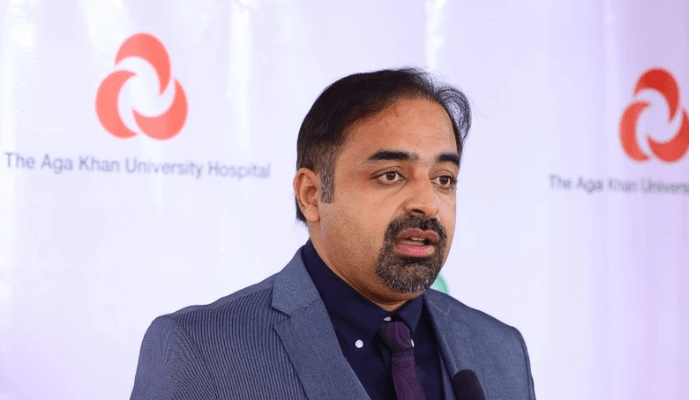
Kenya is positioning itself as a regional healthcare destination, with Aga Khan University Hospital, Nairobi aiming to attract more African patients and reduce billions lost to overseas treatment.
Read also: Meet Africa’s youngest billionaire investing $100m in Dangote’s planned Kenya refinery
Speaking at the 14th annual BusinessDay CEO Forum on Thursday, Khurram Jamal, chief operating officer of Aga Khan University Hospital, Nairobi, said the continent’s healthcare crisis is driven less by a shortage of hospitals than by years of underinvestment in the people who deliver care.
“The biggest challenge is not buildings. It is people,” Jamal said. “A hospital cannot function without trained specialists. You can build a modern hospital in months, but it takes more than a decade to train a medical specialist. If we fail to invest in people today, the next generation will inherit empty hospitals.”
He said governments across Africa have focused on constructing hospitals while paying too little attention to training, retaining and adequately compensating doctors, nurses and specialists.
“Infrastructure is visible and attractive politically, but buildings do not treat patients,” he said. “A state of the art operating theatre is useless without a trained surgeon, anaesthetist and specialist team.”
According to the African Export Import Bank, Africa loses about $7 billion every year as patients seek treatment abroad. More than 300,000 Africans travel to India annually for medical care, highlighting persistent concerns over access to specialist treatment and confidence in local healthcare systems.
Jamal said the exodus of patients is closely linked to the shortage of medical specialists and the continued migration of healthcare professionals.
“We are witnessing a total healthcare drain,” he said. “Doctors are leaving because they are underpaid and do not have the environment they need to practise. Patients are leaving because they do not believe they can get the care they need at home.”
He said the shortage is particularly severe in specialist medicine, noting that Africa has about 2,000 registered cardiologists serving a population of more than 1.2 billion people, leaving roughly one cardiologist for every 600,000 people.
“When someone has a life threatening heart condition and sees those numbers, travelling abroad becomes a survival decision rather than a luxury,” he said.
Jamal said poor working conditions and significant differences in pay across countries, as well as between urban and rural areas, continue to drive healthcare workers away from underserved communities.
“If we do not protect the people who care for our health, we should not be surprised when they choose to leave,” he said.
Read also: Kenya eyes fourth debt buyback in two years to ease repayment pressure
He argued that rebuilding confidence in African healthcare requires hospitals to meet internationally recognised quality standards rather than relying on patriotism to keep patients at home.
“We cannot ask patients to stay simply because they are African,” he said. “Hospitals must earn that trust through quality, safety and internationally recognised accreditation. Accreditation is not about putting a certificate on the wall. It changes how medicine is practised every day.”
He said accreditation helps standardise treatment, improve patient safety and ensure consistent quality across health facilities.
Jamal also called for greater investment in medical education and research, saying Africa cannot continue relying on foreign institutions to train specialists and develop healthcare solutions.
The World Health Organization estimates that countries need at least 4.45 doctors, nurses and midwives per 1,000 people to provide adequate healthcare. Africa has only about 1.5 health workers per 1,000 people.
He said the continent continues to lose many of its specialists after overseas training, with about 70 percent of African doctors who leave for specialist training abroad never returning.
“The Covid 19 pandemic exposed our vulnerability,” Jamal said. “If Africa had stronger research institutions, vaccine development and manufacturing capacity, we would have been better prepared.”
Although Africa accounts for 17 percent of the world’s population and bears 25 percent of the global disease burden, it participates in only about 4 percent of global clinical trials, he noted.
To address these challenges, Jamal said the hospital,which is also a multinational, has adopted a model that combines specialist care with medical education and research.
Read also: Nigerian Capital Market Strategy 2026: H1 Reform Milestones and H2 Outlook
“We are not simply building a hospital. We are building an ecosystem of knowledge,” he said. “Our specialists treat patients, teach future healthcare workers and conduct research every day.”
The hospital employs about 200 full time specialists and runs 16 fellowship programmes, alongside undergraduate medical education, nursing programmes and residency training across nine medical specialties. Its clinical research unit has conducted 17 clinical studies and trials since 2020, with three approved for use in Kenya.
As part of that strategy, Aga Khan University Hospital has partnered with Kenya Airways to establish a medical travel network designed to make it easier for patients across Africa to access specialist treatment in Nairobi instead of travelling outside the continent.
The initiative connects Nairobi with 34 African destinations and provides patients with pre-travel medical assessments, specialised inflight arrangements where necessary, airport transfers, hospital coordination, accommodation support and follow up care through telemedicine after they return home.
“We are creating what is essentially a bed to bed care system,” Jamal said. “From the moment a patient decides to travel until they return home, we coordinate their journey and continue supporting their care.”
He said the partnership is intended to remove logistical barriers that have encouraged many Africans to seek treatment in Europe and Asia.
“If we invest in people, strengthen research, improve quality and build connected healthcare systems, there is no reason Africans should continue looking outside the continent for treatment,” Jamal said. “We can keep African talent, African patients and African healthcare investment where they belong, here in Africa.”

Join BusinessDay whatsapp Channel, to stay up to date
Open In Whatsapp