Despite facing barriers that extend beyond schools and the workplace, from inaccessible infrastructure to discrimination and limited opportunities, many Nigerians with disabilities are breaking stereotypes and excelling in some of the country’s most demanding professions.
Experts believe their journeys reflect resilience, determination, and a growing call for a more inclusive society where talent, not disability, defines success.
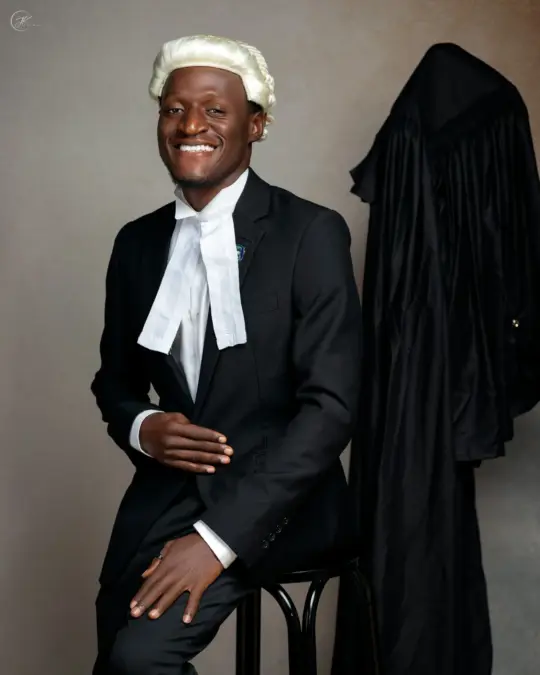
Recently, Nehemiah Danjuma made history as a deaf lawyer from Northern Nigeria, and Abdulsalam Idowu became a successful lawyer despite crippling challenges and having engaged in street begging for education.
Nancy Omaballa, educational psychologist and disability inclusion advocate, said the increasing number of Nigerians living with disabilities thriving in academics and careers is a reminder of what can be achieved when disability is not viewed as a limitation.
“As Nehemiah Danjuma said, his success came from sheer resilience and fighting for accessibility and inclusion, amongst other things,” she said.
However, Omaballa emphasised that while awareness is improving and some schools and workplaces are opening their doors to individuals with disabilities, the reality is that there is still a lot of room for improvement. “Access to appropriate education is still very low, and our cultural and religious misconceptions are still creating barriers for individuals with disabilities to properly integrate into our society.
“I’m happy that schools and workplaces are gradually including individuals with special needs, but it should go beyond just admitting a student or employing a person with a disability; we need to be intentional about ensuring that certain things are put in place like accessible infrastructure, assistive technology, and flexible work arrangements where it is needed,” she urged.
She expressed optimism that the success story of Nehemiah Danjuma, as well as other success stories of individuals with disabilities, will help create better conditions for individuals with disabilities in Nigeria.
Jessica Osuere, chief executive officer at RubiesHub Educational Services, said the success of many Nigerians living with disabilities is proof that disability does not mean inability.
“We are seeing cases of such people against all odds rising to prominence in their chosen career paths. Just like Nehemiah Danjuma, their successes can be attributed to hard work, support from family and mentors, better access to education, assistive technology, and the determination to succeed.
“When people with disabilities have access to good education, the right support, and equal opportunities, they can achieve great things just like everyone else,” she said.
However, Osuere emphasised that to make that happen more often, schools and workplaces must become more inclusive. She encouraged schools and workplaces to provide accessible classrooms and offices, assistive technologies, sign language interpreters where needed, and ensure that no one is left behind because of a disability.
“By fully embracing the spirit of SDG 4, Nigeria can unlock the talents of millions of persons with disabilities and build a more productive and inclusive society,” she said.
Before Danjuma’s feat, Israel Etim, a blind journalist with the Federal Radio Corporation of Nigeria (FRCN), thrived in broadcast journalism, while Joshua Atta, a cripple, through hard work and determination, thrived in his tricycle ‘keke’ driver business.
Atta decided against the odds to venture into the transport business instead of begging for alms, and today, he is an employer of labour, instead of waiting to be employed.
The instances of Nigerian disabled people making progress in academics and business abound, as they defy significant odds to thrive in the society.
Despite systemic infrastructure challenges, these physically challenged people overcome barriers by using screen readers, adapting to remote learning, and utilising advocacy groups.
According to the Commonwealth of Learning report, assistive technologies are powerful tools for increasing the potential of learners with disabilities to succeed.
Buttressing the need to support children with disabilities, Gabriel Ogbechie, the chairman of Brace Foundation, advocated for full-blown public special schools that will exclusively cater to special needs children in Nigeria.
“What we have seen in Nigeria is normal schools that say that they cater for special needs children, but the truth is that they’re normal schools that just bend backwards to actually tolerate these children, and not cater for them.
“So, we look forward to having full-blown schools that do nothing but cater to special needs children,” he said.
Research has shown that people with disabilities are thriving in academics and careers through intense personal resilience, leveraging assistive technology, and relying on peer support.
The government should intensify efforts to provide the physically challenged citizens with inclusive education and the needed infrastructure to thrive in their chosen careers.
The Universal Declaration of Human Rights (1948) cited in UNESCO (2021), underscored the right to education for all people, including physically challenged persons.
However, in many developing countries, such as Nigeria, these ideals have not been fully realised.

Join BusinessDay whatsapp Channel, to stay up to date
Open In Whatsapp