…as military confirms foreign fighters’ presence in Nigeria after BusinessDay exclusive story
..It shows our military operations yielding results- Makama
The recent arrest of a suspected foreign ISIS operative by the Nigerian military could signal a significant shift in the nation’s counterterrorism efforts. This development confirms earlier reporting by Business Sunday regarding the Sahel crisis, where terrorists attempted to infiltrate a town to loot essential cholera medication and other supplies alongside foreign nationals, including a cameraman.
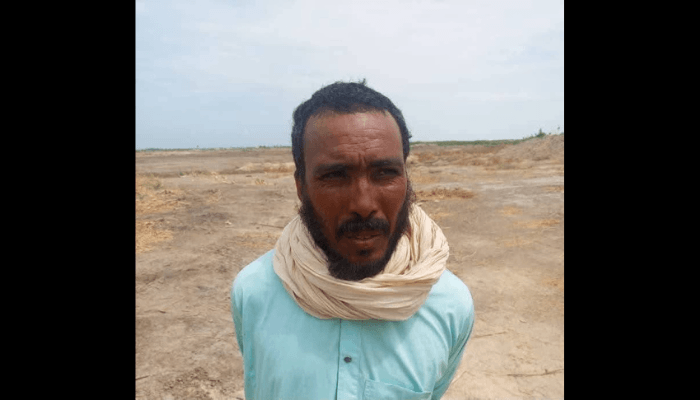
Troops from Operation Hadin Kai captured the suspect—believed to be a Moroccan national—on Monday during exploitation operations in the Abadam Local Government Area of Borno State. This mission followed a failed attack by the Islamic State West Africa Province (ISWAP) on Cross Kauwa in the Kukawa Local Government Area last Sunday. During the initial assault, military personnel neutralised an ISWAP cameraman, leading to the recovery of video footage and a Sony camcorder that proved instrumental in identifying the foreign suspect through joint forensic analysis with international partners.
Military sources indicate the suspect is currently undergoing intelligence exploitation. This breakthrough reinforces long-standing intelligence assessments regarding the presence of foreign nationals within terrorist ranks and is expected to provide deeper insight into the structure of ISIS support networks in the Lake Chad region. Military authorities have promised to share further details as investigations proceed.
Read also: Why Nigeria’s security crisis reflects failure of conscience, not just policing
The internationalisation of the insurgency
Zagazola Makama, a counter-insurgency analyst specialising in the Lake Chad basin, noted that this arrest offers fresh insight into the increasingly international character of the insurgency. While security agencies have long held that ISWAP is primarily composed of local recruits from Nigeria, Niger, Chad, and Cameroon, the group relies on a network of influential foreign operatives. These individuals act as force multipliers, providing specialised expertise in drone warfare, communications, explosives, intelligence, and tactical planning.
Makama highlighted that ISWAP’s recent adoption of sophisticated battlefield tactics—such as the use of commercial drones for reconnaissance and combat support—is not a development that emerged organically from local ranks. Instead, security officials believe these methods were introduced by foreign ISIS-linked trainers who drew upon combat experiences from the Middle East and the Sahel. This tactical evolution presents new challenges for the troops of Operation Hadin Kai, necessitating advancements in force protection, electronic warfare, and counter-drone capabilities.
The success of recent military operations is measured not only by the number of neutralised combatants but by the removal of these high-value architects and specialists. Investigators are now focused on uncovering how these operatives entered the region, who facilitated their movement, and the methods used to transfer funds and technology.
Regional security architecture under pressure
Sadiq Muhammad Mustapha, Senior Programme Officer at the Dispute Resolution and Development Initiative (DRDI), warned that the shrinking regional security framework poses a significant risk to Nigeria. He emphasised that the crises unfolding in the Sahel—characterised by violent extremism, arms trafficking, and political instability—cannot be viewed as isolated national issues.
”We share long borders with Niger, Benin, Cameroon, and Chad, alongside historic economic and social connections,” Mustapha stated. “What happens in the wider Sahel will definitely affect Nigeria’s security environment.” He argued that because threats operate across borders, responses must also be regional, calling for a strengthening of security architecture that bridges the gap between ECOWAS, the Alliance of Sahel States (AES), and the Multinational Joint Task Force (MJTF).
Mustapha urged Nigeria to leverage its position as the region’s largest economy and principal military power to sustain practical regional security cooperation. “The overriding objective should be to ensure that regional security cooperation remains complementary rather than fragmented,” he warned, noting that political realignments should not be allowed to undermine intelligence sharing or defense diplomacy.

Join BusinessDay whatsapp Channel, to stay up to date
Open In Whatsapp