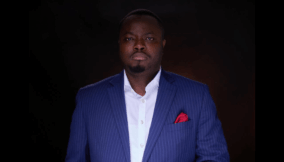
Taiwo Oyedele, Nigeria’s minister of finance and Coordinating Minister of the Economy, has inaugurated a 15-man advisory committee tasked with strengthening fiscal governance and accountability across all government institutions and translating reforms into results.
Speaking while inaugurating the committee in Abuja on Tuesday, Oyedele noted that the reforms introduced by President Bola Tinubu, which included the removal of fuel subsidies, the unification of the exchange rates, and the comprehensive tax reform, among others, imposed real immediate costs on households, businesses, and communities. Hence, the committee’s focus now is on converting the reforms into tangible results.
The committee’s work, according to the Minister, is organised around four clear pillars, including economic policy advisory, public financial management, economic coordination and translating reforms to results.
He said, “It is one thing to make or change policy. It is quite another to translate that change into outcomes ordinary Nigerians can feel. The true measure of reform is not the number of policies announced or macroeconomic indicators cited. It is the number of jobs created, inflation declining, deniers stabilising, and businesses investing with confidence. It is about the number of lives improved. That is why this committee has been established.
“So this committee matters. Nigeria’s economic landscape is intricate, and our fiscal space is constrained. Every policy lever we pull affects multiple stakeholders in ways that are not always predictable.
“The natural instinct in government is often to act quickly, to announce, to declare progress, and to move to the next initiative. But quick actions without rigorous analysis frequently creates new problems while solving old ones. This committee exists therefore to provide independent, evidence-based, and constructive external counsel.”
Speaking further, Oyedele said that the committee was birthed out of the need to strengthen fiscal governance across all government institutions. How revenues are generated, the quality and priority of the government’s spending, borrowing, and transparent reporting.
He emphasised that the committee is not to validate the decisions of the government but to challenge its assumptions and point out the trade-offs. Noting that Nigeria’s fiscal challenges are technically intricate, Oyedele urged the committee to take complex macroeconomic questions and translate them into actionable insights.
He explained that the government’s aspirations remain bold – achieving 7 percent annual GDP growth and building a $1 trillion economy by 2030. This, he said, requires thinking differently, questioning assumptions, challenging long-held theories, and developing strategies while remaining deeply grounded in economic reality.
In his remarks, Raymond Omach, Permanent Secretary, Finance, said that the committee’s inauguration is in furtherance of the government’s commitment to strengthen fiscal governance and enrich the nation’s economic policy through informed external engagement.
“Today’s inauguration reflects the Honourable Minister’s conviction that the complex economic challenges before our nation require not only some public institutions but also the collective wisdom, experience, and perspective of accomplished professionals from diverse fields.
“The Ministry views this committee as an important platform for constructive dialogue, evidence-based policy, advice, and practical solutions that will strengthen fiscal sustainability, deepen public confidence, and support the government’s economic reform agenda,” he said.
Speaking on behalf of the committee, Abubakar Suleiman, Managing Director of Sterling Bank and chairman of the committee, said that the team will act as a vital link between the government and the everyday reality of the Nigerian public.
“I must also assure you that we will serve as a bridge so that what is happening on the street, what is happening in the farms, what is happening in the factory, beyond the noise, beyond the social media noise, beyond the conversations that are held spontaneously in marketplaces and beer parlors, we will try to listen and hear what people are really saying, where Nigerians are really feeling the pain, which of the policies is really working, and then we’ll bring that back to you in an environment that you can work with.”
Members of the committee include: Ayo Teriba, Chief Executive Officer (CEO) of Economic Associates (EA), Uche Uwaleke, President of the Capital Market Academics of Nigeria (CMAN), and Chinyere Almona, Director General and Chief Executive Officer of the Lagos Chamber of Commerce and Industry (LCCI). Partner and Head of the Infrastructure, Dimeji Salaudeen; Government & Healthcare Sector in the Deal Advisory practice at KPMG Nigeria.
Other members include: Jani Ibrahim; National President of the Nigerian Association of Chambers of Commerce, Industry, Mines and Agriculture (NACCIMA),; Segun Ajayi-Kadri; Director General and Chief Executive Officer of the Manufacturers Association of Nigeria (MAN), Baba Yusuf Musa; President of the Nigerian Economic Society (NES), Joseph Nnanna; Chief Economist at the Development Bank of Nigeria Plc (DBN), Suleyman Ndanusa; Independent Non-Executive Director at the Nigeria Sovereign Investment Authority (NSIA)
Damilola Akinbami, Chief Economist at Deloitte West Africa; Jide Adeola, Co-Founder, Executive Director, and Partner at Avante Consultants Limited; Idris Bello-Osagie, Senior Adviser, Economic Strategy to the Minister; and Segun Oloketuyi, Chairman of Chams Holding Company.

Join BusinessDay whatsapp Channel, to stay up to date
Open In Whatsapp