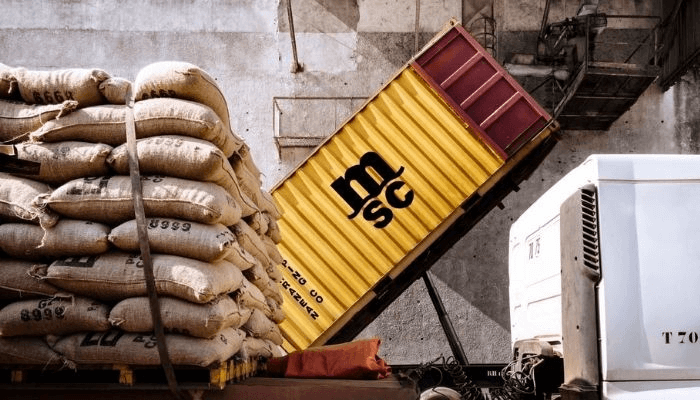
The Mediterranean Shipping Company has introduced a Peak Season Surcharge of up to $3,000 (over N4.1m at the July 13 CBN rate) on imports into Nigeria and West Africa from the Indian Subcontinent.
In an advisory shared with customers, the world’s largest shipper said its decision was influenced by increasing demand along the route amid limited operations.
“Due to strong demand on the trade between IPAK and West Africa, MSC Mediterranean Shipping Company will apply a Peak Season Surcharge (PSS) to all cargo from the Indian Subcontinent (India, Pakistan, Sri Lanka, Bangladesh) to West Africa,” it wrote.
“As of 10 July 2026 (gate-in date) until further notice, the PSS will be charged as follows for all cargoes: $2000 for 20’ Dry and Reefer, $3000 for 40’ Dry and Reefer.”
Nigeria gets the majority of its pharmaceutical and motorcycle imports from the Indian subcontinent, especially India. In the first quarter of the year, Nigeria spent N75.6 billion on imports of pharmaceuticals from India and an additional N80 billion on “Motorcycles and cycles fitted with auxiliary motor, petrol fuel, capacity >50<250cc, CKD”, according to the National Bureau of Statistics. Pakistan also accounted for N5.2 billion of pharmaceutical imports.
MSC has been here before. In late December 2025, MSC announced new import fees for Nigerian shippers starting January 1, 2026. The import documentation fee for 20-foot containers increased from N45,000 to N58,500, while the fee for 40-foot containers rose from N72,000 to N93,600.
Port additional charges also jumped 60 percent from N50,000 to N80,000 for 20-foot containers, and from N100,000 to N160,000 for 40-foot containers.
Read also: Consumers face higher prices as biggest shipper raises import fees
At the meeting with stakeholders in December, MSC cited operational costs, including factors like high inflation rates, as a rationale for the hike.
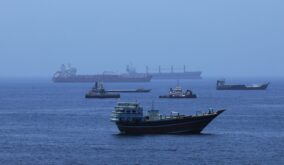
The latest surcharge comes weeks after one of the most significant disruptions to global shipping in recent years. Hostilities between Iran and the United States escalated into direct military confrontation in late February, which threatened the security of commercial shipping through the Strait of Hormuz, the narrow waterway, serving as a primary route for a third of global oil and gas trade, while also serving as a key corridor for containerised cargo moving between Asia, the Middle East and global markets.
A barrage of attacks on vessels, military patrols, electronic interference affecting navigation and sharply higher war-risk insurance premiums prompted many shipowners and charterers to adopt a more cautious approach.
Container shipping lines had already been rerouting many services around the Cape of Good Hope to avoid attacks by Yemen’s Houthi movement in the Red Sea, adding thousands of nautical miles to voyages between Asia and Europe and tying up vessels for longer periods.
It is not clear if this was a factor in MSC’s decision, but new tensions around the Strait of Hormuz have compounded pressures by increasing uncertainty that has further tightened vessel availability and pushed up operating costs across parts of the global shipping industry.
According to its website, MSC Nigeria officially moves “more than 200,000 Twenty-foot Equivalent Units (TEUs) per year.” In March, it signed a 45-year concession to develop a new container terminal at Snake Island Port in Lagos.

Join BusinessDay whatsapp Channel, to stay up to date
Open In Whatsapp