In an era where the quality of higher education is increasingly measured by academic integrity, institutional accountability, and the competence of graduates, the University of Ilorin is taking deliberate steps to ensure that its affiliated institutions are not left behind.
From strengthening examination processes to expanding academic programmes and deepening quality assurance systems, the institution is positioning its network of affiliated colleges as partners in delivering globally competitive tertiary education.
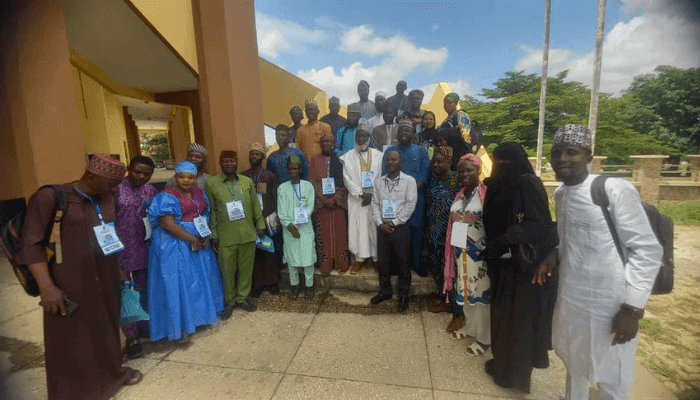
This commitment came into sharp focus during a three-day capacity-building workshop organised by the University’s Centre for Affiliated Institutions, where administrators, academics and examination officers from affiliated institutions converged on the University of Ilorin to review existing practices, share experiences and acquire new skills for improving institutional performance.
Held at the University Auditorium Basement, the workshop featured paper presentations, interactive sessions, deliberations and practical engagements on issues ranging from examination moderation and result processing to institutional management and compliance with affiliation requirements.
For the University, the workshop represented more than another annual gathering; it reflected a growing recognition that sustaining academic excellence across affiliated institutions requires continuous training, effective supervision and a shared commitment to quality assurance.
Welcoming participants, Yahya Oyewole Imam, Professor of Islamic Studies, who is the Director of the Centre for Affiliated Institutions, described capacity building as an indispensable ingredient for institutional growth and long-term sustainability.
According to him, investment in human capacity strengthens institutional resilience by improving leadership confidence, enhancing coordination and workflow, promoting a culture of continuous learning and ultimately delivering better educational outcomes.
He explained that the workshop was carefully designed to address practical challenges encountered in administering affiliated institutions through presentations delivered by experienced academics and administrators actively involved in affiliation exercises.
The sessions covered teaching quality, examination moderation, preparation of marking guides, assessment of examination scripts, result processing and other operational responsibilities critical to maintaining academic standards.
Imam urged participants to contribute actively by sharing experiences from their respective institutions while seeking clarification on issues relating to the Centre’s core responsibilities.
Growing network, expanding opportunities
Beyond improving operational efficiency, the workshop also highlighted the steady expansion of the University’s affiliation network.
Imam disclosed that the number of affiliated institutions had risen from 17 to 21 within the past year, reflecting growing confidence in the University’s affiliation system.
The newly affiliated institutions include Ansar-Ud-Deen College of Education, Isolo; The Polytechnic, Aran-Orin; Daaru’l Khayr College of Arabic and Islamic Studies, Ibadan; and Omo Hiya College of Arabic and Islamic Studies, Ilorin.
The expansion has also been accompanied by the approval of additional academic programmes for existing affiliates.
Haruna Rasheed Centre for Arabic and Islamic Studies, Ilorin, has received approval to commence a Diploma in Common and Islamic Law alongside its existing Diploma in Arabic and Islamic Studies.
Similarly, Imam Malik College, Ibadan, has been approved to introduce a Bachelor of Arts degree in Arabic and Islamic Studies in addition to its diploma programme.
The University Senate has equally approved nine new undergraduate programmes for Kwara State Polytechnic, Ilorin, complementing its existing Diploma in Islamic Law and Common Law.
While celebrating these milestones, the Director reminded affiliated institutions that affiliation is a privilege that must be sustained through strict adherence to approved academic standards.
He urged institutions to remain committed to quality delivery while avoiding practices capable of undermining the integrity of the affiliation arrangement.
He also appealed for the speedy resolution of pending regulatory matters affecting some institutions.
According to him, Imam Malik College, Ibadan, and Ansar-Ud-Deen College of Education, Isolo, are yet to receive bills for resource verification from the National Universities Commission (NUC), despite having secured programme approvals and signed Memoranda of Understanding with the University.
He expressed confidence that participants would maximise the knowledge gained during the workshop to strengthen their respective institutions.
The Director also appreciated the Vice-Chancellor of the University of Ilorin, Wahab Olasupo Egbewole (SAN), Professor of International Law for his continued support for the Centre, while commending facilitators, organisers and participants for their dedication.
Examination moderation: Protecting academic integrity
A major highlight of the workshop was a presentation by Ayodele Fajonyomi, a Professor of the Department of Adult and Primary Education, University of Ilorin, who examined the role of examination moderation in safeguarding academic standards.
Presenting a paper titled ‘Quality Assurance in Examination Moderation: Expectations from Internal Examiners in Affiliated Institution Colleges,’ Fajonyomi observed that assessment remains one of the most critical responsibilities of every higher education institution because it provides evidence that students have acquired the knowledge, skills, competencies and values required by their programmes.
He noted that although teaching and internal assessment take place within affiliated colleges, the responsibility for maintaining uniform academic standards ultimately rests with the parent university.
According to him, examination moderation is therefore not merely an administrative requirement but an essential quality assurance mechanism.
Fajonyomi identified poorly constructed examination questions, weak marking schemes and inadequate documentation among the recurring deficiencies observed during moderation exercises.
He explained that these shortcomings often arise not from a lack of subject knowledge but from insufficient adherence to established quality assurance procedures.
To strengthen examination quality, he recommended that affiliated institutions institutionalise internal moderation before forwarding examination materials for external review.
He also advocated regular training for internal examiners, heads of departments and examination officers to keep them abreast of evolving quality assurance standards.
Other recommendations included the adoption of modern information technology to minimise computational errors during result processing, improved archiving of examination records to strengthen transparency and accountability, and embedding examination quality assurance as a continuous institutional culture rather than an occasional administrative exercise.
Fajonyomi stressed that every internal examiner should regard moderation as a professional obligation aimed at preserving academic integrity and producing graduates capable of competing nationally and globally.
Building institutions, not just partnerships
As universities increasingly rely on affiliation arrangements to widen access to higher education, the effectiveness of those partnerships depends largely on maintaining common academic standards.
The University of Ilorin’s approach suggests that affiliation is not simply about extending institutional reach but about building the capacity of partner institutions to deliver quality education that reflects the University’s academic reputation.
Through continuous training, expanded academic opportunities and a firm commitment to quality assurance, the institution is reinforcing the principle that excellence in higher education is sustained not only by infrastructure and curriculum, but also by competent personnel, robust systems and an unwavering culture of accountability.

Join BusinessDay whatsapp Channel, to stay up to date
Open In Whatsapp