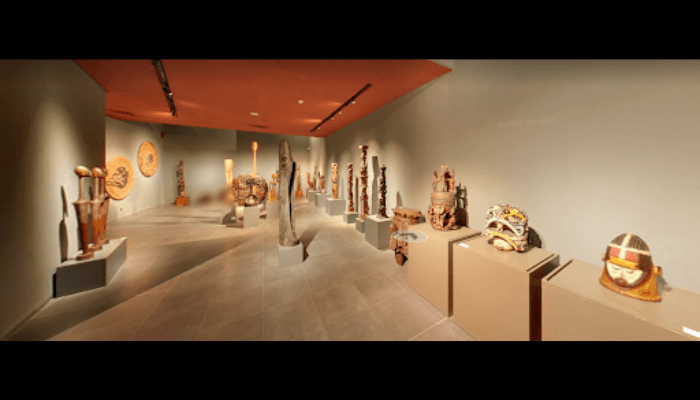
A title like this naturally invites suspicion. Is this a defence of forgery, of passing off a fake as the real thing? Not at all. A forgery depends on deception: it only works if people are led to believe they are looking at something they are not. The copies I am defending are the opposite. They are openly and honestly presented as copies, standing in for originals that are inaccessible, too fragile to travel, or have rightly been returned to the communities from which they were taken.
Nigeria’s own debate over the restitution of the Benin Bronzes has brought this question into focus. As looted objects find their way back from museums in Europe and North America, some institutions have adopted an interesting practice: before an object leaves, they produce a high-fidelity scan, or an exceptionally accurate cast, and keep it for display. The original goes home. The replica stays behind, still telling the story of Benin’s artistic achievement and the history around it. Museums doing this are treating it as a way of honouring two obligations at once: returning what was wrongfully taken, and still educating the people who walk through their doors. That practice made me think harder about what a copy actually loses, and whether that loss is always as serious as we think.
Part of the answer lies in recognising that a work of art carries more than one kind of value. The philosopher Robert Stecker draws a useful distinction here. One is aesthetic value: the qualities we experience directly through seeing, the balance of a composition, the modelling of a bronze, and its colour and form. The other is artistic value, which depends on history and context: who made the work, when, and the place it occupies in the story of art. These two values do not always go together. A carefully produced replica of a Benin bronze can capture its elegance and the skill of the casting with astonishing accuracy, so the aesthetic experience stays largely intact. What it cannot offer is the historical fact that this particular object was cast in the royal guild centuries ago, survived the invasion of 1897, and travelled through a long history of collecting and, now, restitution. That kind of authenticity belongs only to the original.
Recognising this distinction changes the debate. It lets me think that a replica loses something real while still keeping something valuable. It is not the original, and it can still carry real aesthetic and educational weight. Confusing the two kinds of value is what leads museums into unnecessary dilemmas, treating a replica as worthless the moment it fails the authenticity test, when only one part of its value was ever at stake. Constantine Sandis makes a version of this same argument in an essay on the ethics of museum replicas. Much of what we experience standing before an artwork, he argues, depends on what we actually see rather than on what we know about its history. The forms, colours, and proportions in front of our eyes are the same whether we are looking at the original or a faithful replica. What changes is our awareness of authenticity. We value the original for its unique historical relationship to its maker and its past, not for how it looks.
Many visitors resist this instinctively, and that resistance is worth taking seriously rather than arguing away. When people learn an object is a replica, the encounter often changes: the excitement fades, and the sense of standing before history goes. That reaction is entirely understandable. There is something moving about standing before an object that has survived five hundred years. No serious museum professional would deny it. But that feeling does not settle the question of what a copy is for. Knowing you’re looking at a copy clearly changes the encounter, even if philosophers can argue about whether it should.
It is also worth remembering that museums can have more than one purpose. If a museum, like the National Museum in Lagos, exists primarily to preserve unique historical objects, then authenticity really is essential. If its primary purpose is education, though, the answer becomes less obvious. At bottom, the real question is not about copies. It is about what a particular museum is for. That is because museums are not all trying to do the same thing. A museum whose purpose is to preserve unique historical objects has every reason to insist on authenticity above all else. An archaeological museum, a memorial museum, and a house museum may care just as much about their collections, but they exist for different reasons. For instance, a memorial museum built around a single historical event: a room preserved exactly as it was on a particular day and objects that survived a war or a disaster. The whole point of such a place is contact with the actual thing that was there. A replica in that setting would not just be a lesser version of the experience. It would undermine the museum’s whole reason for existing, because here the object’s history isn’t beside the point; it is the point. A university museum sits at the opposite end of that spectrum. It is judged less by what it owns than by the learning it makes possible. If an honestly labelled replica helps a student grasp the genius of a Benin caster or the naturalism of an Ife sculptor, it is advancing that museum’s purpose rather than falling short of it, because the point of the encounter was always the form and the skill, not the specific piece of bronze. Whether a copy belongs in a gallery, then, cannot be answered in the abstract. It depends on what that particular museum is trying to accomplish, and a rule that makes sense for one kind of institution can be exactly wrong for another.
This is not a small point in our Nigerian context. Most Nigerians will never visit the British Museum or the Louvre. Many will never have the chance to visit the National Museum in Lagos or the museums in Benin City, Jos, or Ife. Geography and cost place much of our own artistic heritage beyond the reach of the people to whom it belongs. A child in a secondary school in Sokoto or Yenagoa is no less entitled to encounter the achievement of Benin’s bronze casters than a child in Lagos, yet the accident of geography currently decides who gets that encounter and who doesn’t. A faithful replica offers one answer to that gap. A well-made cast of a Benin bronze or a digital reconstruction of an Ife head can travel into schools, libraries, and community museums across the country in ways an irreplaceable original never safely could. No one imagines the replica replacing the original. It reaches people the original, sitting in one building, cannot reach on its own.
None of this argues for filling museums with copies or for lowering curatorial standards. A poor replica is worse than no replica at all. If a museum chooses to display one, it needs to be excellent, and it needs to be honestly labelled. The moment a visitor is allowed to mistake a copy for an original, the whole justification collapses into something closer to deception than education.
As Nigeria continues recovering its dispersed cultural heritage, it is worth resisting the temptation to reduce every case to a single question: is this the original? That is a good question. It is not always the most important one. Sometimes the better question is whether the object, original or not, helps the museum or cultural institution do what it exists to do. Where the purpose is preservation, only the original will serve, and no replica, however skilfully made, should be allowed to substitute for it. Where the purpose is learning and reaching people the original cannot reach, an honestly presented replica is not a consolation prize. It is doing real work of its own, and dismissing that work out of blind loyalty to originals serves no one, least of all the people the museum exists to serve.
A word on terms, for anyone keeping track: “copy” and “replica” have been used here more or less interchangeably, as they usually are in ordinary conversation, though strictly a replica implies a closer, more faithful reproduction than a copy needs to be. What I have been defending throughout is the stricter, better sense: high-quality, honestly labelled reproductions, not cheap or careless ones. A shoddy copy earns none of the arguments made here. A well-made replica might.
Dr Jess Castellote, Director of the Yemisi Shyllon Museum of Art, Pan-Atlantic University.

Join BusinessDay whatsapp Channel, to stay up to date
Open In Whatsapp