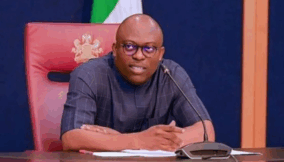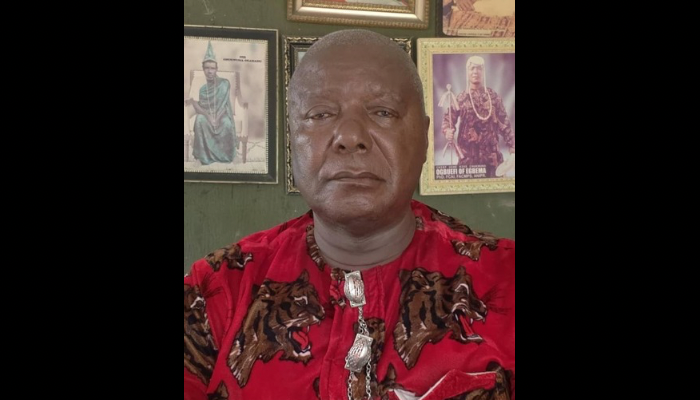
Mike Uche Chukwuma, a retired Assistant Commissioner of Police, who heads the Rivers Neighbourhood Security Watch, opens up in an exclusive interview with IGNATIUS CHUKWU on the inside possibilities of a state police system. He is the author of ‘The Noble Policeman’, onetime PPRO, now pushing for state police. He wrote a book on the need for community policing and has been a resource person to the police since the days of Tarfa Balogun on community policing sysyem. Excerpts:
You are known to be, not just a supporter, but a propounder of the concept of both state policing and community policing system. How do you feel now that Nigeria seems to go that way?
I feel great, I feel glad. I’m happy that Mr. President has courageously, despite all varied opinions, approved state policing for Nigeria. It is a thing we have been clamoring for a long time ago. I have gone to the extent of writing a book on it, on community policing, while I was still in service.
You may help us here in terms of concept. Community policing, state policing, are they exactly the same?
Yes, they are one and the same because, the concept is about the participation of the people. You see, let me be very frank to you. We inherited a policing system that is not only monolithic, but it was not built with context of Nigerians around it. It was established by the British colonial masters to serve the interest of the masters, their economy and trading. It was an oppressive institution created to subjugate us to slavery today.
That is why you now see what they call brutality, oppression, public distrust, etc. So, the community policing system is a state where the community will physically participate in the police discussions, security discussions, issues concerning their community, and the police itself will also see themselves as part and parcel of the community. Where the indigenes of the of the area will play major role in deciding the security arrangement of their community vis-à-vis with the police.
I understand you to be talking about a bottom-up policing system, while what we have is the top-bottom system?
Yes, that’s what we have.
Are you sure the new system they’re bringing will also not be another structure, another top-bottom structure?
Well, let me tell you one thing, eh. Practically speaking, unless they politicize it, at this beginning, to have it right, if they venture to look at academic qualification without practical policing experience particularly, and without somebody who has that deep interest in community policing system in all the states of the federation, you’ll find it difficult. If it’s also politicized whereby it is based on political patronage, it will be difficult again.
Political control was what people complained in years past when state police was suggested. If they allow bad appointments, then the fears of the people would be right.
What we expect is that the nomenclature would be decided as to title of the head in each state; if it’s a Commissioner of Police, or Director-General whichever that it is. The majority of the people that will be recruited to work will be indigenes of the community—of the state, and from the communities and local government having a proportion.
If the non-indigenes are even being recruited, they should be non-indigenes that are resident in that particular state for a long time and who have stakes. For instance, a man who is here for the past 40 years, he has grown-up children who were brought up here—those people are qualified to be treated as indigenes of that state because they have stakes in that state.
Are there structures already on ground that may make this new idea to work in Rivers State?
Well, like I told you, in 2018, Rivers State established Law No. 8 of 2018, which established the Neighborhood Watch Security Agency. That agency is still on ground. It has not been disbanded. Unfortunately, due to political wrangling, the activities of that body were disrupted. But since then, the government on ground has not activated it by way of funding. But majority of the men and women in that agency are still standing by, waiting to be called upon. That is the truth. So, that is a structure and platform under which the state can start off. It’s just like the Lagos State Neighborhood Watch that has been in existence, well-funded and well-catered for. Just like the Hisbah in the North. There are some other vigilante groups in even in Southeast. I know of Anambra State, Bayelsa State too, etc. So, Rivers State has a platform on which it can start her own.
With your experience and inside knowledge, do you think Rivers State missed a great opportunity to have gone ahead in private policing, by what happened to Neighborhood Watch Agency?
Yes, I must very categorical with you. The state government miscalculated by not boldly funding the State Neighborhood Watch Agency.
Let me make it clear, at the risk of blowing our own trumpet, but I need to tell you this. As at the time the Neighborhood Watch was operationally functional, we helped so much in intelligence gathering. We contributed to most of the successes that the police recorded. One particular commissioner of police, now retired as an Assistant Inspector-General of Police (AIG), was the main beneficiary. This is because we shared intelligence with him on daily basis, very important intelligence. Lots of incidents that would have taken place were nipped in the bud.
We were more on covert roles, not overt. We didn’t want to come and tell ourselves that we were the ones giving out information. Most of our men went on surveillance duties, and we’ve shared information with not just the police, in actual fact, even other security agencies gained very much from us. We were more interested in proactive policing than reactive. And they helped the state.
What happened after was a surprise. After winning the case in court on legitimacy, disruption set in, funding stopped. We expected the court victory to open doors for funding and full operations. Rivers State would have been on a very high level by now.
Despite the salary stoppages, we were also working until when things were bad, there was a communication breakdown. Many phased out.
Do you think the state police that is coming to Rivers State will fall back on vigilante structures within the states, or are they just going to inherit the state command of the Neighbourhood Watch or to inherit the various commands of the vigilantes?
Let me make the state police system clear to you. When it was approved, the Inspector-General of Police set up a committee led by the Professor, Olayemi Akinwumi, to work out the structure.
And actually, I waited to see the result of that committee report. Some people contributed and said that I would have been a member of that committee. I told them it’s not necessary. The IG, who incidentally is my friend, was my ASP mate (he’s a cadet, I’m not a cadet), and a very good friend, probably forgot my name because of the enormous duties he’s carrying, and formed this committee. But I said let me wait for the committee report. And when the report came out eventually, I went through the excerpts, and I was not comfortable with some of what they brought out and sent to the National Assembly.
It said that 60% of policemen would be drafted into the state police, allocation, and all the rest. I said it was not necessary because, one, the police is monolithic. It’s a federally controlled police system and they have a system of theirs as inherited from the British colonial policing system.
If care is not taken, it may be like new wine in old wine bottle. There won’t be any change or innovation. Secondly, transferring even 1% of the federally controlled police, people who are already gainfully employed, will now block chances for some of the teeming youths of the various states who are not employed, from getting employment.
Let me tell you one thing, when youths are unemployed, the tendency of getting into crime will be there. These people are already federally-controlled, they’re already gainfully employed.
Get some of these youths in the state who have no gainful employment but are qualified, into the state policing architecture. Let them get a good job and then be meaningfully and gainfully employed. Let them have a stake. Let them see that their contributions are being appreciated and being compensated by way of salary and other ways.
You see, being stakeholders, they know their communities and their communities know them. The tendency of identifying criminals earlier will be there. The tendency of criminals avoiding to commit crime because they know that if they do, these boys know them and they know the boys. They will say, ‘na we, we’.
This way crime will be reduced. You see, I’m a specialist in crime prevention. While in the police, I specialized or took special interest more in preventive security than reactive security.
In the police, I was too realistic. They called me stubborn person, they seemed to resent me, and they were posting me to dangerous places; burning place. But when I got there, I knew how I played my way and got into the heart of the people, the communities, and doused whatever tension there was.
I did not get posting to any great division because of how they perceived me. It’s only few Police Commissioners that recognized some of the little qualities God put in me. Somebody like CP Sir Kieran Dudari, Suleiman Abba, Amusa Bello, CP Tunji Alapini. These ones recognised me and then gave me sensitive positions and gave me the opportunity to showcase what God put in me. To me, state police system is long overdue.
What is your advice since they did not even take the route you suggested? So, what’s the advice now?
I have not said that; because they have not come out with the final operational position. Initially, they said that the state commissioners will be answering to the Inspector General of Police, not to the governor. The governor had no role initially. But today, they have said that the state police boss would be appointed by the state governor. There would be State Police Council playing its role the way National Police Council plays its role, with the State House of Assembly too. These were my suggestions. In fact, I can’t see anything I suggested that has not been picked up.
The only thing that I have not seen, and I’m still waiting, is when they say that there’s a Commissioner of Police in the state, you now appoint and call other one a state police commissioner. There will be confusion.
I suggested that since the states have Director-General nomenclature, federal has commissioner of police, Civil Defence has Commandant system, the DSS goes by State Director, the head of the state police should be Director-General of the State Police.
This is to ensure there is a clear demarcation such that if you’re going to see the Commissioner of Police in the state, you know you’re going to see Federal Commissioner of Police. When you’re going to see the Director General of the state police, you know it’s for the state. There will be a clear distinction as to their duty too. When there is a clash, there shouldn’t be a clash in the first place, the duties should be spelt out.
There should be a boundary where the state can go into and where federal police can go. If there is an inter-state clash between a state and another, the National Police can now come in, take the case, and go look into it and then give the two states Commissioners of Police, and also the state Directors—General of Police, standard report. Then they will now know who has the jurisdiction to charge to his state court, or when it should be the federal court.
That was why I advised in an instance when they wanted to model state policing and I saw it was going toward the US system. I said that for me, the American culture, American environment, American economy, American society are quite different from ours. We have a polarized system culturally speaking, religiously speaking, economically speaking, and otherwise. It is far different from a straight culture, tradition, and religion.
If they had wanted to introduce community policing in Nigeria, they should have looked for seasoned officers who know exactly what has been. Now, if you look at the North, they have Penal Code guiding their police. In the South, we have Criminal Code law. Now, even in the South here, the laws, our culture, our policing system are different from the one of the North. In the South, a police officer can in pursuit of a felon, break in and break out of living quarters. In the North, you don’t do it. If a suspected felon runs into the residence, you can’t follow him because you cannot see the face of the wife of an Alhaji. It’s a heinous offence.
But here, the law protects the policeman. This is why I said you cannot bring an American to come and teach us community policing. I was punished for that, quite alright, for speaking out my mind. Now, coming to tradition, religion, and culture. Even in Rivers State here, there are small cultural differences.
So, talking about community policing, we need indigenous people to play indigenous roles. And, should I tell you this, if arrangements are made and the community leaders and chiefs don’t get a role to play in this state policing architecture they want to build, we’ll all get it wrong. Because it is not about the police carrying uniform, carrying gun, going to arrest people. It is about getting the participation of the community people. The community is part and parcel of the policing. The issue of trust is a big factor.
For now, it is very difficult to get information from community people or members of the public by the police now because of issue of trust. They don’t know who they are talking to.
Another problem with Nigerian police today is the issue of transfer of officers. Today, a man can be transferred from Zamfara down to Ebonyi, from Sokoto down to Ahoada. The next moment, he’s been transferred out. Towards the end of my retirement, I was thrown to Cross River State border town with Cameroon. At what point would I understand the culture and tradition of the people? Then, when I was promoted Assistant Commissioner, what did they do? They took me to Sokoto. What was I going to do there in Sokoto? So, it in this concept of community policing is good for the community to play major role.
If the community is involved, trust will be built. The people may suspect your agenda. That is why the state police is a welcome development. You know, some people say governors will hijack it. I say they are not being established for politics or for election. It’s established to police the people for the people and by the people.
What relationship will exist between the state police and the vigilantes, and who will the vigilance groups report to; federal police or state police?
Let me tell you one thing, if we get it right, the vigilantes will be extinguished.
There won’t be reason why the state police, made up of indigenes of the state, are there, vigilantes will be operating. The vigilantes have no command-and-control structure.
They are not under anybody, not under any defined jurisdiction. They are not accountable to anybody. But the state policemen and officers are accountable to a line of hierarchy known by the government, known by the people. It is known by the government at the state level and at the federal level. Mind you, there will also be a committee of state policing heads, which will be having periodic meetings.

Join BusinessDay whatsapp Channel, to stay up to date
Open In Whatsapp