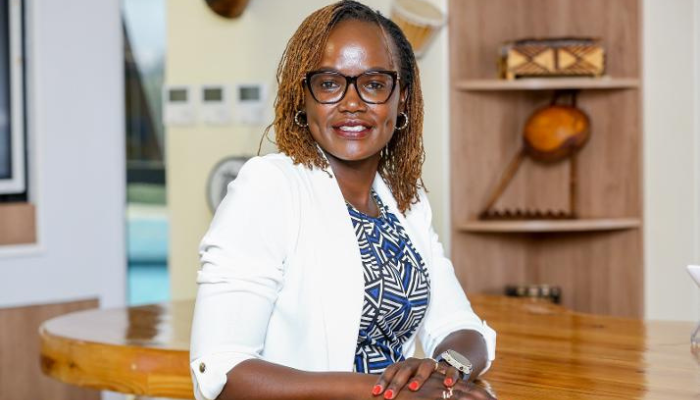
Artificial intelligence is rapidly reshaping how Nigerians shop, with nearly nine in 10 consumers now using AI-assisted tools to make purchasing decisions. Yet, as digital commerce becomes more sophisticated, trust—not technology alone—remains the foundation of secure payments. In this interview with WASIU ALLI, Irene Auma, senior director, Risk, Visa Sub-Saharan Africa, spoke on the the findings of Visa’s Stay Secure Survey, examining how AI is changing consumer behaviour, the growing fraud risks linked to social commerce, and why confidence in digital payments remains resilient despite rising scam attempts. She also explains how AI is being deployed to combat fraud, what will be needed to secure emerging payment methods such as crypto and AI payment agents, the shared responsibility of banks, government and payment providers in strengthening the payments ecosystem, and the objectives of Visa’s Stay Secure campaign for Nigerian consumers. Excerpt:
Nearly 88 percent of Nigerians are using AI to shop. What does that tell you?
It tells you that Nigerian consumers are not waiting to be convinced. They have decided. AI is already part of how people discover products, compare prices, and make decisions every day. When you look at the data, 88 percent of Nigerian respondents said they use AI specifically to find the best prices or deals, and over 72 percent use it to compare options across brands and retailers. That is not experimentation. That is habitual behaviour. What it means for us is that the security infrastructure supporting those transactions has to keep pace with that adoption. The technology driving the shopping experience and the technology protecting it need to evolve together. Convenience cannot come at the cost of safety.
Social commerce is booming here. Over 82 percent of Nigerians have bought directly through social media. Is that a security concern?
It is a reality we take seriously. Social platforms are built on trust and familiarity, and that is precisely what makes them attractive to fraudsters. Among Nigerians who experienced a scam in the past year, social media was the most common channel where it happened, cited by 57 percent of those victims. That is significant. What is also notable is that 78 percent of Nigerian respondents say they discover new brands through social media, which means the shopping journey increasingly begins there. That does not mean consumers should avoid social commerce. It means they need to be more aware of what they click on and who they buy from, and it means the payment systems operating in those environments need to be as robust as anywhere else. Visa’s detection tools are designed to work across every channel, not just at traditional checkout.
Over half of Nigerian respondents reported being victims of a financial scam in the last 12 months. How do you make sense of that alongside the high trust in digital payments?
People are distinguishing between a bad experience and a broken system. They know that fraud happens, but they also know that the vast majority of transactions go through without incident, and that there are mechanisms for recourse when things go wrong. Over 96 percent of Nigerians surveyed said they trust digital payments to some degree, and nearly 74 percent said they mostly or completely trust them. That trust is not naive. It is based on lived experience of a system that, most of the time, works. Our job is to make sure it keeps working and that when fraud does occur, it is caught quickly and the consumer is protected. That is why Visa invests heavily in real-time fraud detection and why we work closely with banks and issuers in Nigeria to close gaps as soon as they appear.
Nigerians want alerts when something looks suspicious. 64 percent said that would make them feel more secure. Is Visa delivering on that?
That finding reflects what we are already building toward. Consumers expect the institutions they trust, their banks, their payment providers, and their governments, to take the lead on protecting them. Sixty-four percent want real-time alerts when something looks suspicious, and 39 percent say seeing a familiar, trusted logo at checkout makes them feel more secure. Those are clear signals. Visa’s tools already support these capabilities, and our partnerships with banks and issuers in Nigeria are designed to bring them to consumers consistently. We also see strong appetite for biometric payments specifically. 54 percent of Nigerians said that paying with a fingerprint or face recognition instead of a password would increase their confidence. That technology exists and we are actively building on it across the market.
76 percent of Nigerians say AI has made scams easier to recognise. Does that surprise you?
It speaks to the digital literacy that is developing in this market, and that is genuinely encouraging. Nigerians are getting better at spotting red flags: an unusual payment request, a link that does not look right, a message that creates unnecessary urgency. But I would not read that figure as a reason to relax, because the other side of it is that cybercriminals are also leveraging AI. We are seeing more convincing phishing messages, synthetic identities, and even voice cloning used to impersonate bank staff. The threat is evolving in real time. What does give us real confidence is that 89 percent of Nigerian respondents agreed that AI will play a critical role in protecting consumers from fraud in the future. We share that view entirely. Visa’s fraud detection systems already use machine learning to analyse patterns across billions of transactions globally, and we continue to deepen those capabilities in markets like Nigeria.
There is clearly openness to emerging payment methods here. 66 percent would consider crypto, and nearly 50 percent are open to AI payment agents. How does Visa think about securing those?
The payment method changes. The security principles do not. Whether someone is tapping a card, paying through a digital wallet, or one day authorising an AI agent to complete a purchase on their behalf, they need the same guarantees: strong authentication, real-time monitoring, and a clear path to recourse if something goes wrong. What is interesting about Nigeria specifically is that only about 6 percent of respondents said they have no intention of using any new or emerging payment method. That is one of the lowest opt-out rates across all 17 markets in the survey. Nigerians are enthusiastic early adopters. Agentic commerce is coming faster than many expect, and Visa is already working on the security architecture for that era. We are not watching from the sidelines. We are in the room helping to define what safe looks like.
Who should be responsible for protecting consumers from fraud online, as the survey shows Nigerians are divided?
Rightly so, because responsibility here is genuinely shared. 49 percent of Nigerian respondents pointed to banks or financial institutions as primarily responsible, 35 percent said government or regulators, and 30 percent said payment providers like Visa. All three are correct, and none can do it alone. Banks hold the customer relationship and can act immediately when something looks wrong on an account. Regulators create the framework of standards and accountability that the whole ecosystem operates within. Visa provides the global intelligence layer: we are monitoring fraud patterns across markets around the world and feeding those insights back into local protections in real time. That is the kind of coordinated secure-by-design approach that keeps consumers protected.
What is the Stay Secure campaign looking to achieve in Nigeria?
Informed consumers are our strongest line of defence, and that is not just a talking point. Technology can catch a great deal, but it cannot catch everything. The survey data bears this out: Nigerians who have experienced fraud encountered it most often through social media, websites, and online marketplaces, which are all environments where consumer judgement plays a critical role. When a Nigerian consumer knows to pause before clicking a suspicious link, to question an unexpected payment request, or to verify that a site is legitimate before entering their card details, that vigilance makes a measurable difference. Stay Secure is about building that habit at scale and giving people the confidence to transact freely because they know what to watch for. Transact freely but transact smart.
What is your message to Nigerians navigating this landscape right now?
You are not alone in this. Visa, your bank, and the broader payments ecosystem are working constantly on your behalf, and the data shows that the system is holding up: 96 percent of Nigerians trust digital payments, and that trust is backed by real infrastructure. But your own vigilance matters too. Enable your transaction alerts. Use platforms and payment methods with clear security credentials. If a deal seems too good or a request feels off, stop and verify before you proceed. Nigeria’s digital economy is one of the most dynamic in Africa, and that is something to be proud of. What we are building toward is an environment where every Nigerian can participate in it fully, freely, and safely.

Join BusinessDay whatsapp Channel, to stay up to date
Open In Whatsapp