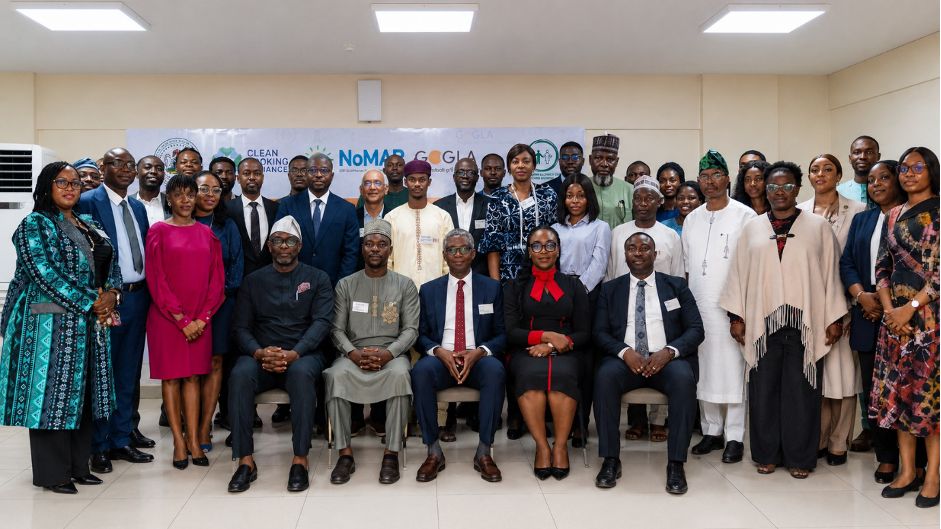
Stakeholders in Nigeria’s carbon markets have convened under the Policy and Regulatory Innovations for Scaling Markets (PRISM) Project to advocate for domestic financing for Nigeria’s carbon market.
The PRISM Nigeria Initiative is a policy and regulatory engagement program working to integrate carbon markets into Nigeria’s domestic financial system, in a bid to promote carbon-linked revenues as a credible, investable asset class and thereby unlock local capital for clean cooking, distributed renewable energy (DRE), and nature-based projects across the country.
The initiative builds on a successful first phase in Kenya, where engagement with financial regulators opened dialogue on recognising carbon revenues within banking, capital market, pensions, and insurance frameworks.
Delivering the keynote address at the validation meeting in Abuja, Ibrahim Shelleng, Senior Special Assistant to the President on Climate Finance and Stakeholder Engagement, said that Nigerian communities must look inward to raise the finance required for climate projects.
He noted that climate finance is too often understood only as international funding, when in fact it is any funding, domestic or international, directed at mitigation and adaptation, and that domestic finance must now become the anchor of Nigeria’s climate agenda.
“Domestic finance brings ownership, and it brings speed,” he said. “Our communities cannot wait two to three years for international validation processes; we must look inward to raise the finance our climate projects need.”
He described the workshop as strategic and timely, coming at a moment when Nigeria must move from years of policy development into implementation.
Also speaking, Michael Ivenso, Director of Energy, Transportation and Infrastructure at the National Council on Climate Change (NCCC), explained that the program is a significant opportunity to unlock financing for the sector, with the potential to positively impact approximately 45 million people by 2030.
He noted that domestic finance and enabling regulations was critical in accelerating Nigeria’s clean cooking transition. Ivenso however emphasized that while carbon credit represents an important source of non-traditional finance, they must be structured as recognised tradable financial instruments to facilitate investment.
He further emphasised the need for stronger participation from domestic financial institutions, noting that development finance institutions have an important role to play in supporting the growth of Nigeria’s carbon market.
Ivenso also highlighted the significance of the Letter of Authorisation (LoA) as a sovereign instrument that enables the monetisation of carbon assets. “Since May, Nigeria has issued 8 Letters of Authorisation, marking an important milestone in strengthening the country’s carbon market framework.
“A credible and transparent monitoring, reporting, and verification (MRV) system will be essential to ensuring the integrity of carbon assets and building investor confidence, reinforcing the principle that every tonne of emissions reduced must be accurately measured and verified,” he added.
In his remarks, Rajeev Gupta of Clean Cooking Alliance said, “Nigeria needs more consistent data flowing through this system. Without good data, there’s no clear picture. Without a clear picture, there’s no informed decision-making. And without that, there’s no real growth in the clean cooking and carbon finance space.”
Stakeholders, under the PRISM initiative, identified regulatory interventions for Nigeria. These include: expanding market participation and financial integration, and ensuring financial stability and risk mitigation.
Others include: the incubation of carbon credit-linked bond instruments, incentivisation of loans for carbon credit-related projects, integration of carbon credit data into climate risk databases, and coverage of carbon credits in ESG and climate disclosures.
PRISM Nigeria is implemented by the Clean Cooking Alliance (CCA) in partnership with the Nigeria Off-Grid Market Acceleration Programme (NoMAP) and the Global Off-Grid Solar Association (GOGLA), in collaboration with the Office of the Senior Special Assistant to the President on Climate Finance and Stakeholder Engagement and the Nigerian Alliance for Clean Cookstoves.

Join BusinessDay whatsapp Channel, to stay up to date
Open In Whatsapp