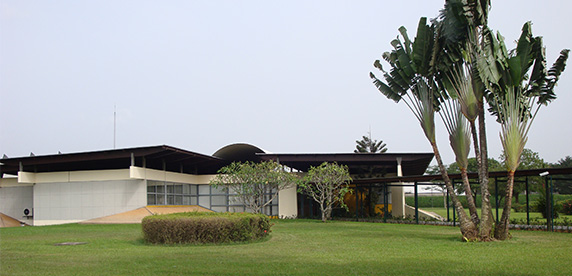
Inside Nestlé’s only African research hub, scientists are redesigning everyday staples to tackle hidden hunger, strengthen food safety and build healthier diets for millions across the continent.
If nutrition is increasingly becoming a science, then the laboratory has become one of the most important battlefields in Africa’s fight against malnutrition.
Tucked away in Abidjan, Côte d’Ivoire, Nestlé’s only Research and Development (R&D) Centre dedicated to Africa is quietly shaping the future of food for more than 40 countries across the continent. It is here that food scientists, nutritionists, microbiologists, agricultural researchers, packaging engineers and regulatory experts work together to answer a deceptively simple question: How can everyday foods deliver better nutrition without becoming more expensive?
Read also: AMCON CEO honoured with African Business Leadership award
The answer begins with understanding Africa itself.
Unlike Europe or North America, where nutritional challenges often centre on excessive consumption of calories, much of Sub-Saharan Africa faces a different reality. Millions of people consume enough carbohydrates to satisfy hunger, yet their diets lack essential vitamins and minerals needed for healthy growth, brain development and immunity.
That reality means products designed for consumers in developed markets cannot simply be imported into Africa without adaptation.
Instead, food must be designed around local crops, local cooking methods, local tastes and, perhaps most importantly, local nutritional needs.
“Our centre here in Abidjan is one of Nestlé’s regional research and development hubs. It is the only R&D centre serving Africa, and our responsibility is to develop innovations that respond to the needs of consumers across the continent,” said Jeroen Muller, Head of Research and Development for Nestlé Sub-Saharan Africa, during a media tour of the facility.
Muller explained that the Abidjan centre forms part of Nestlé’s global network of about 22 research and development facilities, each playing a specialised role in the company’s innovation ecosystem.
At the top of that structure sits the company’s global research centre in Switzerland, where scientists undertake advanced work in molecular nutrition, food safety, material science and clinical research. These teams investigate emerging contaminants, develop new analytical methods and carry out clinical studies to validate health benefits associated with new ingredients.
Once discoveries are made, category-focused technology centres transform them into products for businesses such as nutrition, dairy, beverages and culinary foods.
The final stage happens in regional innovation hubs like Abidjan, where those technologies are adapted to local realities.
“Our role is to understand consumers here: how they eat, what nutrients are lacking in their diets, the ingredients available locally, and how we can translate global science into products that meet those needs,” Muller explained.
That local adaptation extends far beyond recipes. The centre’s scientists conduct consumer studies to understand changing eating habits, monitor emerging food trends and evaluate nutritional gaps across African populations. Every new product is tested not only for taste but also for nutritional performance, food safety, affordability and manufacturing feasibility.
The facility’s work spans five major areas: plant science, cocoa and coffee research, product development, consumer insights and pilot-scale manufacturing.
One research programme focuses on improving agricultural productivity. Scientists work with locally grown cocoa and coffee varieties to identify plant strains capable of producing higher yields while becoming more resilient to drought and climate stress.
For farmers, these improvements translate into stronger harvests and better incomes. For manufacturers, they create a more sustainable supply of raw materials. For consumers, they contribute to long-term food security.
“Helping farmers improve productivity is also part of improving nutrition because sustainable agriculture underpins the entire food system,” Muller said.
The research extends beyond the laboratory.
Nestlé operates a second research station in Divo, about three hours from Abidjan, where new cocoa and coffee varieties are tested under real farming conditions before being introduced to growers across Africa.
Back in Abidjan, innovation moves from the farm to the factory. Within the centre sits what researchers describe as a pilot plant, a miniature factory where new products are produced on a small commercial scale before reaching supermarket shelves.
Unlike a conventional laboratory, this facility replicates industrial manufacturing processes, allowing scientists to assess how products behave under real production conditions.
“We can manufacture products here, evaluate them with consumers, and determine whether they are ready for commercial launch,” Muller said.
The pilot plant is fully certified under international food safety standards, meaning products manufactured there can legally be released for consumer use during market testing.
This reduces the time between scientific discovery and commercial innovation while allowing researchers to gather real consumer feedback before large-scale production begins.
The centre has already contributed to the development and reformulation of several well-known brands consumed across Africa, including Maggi, Milo, Golden Morn and Nido.
More recently, researchers developed Maggi Soy Chunks, a plant-based meat alternative introduced in Egypt to provide affordable sources of protein while responding to changing consumer preferences.
Yet innovation, scientists insist, means little without trust.
Every new ingredient, health claim or package label must withstand rigorous scientific and regulatory scrutiny before products reach consumers.
That responsibility falls to another team working quietly behind the scenes.
For Florence Kacou, Regulatory and Scientific Affairs (RSA) cluster manager for Nestlé Sub-Saharan Africa, food innovation begins not with marketing but with evidence.
“When consumers pick up a product, they do so because they trust it. What they don’t see is everything happening behind the scenes to ensure that trust is justified,” she said.
Her team operates where science, regulation and business intersect.
Before any product reaches the market, specialists verify its safety, review ingredient approvals, confirm compliance with national regulations, assess packaging information and validate every nutritional claim printed on the label.
The challenge is particularly complex in Africa, where regulations differ from one country to another.
A product approved for one market may require modifications before entering another.
That means researchers must navigate dozens of regulatory systems while ensuring that consumers receive consistent information.
Kacou oversees part of a global network of approximately 400 regulatory and scientific professionals working across Nestlé’s operations.
Their work ranges from evaluating new ingredients and packaging materials to generating scientific evidence that supports product innovation.
Increasingly, sustainability has become part of that responsibility.
She cited recent efforts to promote the use of recycled plastics in food packaging as an example of how science and regulation can work together.
Developing those standards required years of research, toxicological assessment, stakeholder engagement and collaboration with regulators before recycled materials could safely enter food packaging systems.
“Safety and innovation move together. We cannot compromise consumer safety in the name of innovation,” Kacou said.
The same principle applies to nutritional claims.
Terms such as high in iron, source of calcium, or fortified with vitamins cannot simply be added to product packaging because they sound attractive.
Each statement must be scientifically substantiated, legally compliant and clearly understood by consumers.
“If claims are misleading or unclear, consumers lose trust,” she said.
That trust, industry experts argue, has become increasingly valuable as African consumers grow more informed about health, nutrition and food quality.
Scientific credibility now influences purchasing decisions almost as much as price.
Read also: Organisational pulse: The business metric leaders are consistently underpricing
For manufacturers, investment in research has therefore become more than a public health initiative.
It is increasingly a business strategy.
Companies that understand local nutritional needs, invest in credible science and build consumer confidence are likely to shape the next generation of Africa’s food industry.
Yet even the most sophisticated research cannot succeed in isolation.
As scientists inside the Abidjan laboratory continue developing foods enriched with essential nutrients, another question remains: What exactly are African consumers missing from their diets and can everyday foods realistically help bridge that gap?
That question lies at the heart of the work carried out by nutritionists at the research centre at Abidjan, whose research focuses not only on products, but on people.

Join BusinessDay whatsapp Channel, to stay up to date
Open In Whatsapp