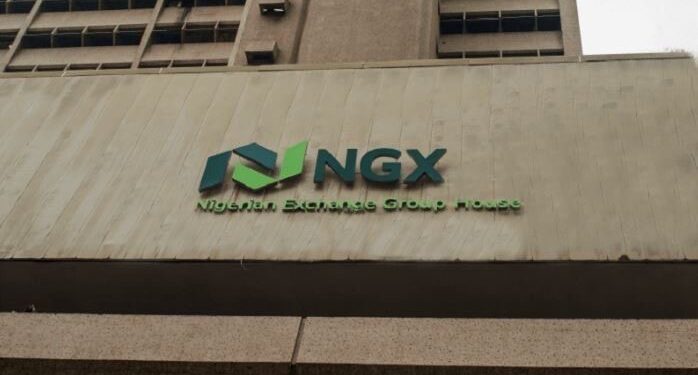
Foreign investor participation on the Nigerian Exchange (NGX) fell in May to its lowest level since March 2026, even as overall market turnover climbed to its highest this year, with concerns over trade settlement cycles tempering offshore appetite for Nigerian equities.
According to recent data from the Lagos-based bourse, offshore investors’ participation fell sharply by 25.9 percent to N183.6 billion, reducing their share of total market activity to 9.45 percent, down from 13.74 percent in April and 16.56 percent in March.
“The decline could be partly as a result of regulation, including settlement cycles and other measures,” Samuel Sule, chief executive officer of Lagos-based consultancy Renaissance Capital Africa, told BusinessDay. “We, however, note that global markets have also seen a downturn in volume and performance.
The report revealed that while foreign participation weakened, total transactions on the nation’s bourse rose by 7.79 percent to N1.94 trillion in May from N1.80 trillion in April, representing the highest monthly trading value recorded on the Exchange so far in 2026.
Foreign investors remained net sellers during the month, with outflows of N96.01 billion exceeding inflows of N87.60 billion, resulting in a net foreign outflow of N8.41 billion.
On a year-on-year basis, market activity expanded significantly, with total transactions in May 2026 surging by 177.42 percent to N1.94 trillion, up from N700.50 billion in May 2025.
Domestic investors lead trading activity
The report indicates that the growth in trading activity was driven almost entirely by domestic investors, as both institutional and retail participants continued to dominate the market despite reduced foreign interest.
Data from the Exchange showed that cumulative transactions between January and May 2026 reached N7.90 trillion, more than double the N3.41 trillion recorded during the corresponding period of 2025.
However, foreign investors have maintained a selling bias throughout the year. Between January and May, foreign inflows amounted to N400.06 billion, while outflows stood at N573.32 billion, leaving cumulative net foreign outflows of N173.26 billion.
The decline in foreign participation comes as Nigeria recently implemented its transition to a T+1 settlement cycle, which took effect on June 1, 2026.
The development followed concerns raised by FTSE Russell, which cited the transition as one of the reasons for pausing Nigeria’s planned return to frontier market status.
The decision, according to analysts, could keep some foreign portfolio investors on the sidelines until operational concerns are resolved.
Kehinde Jones, head of research and strategy lead at Anchoria Securities Limited, said the decline was mainly because foreign investors became “more cautious” due to the new T+1 settlement system, especially concerns about operational changes, timing of cash settlement, and system readiness, as well as weaker global market conditions.
“As expected, foreign investors were not comfortable with the T+1 settlement system. This uncertainty reduced their confidence, limiting their market exposure beyond April levels,” Jones added.
“Once the T+1 system began in June, they started reducing their participation further and became more cautious in the market.”
Investors rotate out of stocks on higher returns on fixed-income instruments
The NGX report also indicates that domestic institutional investors adjusted their portfolios during the month as yields in the fixed-income market became more attractive.
Institutional investors recorded net sales of N93.01 billion in May, reflecting portfolio rebalancing as Treasury bill yields climbed above 17 per cent while Open Market Operation (OMO) rates approached 22 per cent during the month.
In contrast, retail investors remained net buyers, posting a net purchase position of N40.41 billion in May, indicating sustained participation by individual investors despite the market correction.
Analysts expect the market to remain bullish throughout the year despite suffering its biggest loss in 2026, amounting to more than N13 billion in June.
“Naturally, July and August are slower months as a result of the summer lull, and we expect, with some clarity from key regulators, that markets should pick up thereafter,” Sule added.

Join BusinessDay whatsapp Channel, to stay up to date
Open In Whatsapp