Africa is awash with entrepreneurs — and grinding poverty. Opportunities abound for investors keen on accessing these “frontier markets”, but also for those who want to do good as well as make money. The continent is becoming the natural home for people who try to combine the two — the so-called impact investors.
According to the Global Impact Investing Network (GIIN), whose members include asset managers and foundations, these investors poured $9.3bn into east Africa and $6.8bn into west Africa between 2005 and mid-2015. Its report, in association with Dalberg Global Development Advisors, a strategy and policy advisory firm, and with support from the UK government, revealed that there are 40 impact investors active in West Africa alone.
Worldwide, interest is growing — and not just from billionaires or development finance institutions. According to a survey earlier this year from GIIN and JPMorgan, the US bank, $10.6bn was poured into impact investments globally in 2014, with estimates suggesting that figure could reach $12.2bn by the end of this year.
The relationship between philanthropy and investment is shifting, but while Africa may indeed offer opportunities for both, investing in the continent still comes with heightened risk.
Will I sacrifice returns to invest with my conscience?
As special adviser and manager to the family office of Stanley Fink, the former hedge fund manager, Paul Simon has invested in sustainable forestry in Uganda, Rwanda and Tanzania. “Traditional returns from forestry as an asset class would run at 4-6 per cent in Finland,” he says. “Along the equator, we are realising returns in the low 20s.”
Nigeria offers similar rates with “returns upwards of 20 per cent”, says Amy Jadesimi, managing director of the Lagos Deep Offshore Logistics Base. However, she warns: “In Nigeria’s case, investors may have had to stay invested for longer than expected, but for those that stuck it out, there have been significant returns.”
But with returns still relatively high, most governments are not yet looking to introduce tax breaks as incentives for investors, similar to the UK’s Enterprise Investment Scheme.
Are investments locked in for a certain amount of time?
Not always; it will depend on the project. “In some investments it can work like a bond,” explains Murray Simpson, chief executive of the Intasave-Caribsave Group, a not-for-profit organisation. “So there could be returns on an annual or six-monthly basis, but in other investments it could be locked up for three to five years.”
What are the regional and country differences?
Nigeria is all about entrepreneurs; Kenya is home to a burgeoning renewables industry, particularly in solar power. At the broad brush level, there are country-by-country differences, but the macroeconomic themes remain the same: improving access to energy (there are 30m people in Kenya without electricity); financial services and technology (mobile banking, in particular); and boosting agricultural output. Certain innovations, particularly in mobile, are starting to be exported northwards to the developed world. Kenya, notes Anne Muchoki, chairperson of the Kenya Investment Authority, is now 70 per cent banked thanks to the “M-Pesa model”, a mobile money transfer system.
Does high return entail greater risk?
To mitigate risk, investors can opt for impact investing funds that target the region. The Lombard Odier Gateway Development Finance Fund, which was launched in May last year, has approximately 10 per cent invested in Africa, for example. JPMorgan and Axa are among others active in the region, as are a range of private equity and venture capital funds.
There are even crowdfunding options available. Emerging Crowd, which specialises in fast-growing businesses in frontier markets, allows investors to tap into the region for as little as £500.
Yet the risks remain, if not the civil war, famine and political strife of the past decades.
“Political risk has been a big scare story for Africa over an extended period,” says Will Tindall, co-founder of Emerging Crowd. “But Nigeria going through [a relatively peaceful] election was a good sign; they are a bellwether for a lot of the other countries.”
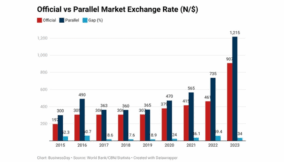
Currency risk is much more of a factor, he says. “[Local currencies are] going to fluctuate more from the nature of the general country stability, and there is correlation here with some of the political risk.”
Hugo Greenhalgh

Join BusinessDay whatsapp Channel, to stay up to date
Open In Whatsapp