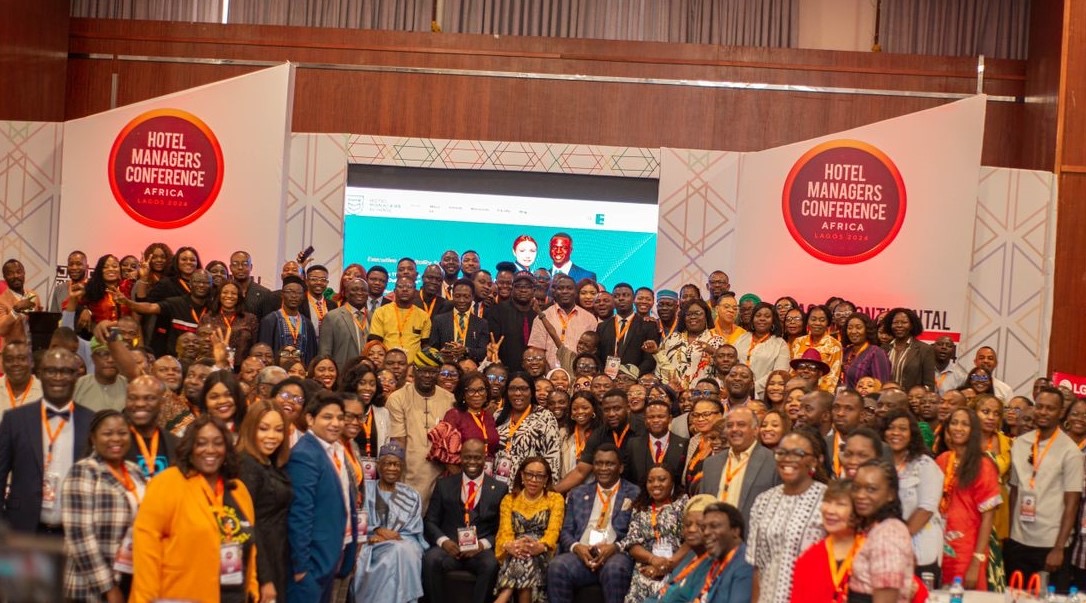
Once again, African hospitality stakeholders will converge in Lagos for the eighth edition of the Hotel Managers Conference Africa (HMCA), where discussions will centre on raising service standards, strengthening policy support, improving workforce capacity and positioning Africa’s hospitality industry for greater competitiveness.
The two-day conference will hold on the theme, “Raising the Bar: Sales, Service and Standards for a Competitive Africa” at the Grand African Ballroom, Lagos Continental Hotel, Victoria Island, from July 11-12, 2026.
Speaking during a breakfast meeting with members of the Association of Nigeria Journalists and Writers of Tourism (ANJET) on Tuesday in Lagos, Olugbenga Omotayo Sunday, chief executive officer, Tojum Hospitality and convener of HMCA, said that the conference had evolved into one of Africa’s leading hospitality gatherings since it began in 2016.
According to Sunday, the conference is expected to attract participants from across Nigeria and 13 African countries.
The above reflects the growth of the conference, which started in Uyo, Akwa Ibom State, before expanding to Port Harcourt, Owerri and Lagos as part of a deliberate strategy to take the initiative across Nigeria’s regions before broadening its continental reach.
“We started small. But today, the conference has grown to become one of the major conferences we have today on African soil,” the convener said.
According to him, the event has attracted participants from all six geopolitical zones of Nigeria, with one edition recording physical attendance from 27 states, while recent editions have continued to draw delegates from West, East and Central Africa.
He disclosed that this year’s edition had already confirmed participants from 13 countries, including Ghana and Uganda, adding that organisers expected another increase in continental participation.
Sunday explained that the vision behind the conference was to bridge the long-standing gap between indigenous hotel brands and international hospitality chains by exposing hotel managers to global best practices and encouraging knowledge sharing.
“We saw the gap between the local brands and these branded hotels, which are international brands.
“We saw that gap over the years because the same people working in these local brands are the same set of people working in these international brands. But they are not behaving the same way,” he said.
He noted that eight years of sustained engagement had begun to yield visible improvements across the industry.
“I will tell you this, that over the years, the conference has drawn all the leading expatriates and by and large, we’re actually bridging that gap.
“You see, over the years, you now see a local brand offering a four to five-star service.”
Capacity building, according to Sunday, remains the conference’s biggest focus because hospitality was fundamentally driven by people.
“We focus more on capacity building because we feel like that is an opportunity for some of these managers to be exposed and cross-breed knowledge within their peers.”
Speaking on the highlights and benefits for the participants, he said that the highlights include; keynote sessions, panel discussions, mentoring opportunities, masterclasses, business networking and exhibitions showcasing hospitality technology and operational solutions.
“Beyond learning, beyond capacity building, beyond having strong panel discussions, we should have that time to find new solutions,” he said.
The convener also highlighted the growing role of digital technology in transforming hotel operations, saying smart solutions had improved payment systems, check-in processes and guest experiences.
“So, we are embracing anything digital, because first, it makes us smart, and two, it makes our operation very easy,” he said.
Sunday also acknowledged persistent challenges facing the hospitality industry, including multiple taxation, poor infrastructure, flooding, electricity costs and insecurity, urging governments to pay greater attention to policies affecting the sector.
“I would say policy. Policy making is key. Government needs to do more with regulations. Government needs to look at enabling environments, because the lack of power, the road, look at floods now.
“There are some hotels today that have shut down completely. Today now 40 percent of our income is going to power,” he said.
On workforce issues, Sunday admitted that disparities in remuneration between senior management and junior employees remained a concern across the industry, saying the conference consistently encouraged hotel owners to improve workers’ welfare.
“We are speaking about making sure our staff are well compensated,” he said, noting that discussions at previous editions had covered salaries, staff meals, medical care, health insurance, leave allowances and pensions.
Although HMCA is not a labour union, he said that the organisers had continued to advocate fair compensation and had even encouraged employers advertising vacancies on the conference platform to disclose salary details.
Sunday also stressed the need for continuous learning, stronger networking and mentorship among hotel professionals, saying the conference had created lasting relationships among managers across Nigeria and beyond.
“The conference has given an opportunity for people to now have mentors,” he said.
On government collaboration, he said the Lagos State Ministry of Tourism, Arts, Culture and Creative Economy had continued to identify with the initiative, while this year’s conference had also secured the endorsement of the Ghana Tourism Authority.
He announced that the chief executive officer of the Ghana Tourism Authority would attend the conference as a guest of honour, adding that discussions were already underway for Ghana to host a future edition of HMCA.
Sunday said that the conference would also feature the graduation of nearly 90 students from the Hotel Managers School, who had completed programmes in Hotel Management and Operations, alongside an awards ceremony recognising outstanding hotels and hospitality professionals.
He attributed the conference’s growth to strong industry support from sponsors and partners, including headline sponsor Opay, Huawei, Continental Hotels Group, Radisson Blu, Marriott, Eko Hotels and EbonyLife, among others.
According to him, sponsors are selected based on their relevance to the hospitality ecosystem rather than commercial interests alone.
“We don’t allow our sponsors to determine what we are doing,” he said. “Before we even choose our sponsors, we want to be sure you have a solution for us.”
The breakfast meeting formed part of ANJET’s engagement with stakeholders in Nigeria’s tourism and hospitality industry to promote dialogue on issues affecting the sector and amplify initiatives supporting tourism development across the country.

Join BusinessDay whatsapp Channel, to stay up to date
Open In Whatsapp