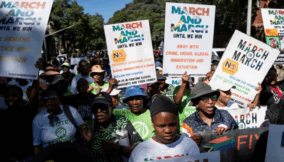
As far as some 11 host communities in Bayelsa State under the OML 83 and 85 are concerned, what is happening to them these days in terms of rapid development in infrastructure, health, education, welfare, empowerment, and human capital development is simply a revolution, a transition from alleged neglect and backwardness to an era of everything you ask for, you get.
This is the outcome of the introduction of the Host Community Development Trust (HCDT) system by the Nigerian Upstream Petroleum Regulatory Commission (NUPRC) after the Petroleum Industry Act (PIA).
These communities operate under KEFFESO which is an acronym for the 11-community oil-bearing cluster in the Brass and Southern Ijaw Local Government Areas of Bayelsa State, representing Koluama 1, Koluama 2, Ezetu 1, Ezetu 2, Foropa, Fish Town, Ekeni, Sangana, Opu-Okumbiri, Okumbiribeleu, and Oginibiri.
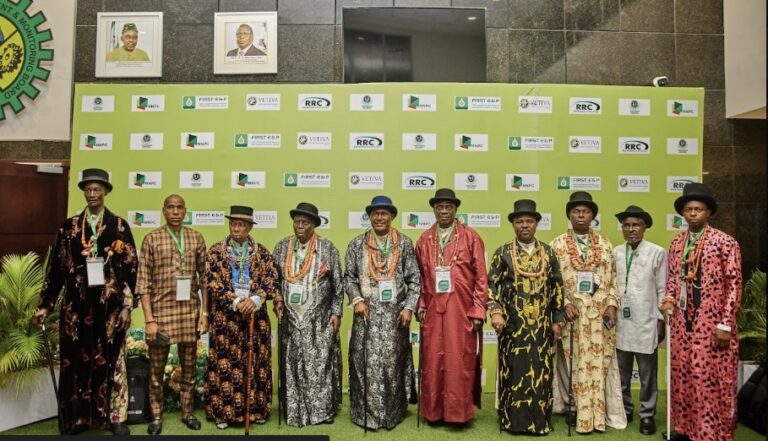
KEFFESO group is one of the 155 HCDTs so far incorporated since PIA came into existence, 79 of which are said to have received N373Bn so far for 663 ongoing projects.
Many critics may still be kicking against the 3% awarded to host communities in the PIA (which lasted over 20 years to come out of the National Assembly), some host communities such as KEFFESO have moved fast to begin to deploy the little they have seen into action.
Statements from NUPRC disclosed that the N633Bn comprises N125bn and $168.9m set aside by oil companies in line with Section 235 of the PIA 2021. These funds are held in top rated banks to be used to execute development projects in host communities. The objective is to drive infrastructure development, education, healthcare, environmental protections, and youth empowerment in oil producing communities especially in the Niger Delta.
The overall objective, according analysts is to address recurring accusations of neglect and decaying communities. It is also to help the Federal Government discourage pipeline vandalism and oil theft which seem to get justification from cries of neglect despite crude oil and gas coming from these communities.

Condition of KEFFESO host communities before HCDT system:
The communities had faced severe environmental challenges, including coastal erosion, sea encroachment, and perennial flooding, which frequently destroy homes, livelihoods, and critical infrastructure. Situated within the saltwater region, all KEFFESO communities have had limited access to potable water, forcing families to depend on hand-dug wells, rainwater harvesting, and other unreliable sources.
Road infrastructure was long been inadequate. In many communities, paved roads were either nonexistent or impassable, restricting movement, trade, and emergency response.
Schools remained poorly maintained, under-resourced (often with a teacher or two in a school), making quality education difficult to sustain. Healthcare facilities, where available, were inadequately equipped and lack sufficient medical personnel, compelling residents to travel long distances to the state capital for even the most basic medical care.
For young people, opportunities were limited. Skills development programmes were scarce, employment pathways remained uncertain, and frustration had steadily grown.
Development experts said over time, these conditions did more than hinder development; they lowered expectations, weakened public trust, and reinforced a cycle of neglect. A community member told newsmen: “We used to dig the ground until water came out. That was the water we drank and used for bathing. Sometimes, after bathing, our bodies would itch.”
A community health worker added: “I advised the community not to drink the water because it wasn’t safe. It was salty, and whenever I drank it, my blood pressure would rise.”
Another community member said: “We lacked a town hall, good roads, proper sanitation facilities, and electricity. If electricity came to this community, everyone would celebrate because it would change our lives.”
Change and surprise:
This was the situation until the KEFFES Host Community Development Trust (KHCDT) was established, redefining how host communities participate in and benefit from petroleum operations.
It marked a decisive transition from the limitations of the Global Memorandum of Understanding (GMoU) model—often inconsistent, opaque, and externally driven—to a structured, legally backed framework that funds development, promotes local participation, and reduces conflict across host communities in the Niger Delta.
With the support of ‘First Exploration & Petroleum Development Company’ led by Ademola Adeyemi-Bero, the Managing Director/CEO, and the NNPC Joint Venture, development was no longer externally determined or delivered intermittently. Instead, it became structured, predictable, transparent, and community-owned.
A HCTF official explained: “The Petroleum Industry Act introduced a much stronger framework. The 3% OPEX contribution provides significantly more resources than the previous GMoU model, allowing for projects with a much broader scope and greater long-term impact.”
He said the Trust introduced a fundamentally participatory model anchored in local governance, guided by transparency, and designed for long-term sustainability.
Rather than implementing isolated interventions that addressed immediate needs, KHCDT adopted a systems-based approach; one that he said connects infrastructure with economic opportunity, education with future prospects, and healthcare with long-term community resilience.
An education programme representative said: “Our education intervention programme focuses on providing service personnel to schools. Before now, some schools had only one head teacher, while others had just two teachers. We engaged qualified teachers from within the communities to bridge this gap.”
Within this model, infrastructure is no longer viewed as an isolated project but as part of a broader development ecosystem.
Concrete walkways are more than access routes; they are economic lifelines. Clean water is more than a utility; it is a public health intervention. Education is more than classroom instruction; it is a pathway to opportunity.
At the heart of this transformation is a redistribution of responsibility and decision-making.
He added that men and women, young people and elders, traditional rulers and emerging leaders all contribute to defining development priorities and determining how resources should be allocated.
This process does more than identify community needs. It builds consensus, strengthens accountability, and ensures that investments respond to lived realities rather than assumptions.
It is this shift from passive beneficiaries to active leaders that he said is gradually redefining development across the KEFFES communities.
The process:
The Trust official said: “The PIA requires every Host Community Development Trust to prepare a five-year Community Development Plan in collaboration with the communities. That plan provides continuity and ensures that development is strategic rather than reactive.”
Today, he said, the communities are driving their own development, managing their resources, and deciding how those resources should be invested.
Education gets a boost:
Education, once constrained by failing infrastructure and a severe shortage of teachers, is said to be systematically restored.
Community teachers have been recruited and deployed across the communities, while government-employed teachers receive monthly stipends to encourage retention and consistent attendance.
Beyond addressing immediate staffing needs, the Trust is said to be implementing a holistic education strategy designed to improve learning outcomes and sustainably transform the educational landscape across the KEFFES communities.
An education programme coordinator said: “We currently have over 90 teachers across the communities. Previously, we had 78, but we recently engaged an additional 23 teachers from the three older communities. Beyond recruiting teachers, we have also introduced education monitors to ensure quality service delivery and accountability.”
A head teacher and a class teacher admitted during investigation that the impact on learning has been remarkable. “Students who previously struggled to read can now read confidently because there are enough teachers to support them.”
The Trust is said to be expanding educational support through scholarships, learning materials, and other targeted interventions that reduce the financial burden on families and encourage more children to remain in school. It is creating an education system capable of preparing young people for meaningful opportunities and long-term success.
Transformation in healthcare:
Health officials said for many years, access to quality healthcare was defined by distance, inadequate facilities, and an acute shortage of medical personnel. Residents often travelled long distances, frequently by water, to access even the most basic medical services.
Today, they said, that reality is gradually changing. Through the ‘First Exploration & Petroleum Development Company’ and NNPC Joint Venture, annual medical outreach programmes now deliver essential healthcare services directly to the communities.
Preventive screenings, treatment for common illnesses, health education, and medical consultations are reaching residents who previously had little or no access to healthcare.
To strengthen primary healthcare services throughout the year, KHCDT is said to have also recruited 18 Community Health Extension Workers and provides monthly incentives to 14 government health personnel serving within the communities.
A community health worker said: “Since KEFFES employed us, healthcare delivery has improved significantly. Before now, many patients had to travel outside the community for treatment, and some never made it in time. Since we started working here, we have witnessed a significant improvement in emergency response.”
By strengthening education and healthcare simultaneously, KHCDT is said to address immediate needs and is investing in the human capital that would sustain development for generations to come.
Infrastructure now a reality:
Where many community members had given up on expecting motorable roads in the swampy communities or portable water, now, infrastructure and access to clean water are said to form the foundation of everyday life, and across the KEFFES communities. Both are being strengthened through deliberate, long-term investment, the source said.
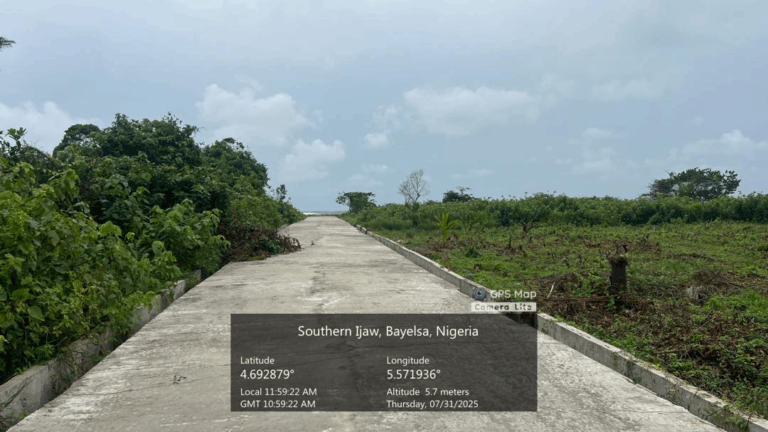
“Concrete walkways are currently under construction in several communities, guided by the revalidated Five-Year Community Development Plan developed in collaboration with community stakeholders. These projects improve mobility, connect neighbourhoods, enhance safety, and support local economic activities.
“Alongside these initiatives, legacy infrastructure projects—particularly concrete roads initiated under the GMoU framework—are also being completed. By fulfilling these longstanding commitments, the Trust is restoring trust, ensuring continuity while honouring promises made before the implementation of the Petroleum Industry Act.
A community member testified: “This road project started during the transition to KEFFES. Community members were consulted, and after assessing the area, it was agreed that this was the right location for the road.”
One project helps the other. These roads are restoring access to schools, healthcare facilities, markets, homes, and places of business. They are making movement safer and easier.
Clean water replaces well water:
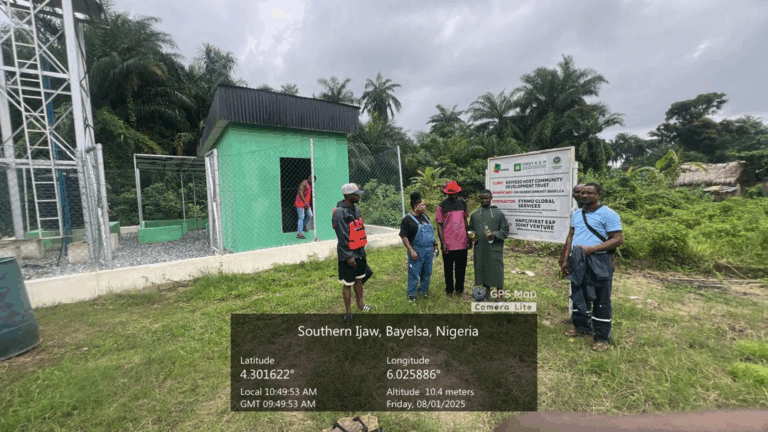
For generations, many residents relied on hand-dug wells contaminated by saltwater intrusion and floodwater. Unsafe water exposed families to preventable illnesses and affected everyday life. Today, the community said, new water systems are changing that reality.
Safe, treated water is reducing dependence on contaminated sources, lowering the risk of waterborne diseases, and improving health outcomes across the communities. “When KEFFES decided to build this water project, it brought us clean water—water that is odourless, colourless, and tasteless. That is what good drinking water should be.”
For KHCDT, infrastructure is not measured by the number of projects completed but by the lasting improvements they bring to people’s lives.
The Trust’s development approach recognises that roads, walkways, and clean water are interconnected. Together, they improve mobility, strengthen public health, increase productivity, and create the conditions necessary for sustainable development.
Economic empowerment coming:
Economic empowerment is said to represent the next stage of the transformation.
Recognising that long-term development depends on thriving local economies, KHCDT is said to be implementing strategies that move households beyond subsistence livelihoods toward sustainable income generation.
Comprehensive studies on Micro, Small, and Medium Enterprises (MSMEs) are currently being conducted across the KEFFES communities, officials said. These assessments are identifying existing businesses, mapping economic opportunities, evaluating competitive advantages, and establishing potential partnerships that can stimulate local enterprise.
The findings will guide future interventions, including entrepreneurship development programmes, vocational training, financial support initiatives, and business capacity-building activities.
The objective is clear: to equip individuals with the knowledge, skills, and resources needed to build sustainable businesses and generate lasting income.
By strengthening local enterprise, the Trust aims to reduce dependence on unstable informal livelihoods, expand employment opportunities, and stimulate inclusive economic growth across the communities.
Emergence of a model:
The result is a model that places people at the centre of development—equipping children to learn, supporting teachers to educate, empowering health workers to serve, and enabling families to build healthier, more resilient futures.
The official said: “These investments are laying the foundation for stronger communities, where opportunity is no longer determined by geography but by the systems deliberately built to support every resident.”
Future:
As development continues to take shape across the KEFFES communities, the Trust is said to be expanding its vision to ensure that no one is left behind.
Historically, people living with disabilities have often been excluded from development planning and access to economic opportunities. KHCDT is working to change that narrative.
In March 2026, the Trust convened a strategic stakeholder engagement in Yenagoa focused on the needs and aspirations of persons living with disabilities. The session brought together community representatives, disability advocates, and other stakeholders to identify barriers to inclusion and develop practical pathways for empowerment.
Rather than treating inclusion as an afterthought, the Trust is embedding accessibility, representation, and equity into its long-term development strategy.
The outcomes of the engagement, according to officials, will inform a comprehensive support programme for persons living with disabilities across the KEFFES communities, ensuring that future interventions reflect the needs of every segment of society.
A participant said: “These are the kinds of opportunities we have been asking for. Many persons living with disabilities face enormous challenges, and programmes like this give us hope. They help us identify our needs and create pathways for empowerment and meaningful achievement.”
Chairman:
“The legacy I hope to leave behind is one where members of the KEFFES communities willingly return home because the infrastructure deficits that once forced people away have been significantly addressed.”
Across the KEFFES communities, the results of this transformation are becoming increasingly evident.
Children now have greater access to qualified teachers and improved learning environments.
Healthcare services are reaching communities that once had little or no access to essential care: Clean water systems are replacing unsafe sources; Roads and walkways are improving mobility and strengthening local commerce; Young people are acquiring practical skills that prepare them for productive futures; community institutions are becoming stronger. Most importantly, he said, development is becoming sustainable because it is rooted in community ownership, guided by structured governance, and supported by long-term investment.
He thinks the KEFFESO Host Community Development Trust is doing more than delivering projects. “It is demonstrating a model for host community development—one where communities are not passive recipients of development, but active partners in shaping it. It is a model where transparency replaces uncertainty; where participation replaces dependency; where investment creates opportunity; and where development is measured not simply by infrastructure delivered, but by lives transformed.
The summary of the KEFFESO experiment, he says, is a story of communities confidently building their own future.
The expectation and hope is that this kind of story should be the same in the 150 HCDTs in the oil region. The hope also is that as oil output increases from 900,000 bpd to 1.8mbp, the joy and prosperity in the host communities would also jump from outcomes of N373bn to over N1trn in near future.

Join BusinessDay whatsapp Channel, to stay up to date
Open In Whatsapp